



Reflections on a Playoff Farewell: Aaron Rodgers and the Steelers’ Wild-Card Loss
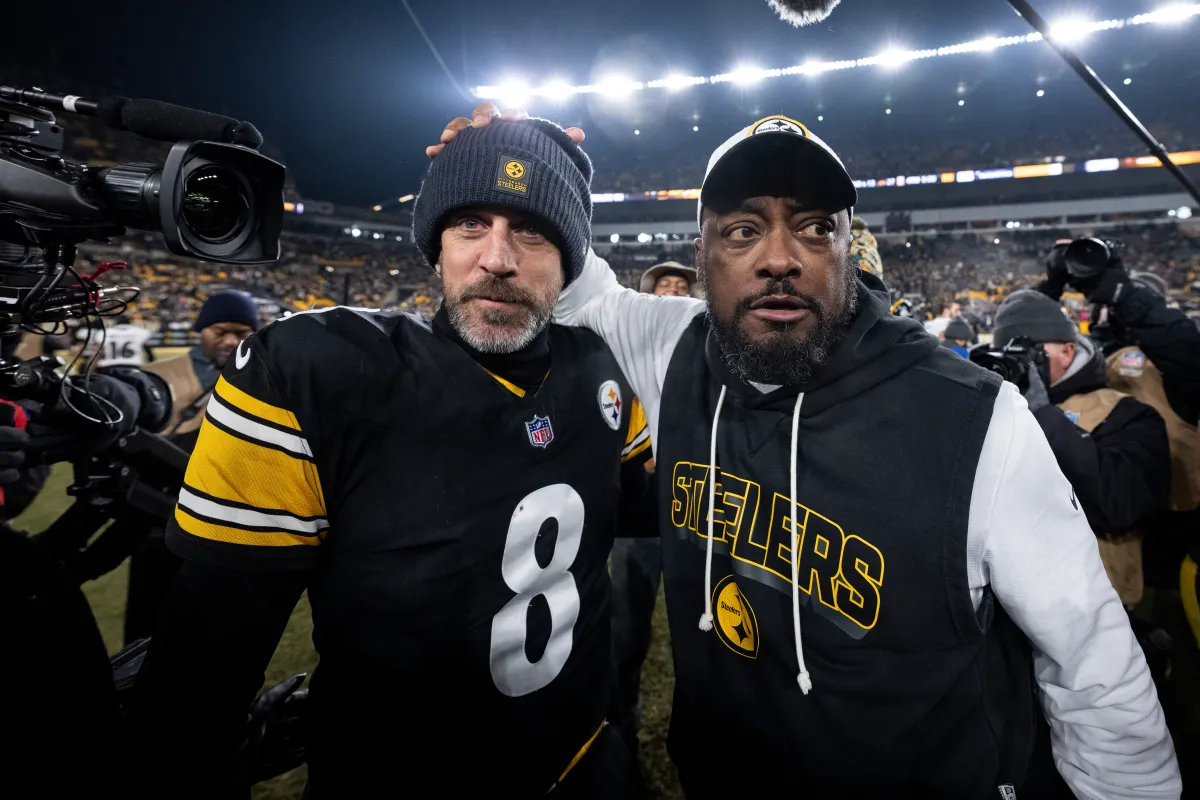
In the chilly aftermath of the Pittsburgh Steelers’ disappointing wild-card loss to the Houston Texans, a reflective silence hung over the franchise as fans and analysts alike pondered whether they had just witnessed the final chapter of Aaron Rodgers’ illustrious NFL career. The 42-year-old quarterback, whose brilliance on the field has long been the stuff of legend, struggled notably in what may have been his final professional appearance, completing just 17 of 33 passes for a modest 146 yards without finding the end zone. The Texans’ defense harassed him throughout the evening, recording four sacks for a loss of 36 yards. Adding a bitter exclamation point to the defeat, Rodgers’ final play might well have been a deflating pick-six that helped cement Houston’s commanding 30-6 victory and unceremoniously ended Pittsburgh’s postseason hopes.
Before the season began, Rodgers had hinted that this campaign would likely be his NFL swan song, though the Steelers organization had expressed openness to his potential return. In the somber aftermath of the playoff defeat, Rodgers faced the inevitable questions about his future with characteristic thoughtfulness tempered by emotional restraint. “I’m not gonna make any emotional decisions,” he told reporters during his postgame press conference, his voice tinged with the disappointment of unfulfilled potential. “It’s been a great year, overall, in my life in the last year, and this is a really big part of that, coming here and being part of this team. It’s disappointing to be sitting here with the season over.” When pressed about his decision-making process, he simply offered that he would “just get away and then have the right conversations,” maintaining the measured perspective of someone who understands the weight of such a monumental life transition.
There was a poignant moment during the press conference when a reporter asked if Rodgers had entered the Texans matchup contemplating that it might be his final NFL game. His response carried the wisdom of two decades spent under the bright lights of professional football: “I’ve answered this before. Every game could be my final game.” The philosophical undertone of his answer spoke volumes about a man who has learned to appreciate the impermanence of athletic careers, no matter how decorated. When questioned about why he exited the game in the closing minutes, allowing backup Mason Rudolph to take the field for Pittsburgh’s final possession, Rodgers’ matter-of-fact reply—”It was 30-6″—captured both the competitive reality and the emotional resignation of a quarterback who has always prided himself on playing to win until the final whistle.
Throughout his career, Rodgers has embodied the rare combination of physical brilliance and intellectual mastery that defines the quarterback position at its highest level. His 18 seasons with the Green Bay Packers, highlighted by a Super Bowl victory in 2011 (ironically against Mike Tomlin’s Steelers), established him as one of the game’s most gifted passers and strategic minds. During his press conference, Rodgers reflected on the symmetry of his career, having played for two of the NFL’s most storied franchises. “This has been a really beautiful back end to that first 18, to be able to be here for a year,” he said with genuine appreciation. “This is a special place. Got tradition, got excellence, got all-time greats. There’s only a few special places in the league that have the tradition and the town and the organization, and I’m thankful to have played for two of them.” His words carried the weight of a man taking stock, perhaps for the final time, of a professional journey that has spanned more than two decades of excellence.
The question of retirement looms not just for Rodgers but for several aging NFL superstars, including Kansas City Chiefs tight end Travis Kelce. Both men stand at the crossroads that all great athletes eventually face—the intersection of diminishing physical capabilities and the accumulated wisdom that only experience can provide. For Rodgers, whose cerebral approach to quarterbacking has always been as impressive as his physical gifts, the decision carries particular complexity. Does he walk away now, with his legacy secure as one of the most talented passers the game has ever seen? Or does he return for another season, risking further physical decline but perhaps also finding redemption in one final playoff run? The coming months will provide time for reflection away from the immediate sting of playoff elimination, allowing Rodgers to consider his future with the clarity that distance often provides.
Whatever decision Rodgers ultimately makes about his football future, his place in NFL history is unquestionably secure. From his miraculous throws that seem to defy physical limitations to his masterful command of the game’s strategic elements, Rodgers has redefined what’s possible at the quarterback position. His career represents a bridge between generations—having learned under Brett Favre before developing his own distinctive style that has influenced countless young quarterbacks who followed. If the wild-card loss to Houston does indeed mark the end of Aaron Rodgers’ playing days, it would be a subdued finale for a player whose brilliance has so often shone brightest in the game’s biggest moments. Yet even in defeat, there was something fitting about seeing Rodgers fighting until the end, embodying the competitive spirit that has defined his remarkable journey from backup quarterback to future Hall of Famer. The final chapter may have lacked the storybook ending, but the complete narrative of Aaron Rodgers’ career stands as one of the most compelling in modern sports—a testament to excellence, resilience, and the relentless pursuit of greatness.