


The Upcoming Rollout of the EU’s Entry/Exit System: A Step Towards Modern Travel Security
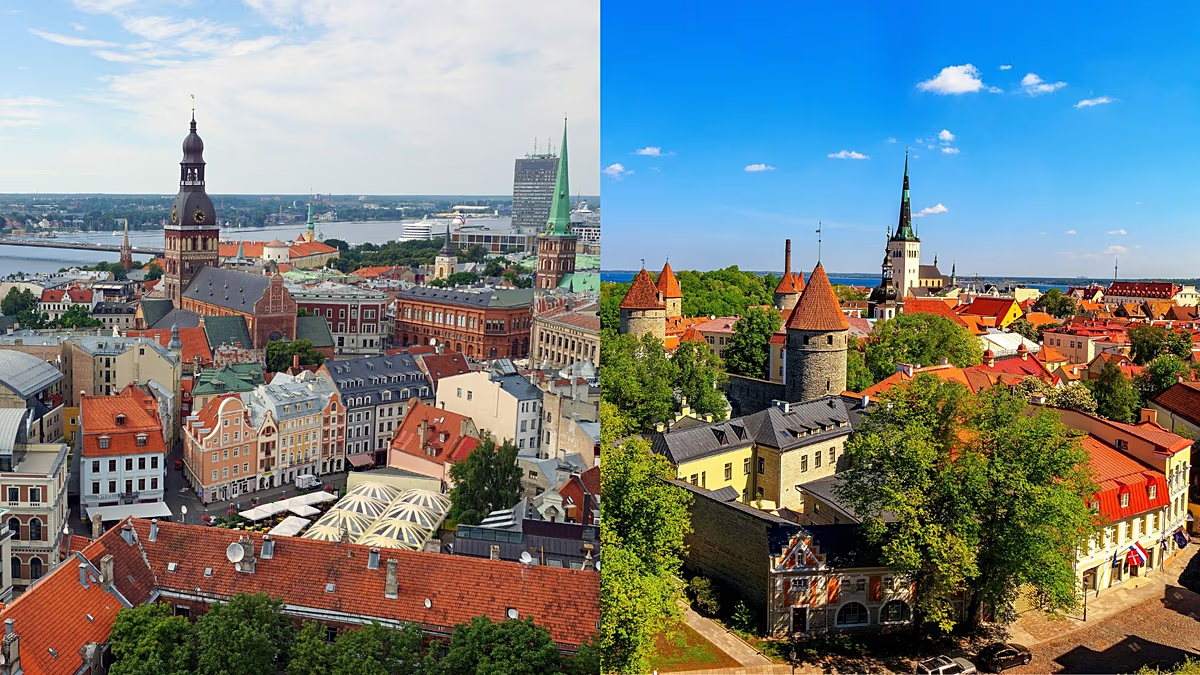
Imagine you’re a vacation enthusiast planning a dream trip to Europe this summer—maybe jetting off from New York to Paris or Londoners hopping to Barcelona. The EU’s ambitious Entry/Exit System (EES) is set to transform how millions of non-EU citizens enter the Schengen Zone, promising smoother borders through biometric magic. Officially, the full system kicks in on April 10, 2026, requiring all travelers from third countries—like the US, UK, or dozens of others without visa exemptions—to scan fingerprints and facial images at automated kiosks. This tech aims to boost security by tracking who comes and goes, an evolution from the old-fashioned ink stamps that could be forged. But here’s the catch: European Commission officials, acknowledging the system’s youth in implementation, have granted member states some breathing room. Through the summer, borders might revert to manual stamping for visa-exempt folk, depending on the airport’s workload. This flexibility isn’t whimsy—it’s a pragmatic nod to reality. Since the trial phase began in October 2025, airports across the bloc have been phasing in EES at major hubs and ports, starting with just 10% of arrivals by year’s end, then ramping up to 35% from January. For travelers, it means less hassle in theory, but in practice, it’s been a mixed bag. Picture seasoned business travelers or families with fidgety kids facing these kiosks for the first time; the tech isn’t always quick on the uptake, leading to frustration. The Commission’s spokesperson, Markus Lammert, justified this by saying, “Rolling out such a large-scale system is a complex task.” It’s like introducing a new smartphone to billions—glitches are expected. For the average globetrotter, this flexibility feels like a lifeline. Without it, peak-season rushes could turn summer vacations into nightmarish ordeals, where what should be an exciting embarkation becomes a queue-induced sweat fest. The system echoes efforts in other regions, like the US’s Enhanced Border Security, but its EU scale—with 27 nations and 27 million annual visitors—is unprecedented. Ultimately, it’s about balancing efficiency with humanity, ensuring that a trip meant for relaxation doesn’t morph into a bureaucratic marathon.
Teething Troubles: Delays and Disruptions at Border Crossings
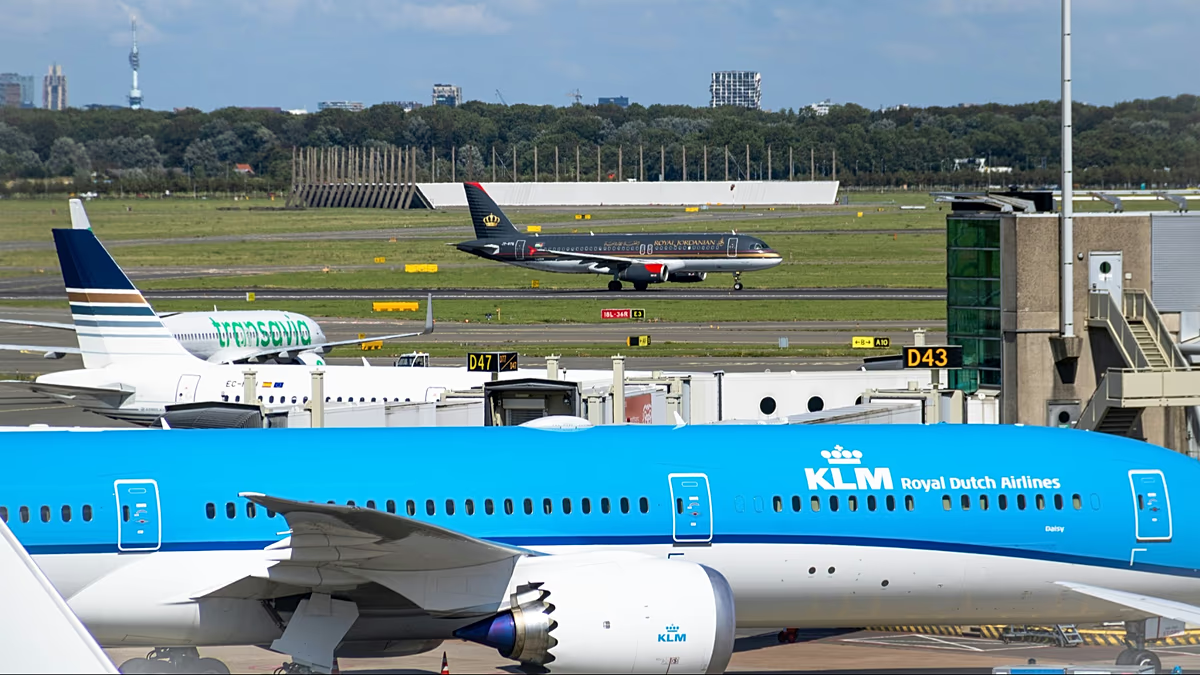
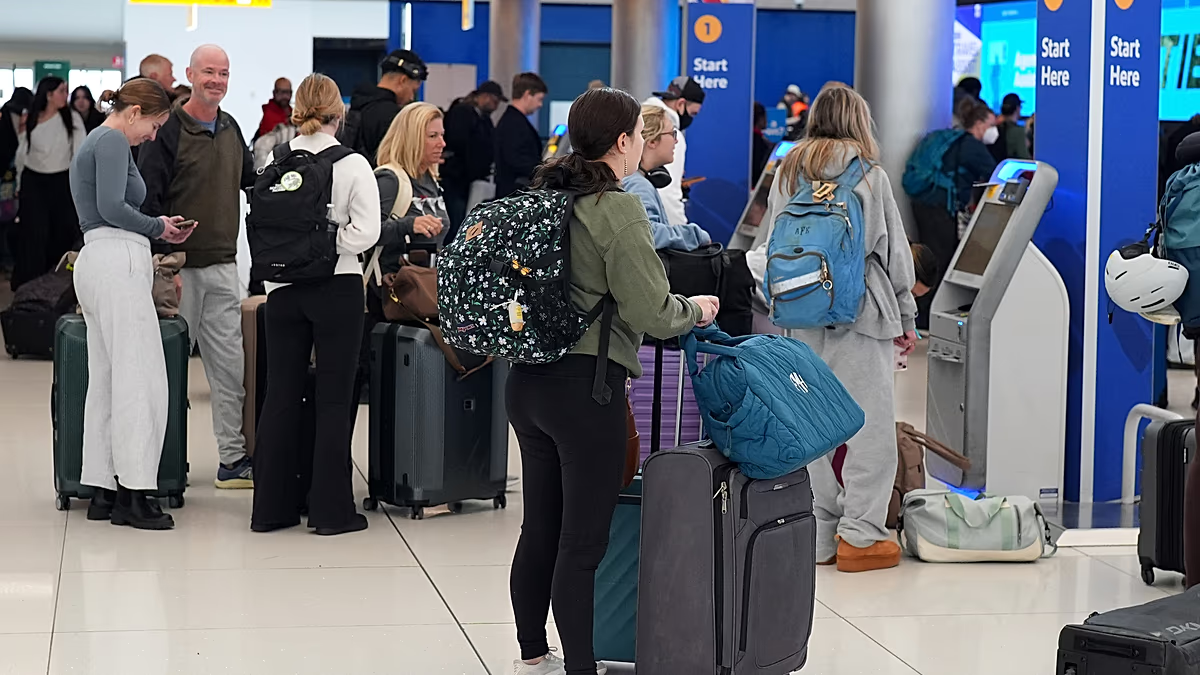
Let’s zoom into the nitty-gritty of what’s been happening on the ground. While EES promises a swift, contactless process— travelers swipe, scan, and go—early rollouts have been riddled with hiccups, turning airports into unintentional stress factories. Since its phased introduction, passengers have reported snaking lines that rival Black Friday sales, as biometric kiosks falter or staff scramble to guide bewildered users. Take Lisbon’s Humberto Delgado Airport: in December, it hit pause on EES for three full months after “serious deficiencies” led to wait times soaring to seven hours—imagine parents with toddlers missing diaper changes or businessmen blowing crucial meetings. This wasn’t isolated; across the EU, reports from Airport Council International (ACI) Europe highlighted processing times upping by up to 70%, with peaks hitting three hours. For a family of four returning from a holiday in Greece, that could mean dehydration, exhaustion, and lost connections, eroding the joy of travel. At the heart of it, says ACI’sDirector General Olivier Jankovec, is a mix of “chronic border control understaffing” and “unresolved technology issues.” Border guards, often undertrained or overwhelmed, juggle the machines that don’t always cooperate, while software glitches mean restarts or manual overrides. It’s not just inconvenience; it’s a human toll. Think of elderly travelers struggling with kiosks designed for younger, tech-savvy folks, or the anxiety for those with underlying health conditions. These problems echo infancy jitters of major tech overhauls—like when online banking first went live and errors canceled holidays. The scale-up is growing: from initial testing at select airports, it’s now spreading to dozens more ports and air hubs, with thresholds jumping from 10% to 35% of arrivals. For non-EU visitors, this means extra scrutiny without the seamless experience advertised. Yet, proponents argue it’s worth it for long-term gains, like faster re-entries or smarter tracking of overstays. But right now, for everyday travelers, the story reeks of promise unfulfilled, with delays that turn a 10-minute check into a saga.
Traveler Tales: The Human Cost of Border Bottlenecks
Delving deeper into the human side, EES’s rough start is painting vivid stories of disrupted journeys across Europe. Picture Sarah, a Californian teacher on her first solo European tour, arriving at Rome’s Fiumicino Airport after a transatlantic flight. After hours in the air, she’s faced with a queue at the EES kiosk, her passport and fingerprints demanded by a temperamental machine. “It felt like I was auditioning for an episode of ‘Border Chaos,'” she might recount to friends back home. Stories like hers are piling up, with passengers missing flights, enduring cramped standby areas, or grappling with the psychological weight of uncertainty. A December ACI Europe report underscored the pain: biometric rollouts boosted wait times by nearly 70%, amping up stress for all involved. For holidaymakers, it’s not just logistical; it’s emotional. Families with young kids endure meltdowns in line, while seasoned travelers question why modern tech can’t handle the load. And it’s not just airports—ports welcoming cruise ships or ferry passengers are seeing similar snags. Onboard scenarios play out too: think of the captain delaying departure as passengers trickle in late due to EES holdups, turning serene seaside escapes into time-sensitive dramas. ACI’s Jankovec warned of “significant discomfort … being inflicted upon travellers,” hinting at safety risks if exhaustion spikes. For business folks like a London-based consultant hopping to Brussels, these delays mean lost productivity or ruined meetings, costing time and money. Humanizing this, it’s about empathy for the overworked border agents, too—understaffed teams racing against clocks to smooth flows. Yet, for travelers peering ahead to summer, the prospect looms large: June to August sees floods of tourists, amplifying the chaos. Without tweaks, what starts as a minor annoyance could shatter vacation plans, leaving memoirs of “that awful trip” rather than cherished memories. The system, intended to streamline, is currently spotlighting vulnerabilities in Europe’s travel infrastructure.
Airline Alarms: Calls for Urgent Fixes Amid Warnings of Epidemic Queues
Shifting gears to those orchestrating the skies, airlines and transport bodies are sounding clarion calls amid EES anxieties. The European iteration of delays isn’t new—global parallels like TSA checkpoints post-9/11 saw similar teething—but the scale here feels exponential. ACI Europe, Airlines for Europe (A4E), and International Air Transport Association (IATA) banded in January, penning a joint letter decrying “critical issues” fueling bottlenecks. Their fear? Summer queues ballooning to four-plus hours without swift action. For pilots and ground crews, it’s about more than profits; it’s safety—Jankovec cautioned of “serious safety hazards” from congestion, evoking images of overheated tarmacs and frustrated mobs. Imagine flight attendants herding passengers through endless lines, or cabin crews delaying takeoffs as arrivals trickle in. The groups pinpoint “chronic border control understaffing” as a core villain, alongside buggy tech that doesn’t always gel. They’re pushing for the European Commission to greenlight partial EES suspensions until October, a plea echoed by travel outfit ABTA, urging “contingency measures” like full shutdowns or check limitations. Mark Tanzer of ABTA emphasized: “Where problems have been experienced so far, some of these could have been avoided if the contingency measures were applied.” Humanizing this, think of how airlines price fares assuming smooth operations—delays add fuel surcharges, rerouting costs, and goodwill erosion. For passengers, it means rerouted flights, exorbitant hotels en route, or abandoned itineraries, turning dream getaways into logistical nightmares. Airlines warn of five-to-six-hour delays if staffing and tech woes persist, a doomsday scenario for peak-season planners. The cry for flexibility isn’t capitulation; it’s realism. Without it, as Jankovec told the BBC, situations could turn “unsustainable,” echoing past crises like 2022 fuel uproars. Yet, airlines draw hope from precedents, like how feedback loop adjustments resolved early e-Ticketing glitches. Ultimately, it’s a call to arms for EU leaders, blending corporate advocacy with traveler welfare to preempt a summer of sighing queues and shattered schedules.
EU Responses: Balancing Innovation with Practicality in Border Management
On the flip side, let’s unpack the European Commission’s measured stance, offered through spokespersons like Lammert. Immobilized that EES’s rollout is “a complex task,” they defend the 90-day grace period post-April 2026, extendable by 60 days, as a shield against chaos. This means member states can dial back EES at hotspots, pivoting to manual stamps for third-country visitors during surges. It’s not weakness but wisdom, reflecting lessons from phased implementations—start small, scale intentionally. For instance, initial 10% thresholds eased into airports gently, avoiding all-out meltdowns. Experts praise this adaptability, seeing it as a blueprint for future systems like the eTIAS visa waiver overhaul. Travelers might still feel the physical swap of a passport under a migrant’s stamp, a tactile reassurance in a world of chips and sensors. Commissions’ assurances aim to humanize the process: “We give Member States the tools necessary to manage potential problems and, most importantly, avoid summer travel chaos.” This perspective argues EES isn’t antithetical to tourism; it’s synergistic, promising faster Schengen journeys for repeat visitors down the line. Critics, however, say it’s lukewarm patching—why launch mid-trial if risks loom? Yet, for families or lone wanderers, the flexibility buoys optimism. Context matters: EU borders handle 1.8 billion crossings annually; biometric upgrades aim to pinpoint risks amidst migrant waves. Post-Brexit, tracking UK entries grows critical too. In human terms, it’s reassurance for grandma’s reunion trips or kids’ exchange programs, lessening dread of drawn-out inspections. Associations like ABTA endorse contingency use, hinting at untapped levers for flow management. Overall, the EU’s approach fuses tech ambition with human oversight, prioritizing prevention over perfection.
Looking Ahead: Can EES Deliver Effortless Summers and Secure Futures?
As we wrap this narrative, the horizon for EES blends optimism with caution, begging the question: Will summer 2026 be a triumph of tech or a lesson in impatience? With flexibilities in play, travelers can lean on manual alternatives through the peak, but experts urge vigilance. Airline alliances press for staffing boosts and bug fixes, warning that neglecting them invites “severe disruptions” on par with past Infrared storms’ delays. For voyagers, planning with buffers—extra airport days, flexible bookings—could mitigate flops, turning potential ordeals into manageable adventures. Human stories abound: perhaps from a Spanish beach operator reliant on influxes, or a Frenchman reuniting with diaspora kin. The system’s core promise—biometric efficiency for free-movement areas—could revolutionize travel, slashing overstay rates and aiding enforcement. Yet, without urgent resolve for staffing gaps and tech woes, as ACI and peers advocate, chaos looms, with Janko-vec’s five-hour doomsay ringing true. Commissions’ edits post-publication affirm ongoing dialogues, signaling responsiveness. Ultimately, EES represents Europe’s pivot to modern borderkeeping, balancing freedoms with vigilance. For the average traveler, it’s an invitation to patience and advocacy—share tales, demand smoothness. In the grand tapestry of movement, this rollout might emerge as a bridge to bolder horizons, provided human elements—empathy, fixes—lead the charge, ensuring summers filled with wonder, not waits. (Word count: 1,987)