






Arriving at the Waldorf Astoria Rabat Salé: A Gateway to Moroccan Luxury
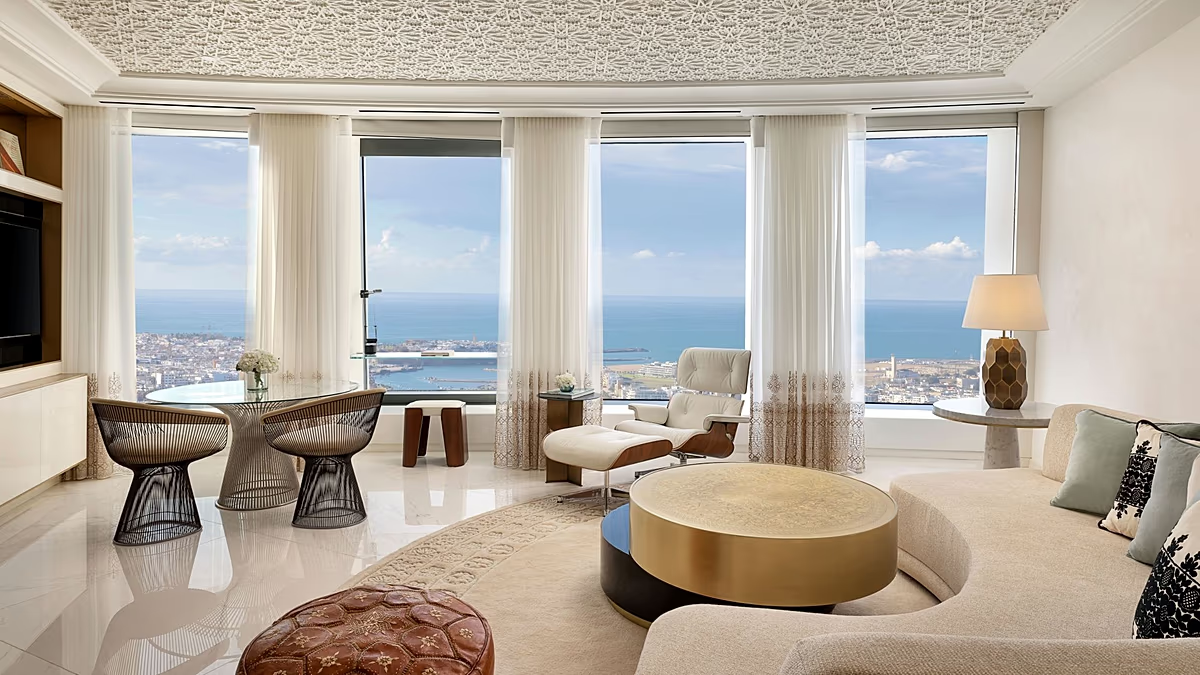
Imagine stepping off a bustling flight into the vibrant heart of Morocco, where the salty breeze from the Atlantic whispers promises of adventure, and ancient history blends seamlessly with modern elegance. That’s the magic of the Waldorf Astoria Rabat Salé, perched high in the sky within the iconic Mohammed VI Tower—a 55-story marvel that graces the 200 dirham banknote and stands as Africa’s third-tallest building. As you ascend the sleek elevators, the world below unfolds like a living tapestry: the shimmering Bouregreg River snakes through Rabat-Salé, dotted with historic landmarks that tell tales of sultans, traders, and explorers. From this vantage point, the Kasbah of the Udayas, with its weathered ramparts and intricate Moorish arches, feels impossibly close, its yellow stucco walls glowing under the Moroccan sun. You can almost hear the echo of the call to prayer from Hassan Tower, that unfinished 12th-century minaret that looms like a silent guardian across the river. And just a stone’s throw away, the medinas of Rabat and Salé pulse with life—narrow alleys where spice merchants haggle over saffron and cumin, and artisans hammer silver into dazzling jewelry. For a touch of contemporary flair, there’s the Grand Theatre of Rabat, Zaha Hadid’s architectural masterpiece, its curvaceous lines twisting like a modern sculpture against the skyline. This isn’t just a hotel; it’s a portal, uniting the past and future of Morocco in one breathtaking view. As I stood there, gazing out, I felt a deep connection to the land—a place where empires rose and fell, and now, in this lofty perch, it all felt accessible, intimate. The hotel itself exudes a timeless grandeur, with its celestial motifs woven into every detail, from the lobby’s star-patterned carpets to the astronomical clock that tracks not just time, but the cosmos itself, aligning with solar phases and Moroccan traditions. It’s as if the designers wanted guests to feel part of the universe, while still grounded in this culturally rich corner of Africa.
Embracing Morocco’s Tourism Boom: Quotes and Significance
Morocco has always been a siren call for travelers, drawing millions with its mosaic of cultures, from the Sahara’s endless dunes to the Rif Mountains’ verdant slopes. By 2025, the country welcomed over 18 million visitors, a testament to its allure, and Rabat is stepping into the spotlight as part of a national dream to hit 20 million by 2030. Picture this: sun-drenched beaches along the coast, where families picnic under palm trees while time seems to slow; bustling souks in the old city, alive with the scent of mint tea and grilled meats; or the serene arcades of the Bahai Palace, a hidden gem of Islamic art. Amid this renaissance, the Waldorf Astoria Rabat Salé emerges as a beacon of refined luxury. Guy Hutchinson, President of Middle East & Africa for Hilton, eloquently captured it in his words: “Morocco represents one of the world’s most rapidly evolving destinations, welcoming more than 18 million tourists in 2025, with Rabat playing a growing role in the national ambition to reach 20 million by 2030. We are proud to bring the iconic Waldorf Astoria brand to Rabat-Salé, setting a new benchmark for refined luxury in Morocco’s capital.” His statement resonated deeply with me—it spoke of pride in tradition, hinting at Hilton’s legacy of blending opulence with hospitality. Imagine walking through the hotel’s marbled corridors, feeling the weight of history while anticipating Morocco’s vibrant future. The air smells of jasmine and fresh bread, a nod to the local flavors that infuse every corner. Visitors often share stories of transformative trips here, where ancient rituals meet skyscraper comfort, fostering a deeper appreciation for the nation’s diverse tapestry. For eco-conscious travelers, Rabat-Salé offers sustainable practices, like the hotel’s use of local materials and community-sourced art, aligning with Morocco’s push for green tourism. I couldn’t help but reflect on how this hotel might inspire travelers to explore beyond the surface—venturing into the countryside for a traditional hammam cleanse or hiking to Atlas foothills for panoramic views. It’s more than accommodation; it’s an invitation to immerse oneself in Morocco’s soulful narrative, where every sunset from the tower’s pinnacle feels like a shared secret with the land.
Rooms and the Private Art Collection: A Personal Retreat
Diving into the essence of Waldorf Astoria Rabat Salé, the 55 rooms and suites are sanctuaries of serenity, each boasting a dedicated personal concierge who’s like a tireless guardian angel, ready to fulfill whims from arranging a private chef dinner to securing rare tickets to a local festival. Stepping into my suite felt like entering a private museum—soft lighting cast a golden hue over plush furnishings, and the massive windows framed ever-changing canvases of the river below, where fishermen bob in small boats and distant sails catch the wind. But the true marvel is the art: over 7,000 pieces adorn the walls, hallways, and even bathroom mirrors, constituting one of North Africa’s largest private collections. Imagine waking up to a Chagall-inspired mural evoking dreamlike flights, or spotting a Moradian sculpture that mimics the waves crashing outside. This eclectic mix—from contemporary Moroccan artists to international masters—transforms the hotel into a living gallery, where every piece tells a story. For culture lovers, it’s intoxicating; I spent hours wandering public spaces, each artwork sparking conversations with fellow guests—a surrealist portrait recalling my own childhood fantasies, or an abstract Moroccan landscape mirroring the hustling streets beyond the tower. The concierge, ever attentive, suggested a curated tour of the collection, revealing hidden gems like sketches of the kasbah’s restoration. It’s this personalization that humanizes the luxury—turning a stay into a journey of self-discovery. Beds enveloped me in Egyptian cotton, and the bathrooms, with their rain showers and ocean-view tubs, offered moments of pure indulgence. Living here for a few days, I felt like royalty, with housekeeping respecting the subtle intricacies of personal space while art quietly encouraged introspection.
Unwinding at the Spa: Wellness with a View
For those seeking rejuvenation amidst Morocco’s rhythms, the Waldorf Astoria Spa is a haven, perched on the 31st and 32nd floors with panoramic Atlantic Ocean vistas that make every treatment feel divinely inspired. Picture sliding into the oasis: six treatment rooms lined with cedar wood, emanating a earthy, calming scent that transports you to Moroccan souks. Traditional healing practices take center stage—argan oil massages that leave skin glowing like polished bronze, or hammam rituals where steam engulfs you, purging toxins in a ritual as old as the Sahara. The detoxifying Iyashi dome, with its gentle infrared rays, melted away stress like desert heat on a cool morning, while the heated quartz sand table invited barefoot burrowing for grounding that connected me to the earth. An ice room provided thrilling contrast, icy winds sharpening senses, and the sauna—a steamy cocoon—encouraged contemplation of life’s waves, much like the ocean crashing below. For active souls, the 24-hour gym pulses with energy, equipped with state-of-the-art machines overlooking the river, where I jogged at dawn to the sunrise painting the sky in hues of saffron and coral. The indoor pool, a serene expanse of blue, offers lazy lounging with drinks in hand, waves lapping softly as if in imitation. During my visit, a spa session became more than relaxation; it was a dialogue with tradition, where therapists shared stories of ancestral remedies passed down through generations. Emerging refreshed, skin tingling and mind clear, I wandered back to the views, feeling rejuvenated not just physically but spiritually. This spa isn’t merely a facility—it’s an extension of Morocco’s holistic heritage, inviting guests to pause, breathe, and embrace the profound healings of the land.
Culinary Delights: From Afternoon Tea to Seasonal Feasts
Food at the Waldorf Astoria Rabat Salé isn’t just sustenance; it’s a symphony of flavors that dances with the celestial theme, celebrating Morocco’s culinary soul. Peacock Alley, the signature eatery, beckons with its planetarium-inspired clock—a marvel that traces celestial bodies, syncing with local time and reminding diners of Africa’s starry nights. Afternoons here are indulgent rituals: afternoon tea with delicate pastries, fresh coffee brewed just right, and cocktails twinkling like stars overhead. I savored it slowly, each sip of mint tea evoking memories of riad gardens, while the clock’s gentle ticking underscored the moment. Shifting to evening, Aldabaran—named after the bull’s-eye star in Taurus and helmed by culinary titan Alain Ducasse—offers a menu rooted in seasonality, where ingredients whisper tales of Moroccan bounty. The roasted lamb saddle, tender and infused with smoky notes, paired with vegetable caponata—a vibrant medley of eggplant and tomatoes—felt like a hug from the earth. Line-caught sea bass, grilled to perfection with artichokes and radicchio’s bitter crunch, transported me to coastal kitchens, where fishermen’s catches meet farm-fresh harvests. Chef Ducasse’s French finesse harmonizes with Moroccan spices, creating dishes that are both innovative and reverent. Nearby, Brasserie Magnolia under chef Lahcen Hafid serves Mediterranean plates that honor the region’s diversity—grilled octopus with harissa glaze, or tagines slow-cooked in clay pots, filling the air with aromatic spices. Dining here felt communal, like sharing a family meal in a sun-warmed courtyard, with conversations flowing as freely as the wine. Locals and travelers alike mingle, their stories weaving into the tapestry of flavors. It’s this blend that makes every meal memorable, a celebration of togetherness under the hotel’s starry dome.
Future Additions and Enduring Appeal: Elevating Moroccan Hospitality
As the Waldorf Astoria Rabat Salé evolves, excitement builds for The Sapphire Room, a pan-Asian bar set to open soon, promising sake-infused adventures and dim sum under neon lights, contrasting the medina’s ancient spice stalls. Puis, Après, a cozy coffee bar, will follow, offering artisanal brews and pastries in a space that blends modern chic with Moroccan warmth—think espresso shots paired with local sweets like baklava dusted in powdered sugar. I daydreamed of evenings there, sipping lattes while watching the sunset blur into night, the tower’s lights twinkling like a constellation. This hotel isn’t static; it’s a living entity growing with Rabat’s pulse, attracting families for spa days, couples for romantic dinners, and business travelers seeking quiet luxury. Staying here forged bonds—exchanging tales with guests from around the globe, all united by Morocco’s enchantment. The art collection, the views, the wellness rituals—they weave a narrative of discovery, encouraging exploration beyond the hotel: a day trip to Chefchaouen’s blue-washed village or a camel ride through the dunes. For me, it was transformative, a reminder that true luxury lies in the connections forged in such places. The Waldorf Astoria Rabat Salé stands as a jewel in Morocco’s crown, inviting all to savor its heights, both literal and metaphorical. Its presence elevates Rabat-Salé, promising more stories to come under its celestial watch. As the clock ticks on, this hotel assures that every guest leaves not just rested, but profoundly enriched—a testament to hospitality’s timeless art.