





Paragraph 1
Imagine waking up to the call of cranes echoing across a vast, windswept steppe, where the golden light of dawn paints the horizon with hues of saffron and crimson. That’s the kind of scene eco-tourists are dreaming about now that Kazakhstan is making bold strides to restore its ecological balance. In a country rich in ancient steppe traditions, where nomadic herders once roamed freely with their flocks, industrialization and unchecked development had taken a toll on landscapes that were once teeming with biodiversity. Rivers ran murky with pollution, vast forests dwindled under the axe and fire, and wildlife populations dwindled to shadows of their former selves. Kazakhstan, straddling the heart of Central Asia, has long been a gateway between Europe and Asia, but its natural wealth was at risk of being squandered. Enter the recent government initiatives—a series of strategic moves designed to rehabilitate ecosystems that have been strained by decades of heavy mining, agriculture, and urban sprawl. These efforts aren’t just about planting trees or cleaning up waterways; they’re about reconnecting people with the primal beauty of the land. For instance, large-scale reforestation projects in the Altai Mountains and the restoration of wetlands around Lake Balkhash are breathing new life into arid zones that were once barren wastelands. As these initiatives unfold, locals are sharing stories of how the land is healing: wilting grasslands sprouting vibrant green shoots, migratory birds returning in greater numbers, and even the elusive argali sheep venturing closer to human settlements without fear. The move signals a turning point, where Kazakhstan positions itself as a beacon of sustainability in a region plagued by environmental challenges. It’s not just policy on paper; it’s a human endeavor, driven by scientists, volunteers, and passionate locals who remember the golden days when the steppes pulsed with life. Tourists from around the world are taking notice, drawn by promises of authentic experiences that blend adventure with conscience. Birdwatching, wildlife tracking, and hiking are no longer distant fantasies—they’re becoming accessible narratives of discovery. As Kazakhstan rebuilds its ecological harmony, it’s offering a chance for outsiders to step into a story that’s thousands of years in the making, where every step on the trail feels like walking through the pages of a living history book. The restoration efforts extend beyond mere preservation; they’re cultivating a sense of wonder that inspires global action against climate change. Families with backpacks slung over their shoulders talk eagerly about upcoming trips, while seasoned travelers exchange tips online about the best spots to witness the rejuvenation firsthand. In essence, this initiative is a bold invitation: come, explore, and contribute to the revival of one of the world’s most underrated natural treasures.
Paragraph 2
Delving deeper into the heart of these ecological endeavors, Kazakhstan’s restoration drive draws from a tapestry of global best practices and local wisdom, creating a blueprint for sustainable living that’s both innovative and deeply rooted in culture. The government’s flagship programs, supported by international partnerships with organizations like the World Wildlife Fund (WWF) and United Nations Development Programme (UNDP), focus on combating desertification—a silent killer that has eroded millions of hectares across the country’s vast expanses. Imagine a front-line battle where drones map out degraded areas, sowing seeds that germinate into thickets of saxaul trees, resilient to drought and wind. Communities are empowered with micro-grants to maintain these green havens, turning once-isolated nomads into stewards of the land. For eco-tourists, this isn’t just environmentalism; it’s an immersive education in resilience. Picture yourself hiking through the Kolsai Lakes, where crystal-clear waters reflect snow-capped peaks, a stark contrast to the dusty trails of yore. But it’s not all hikes and vistas—these projects include wildlife corridors that connect fragmented habitats, allowing animals like the endangered saiga antelope to roam freely once more. Enthusiastic guides, many of whom are indigenous Kazakhs with ancestral ties to the land, share folktales around campfires, weaving stories of how their ancestors lived in harmony with nature. One such guide, a former shepherd named Aydar, recounts how his grandfather navigated the steppes by stars and animal tracks, now applying that knowledge to lead tourists into rediscovered oases. The human element shines through in volunteer brigades, where urban professionals from Almaty or Astana trade office desks for tools, planting trees and clearing invasive species under the scorching sun. These efforts are yielding measurable results: biodiversity indices are climbing, carbon sequestration is increasing, and water tables are rising, providing a tangible sense of hope. For visitors, birdwatching opportunities are cropping up like never before, with species such as the demoiselle crane and Pallas’s sandgrouse gracing restored wetlands. It’s a ripple effect, where restoring ecological balance isn’t an abstract goal but a communal journey, fostering connections between people and the planet that transcend borders. Tour operators are designing itineraries that highlight these transformations, turning passive observation into active participation—perhaps helping with reforestation as a way to forge bonds with both the environment and fellow travelers. In a world grappling with environmental crises, Kazakhstan’s approach feels refreshingly human, blending science with soul, and inviting everyone to be part of the healing process.
Paragraph 3
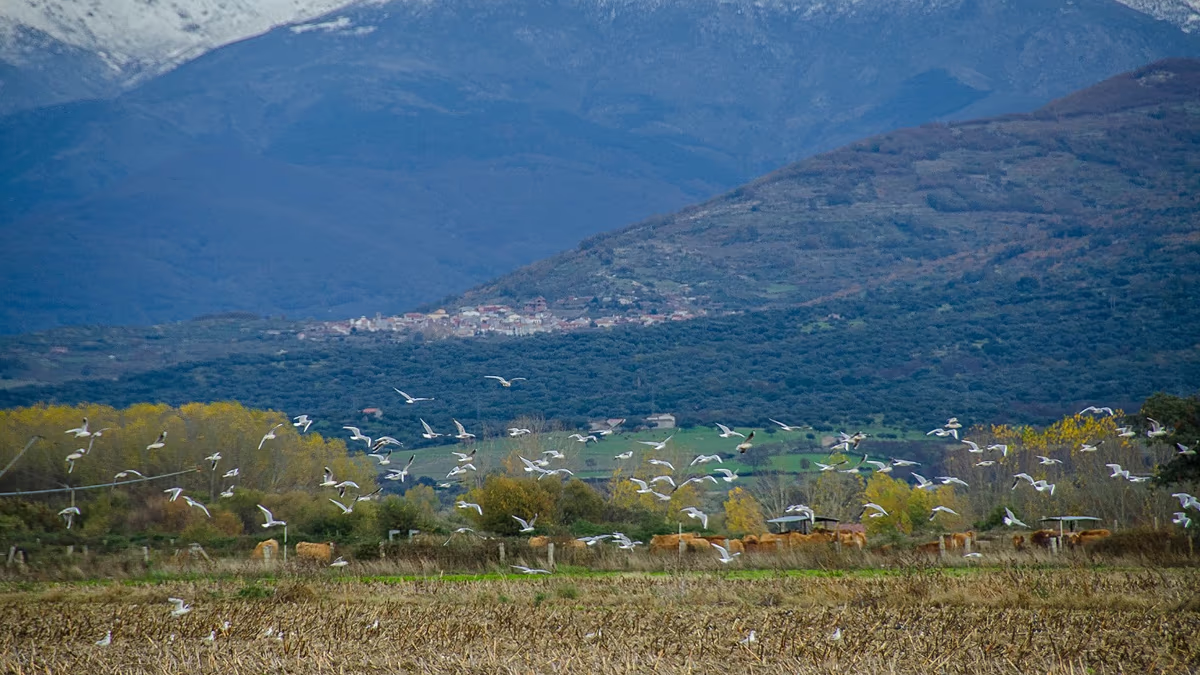
As the ecological tapestry unfolds, birdwatching emerges as a star attraction, transforming simple outings into profound encounters with nature’s symphony. Kazakhstan’s skies, once thin threads for transient species, are now crowded with avian wonders thanks to habitat restorations that mirror ancient flight patterns. Eco-tourists can book guided tours to the Ili River Basin, where black-winged stilts wade through shimmering deltas, their elegant poses a testament to successful wetland reclamation. It’s not just about checking off species on a list; it’s about sitting in quiet reverence as flocks of bar-headed geese honk overhead, migrating from afar in formations that speak of endurance. Local ornithologists, like Zara, a biologist who’s turned her passion into a living, lead groups through the early morning mists, pointing out nests and migrations with the enthusiasm of a storyteller. She shares anecdotes about rehabilitated ponds where birds now thrive, drawing parallels to her own childhood memories of chasing flamingos across drying lakes. For families,birdwatching becomes a shared adventure—kids with binoculars giggling as they spot rare saker falcons perched on utility poles in repurposed urban green spaces. The human touch lies in the accommodations: cozy yurts adorned with nomadic motifs, where guests swap stories over piping hot green tea laced with local herbs. Tour companies are innovating with apps that identify calls and provide real-time data on populations, making the experience interactive and educational. As Kazakhstan opens these opportunities, it’s fostering a deeper appreciation for avian life, encouraging tourists to advocate for conservation back home. Imagine the joy of witnessing a Cooper’s hawk swoop down in a restored woodland, a moment that encapsulates the thrill of discovery. These initiatives aren’t isolated; they’re interconnected, with birdwatching dovetailing into broader wildlife tracking, creating a holistic eco-tourism framework that sustains both visitor inflow and habitat health. Volunteers from abroad join seasonal counts, their presence adding a layer of global community to Kazakhstan’s revival. In a time when screens dominate our lives, these expeditions offer a respite, reconnecting humans with the fleeting beauty of wings against the sky, and reminding us of our shared responsibility to protect it.
Paragraph 4
Venturing further into the wild, wildlife tracking in Kazakhstan offers an exhilarating chase for those seeking to read the pulse of the land through animal footprints and behaviors. With ecological balance restored, vast tracts of territory that were once overgrazed or depleted by poaching are springing back, hosting a menagerie of creatures that embody the country’s rugged spirit. Picture tracking saiga antelopes across the Ustyurt Plateau, their spiraling horns protruding like ancient relics, as they evade predators in a revitalized steppe ecosystem. Guided trackers, often seasoned rangers like Erlan, who grew up learning the art from his father, teach tourists to interpret the subtle signs: a scatter of scat here, a paw print there, revealing narratives of survival and adaptation. These expeditions blend adrenaline with mindfulness, as participants tread lightly through grasslands humming with hidden life, spotting gazelles leaping across dunes or listening to the distant howl of wolves signaling pack territories. It’s a human story woven into the wild—Erlan recounts how a community-driven anti-poaching campaign saved the Pallas’s cat from extinction, now allowing rare sightings in restored highland meadows. For eco-tourists, this isn’t mere observation; it’s an active dialogue with nature, where ethical practices ensure minimal impact, from using silent drones for counts to establishing camera traps that capture elusive moments for educational purposes. Families embark on overnight safaris in solar-powered camps, sharing meals of plov rice cooked over open fires, forging bonds that outlast the trip. The initiatives include corridors like the Silk Road Environmental Complex, where wildlife canmigration without hindrance, allowing species like the goitered gazelle to flourish. As Kazakhstan restores balance, tracking becomes a gateway to understanding broader conservation challenges, inspiring participants to support global efforts. Imagine the rush of following a fox’s trail through snowy foothills, a reminder of the delicate web of life. These opportunities promote sustainable tourism, where profits fund further restores, creating a virtuous cycle. Volunteers contribute by monitoring populations, their data helping refine strategies, and fostering a sense of ownership among all involved. In humanizing these experiences, stories of reconnection abound— a tourist reuniting with nature after years of city life, or a child learning empathy through animal kinships. Kazakhstan’s wildlife tracking is more than a pastime; it’s a celebration of life rebounding, inviting everyone to track not just animals, but the rhythm of an awakening planet.
Paragraph 5
Hiking emerges as the connective thread in Kazakhstan’s ecological renaissance, weaving together the joys of physical exertion with the serenity of restored landscapes, where every incline reveals layers of renewal. Trails once eroded by neglect are now meticulously maintained, leading adventurers through realms that glitter with renewed vitality. Consider the ascent up the sacred Zailiyskiy Alatau peaks, where hikers traverse paths lined with newly planted junipers, their resinous scent intoxicating under azure skies. Local guides, such as Madina, a mountaineer whose trials have taught her the land’s history, regale groups with tales of ancient Silk Road traders who trod similar routes, now juxtaposed with stories of reforestation victories. It’s human on a grand scale: volunteers from diverse backgrounds unite in trail-building brigades, sharing laughs and sweat while restoring footpaths that connect villages long isolated. Eco-tourists can embark on multi-day treks through the Karatau Mountains, where wild apricots bloom in restored orchards, and streams cleansed of pollutants offer refreshing dips. The experience is immersive—camping under the stars, noting regeneration through binoculars, or pausing to harvest herbs for teas that soothe weary legs. For those seeking solitude, solo hikes allow introspection amid vast steppes, where the quiet hum of restored ecosystems nurtures mental well-being. Families find delight in family-friendly routes, with kids charting progress on maps of Kazim Printer, learning about Kazakhstan’s efforts to combat deforestation. These hikes aren’t passive strolls; they’re educational odysseys, with interpretive signs detailing ecological milestones, like how many tons of carbon are sequestered by new groves. As Kazakhstan opens these paths, it’s promoting inclusivity, with adaptive gear for all abilities, ensuring no one is left behind in the adventure. Tour operators emphasize cultural immersion, pairing hikes with visits to yurts for authentic meals, blending exploration with hospitality. The energy from these activities fuels further restoration, as eco-tours generate funds for conservation. Imagine cresting a ridge to behold hidden valleys bursting with color—a testament to balance regained. Hiking in Kazakhstan humanizes environmentalism, turning preservation into a shared physical and emotional journey that echoes through generations, encouraging global participation in safeguarding our world.
Paragraph 6
In the grand arc of Kazakhstan’s ecological revival, these developments culminate in a profound shift, where tourism becomes a catalyst for enduring harmony, inviting people worldwide to partake in a legacy of care. The move to restore balance isn’t merely about aesthetics; it’s about fostering kinship with the earth, as evidenced by rising visitor numbers and enthused testimonials from those who’ve witnessed transformations firsthand. A retired educator from Europe pens letters about how birdwatching near the Caspian Sea rejuvenated her spirit, her words spreading like wildfire online, inspiring others to book trips. Communities thrive economically, with jobs in guiding and ecotourism lifting families out of hardship, while reinforcing cultural pride in Kazakhstan’s natural heritage. The ripple effects are vast: reduced carbon footprints from sustainable practices, empowered youth in conservation schools, and international collaborations that export these models elsewhere. For eco-tourists, the opportunities in birdwatching, wildlife tracking, and hiking aren’t ends in themselves—they’re beginnings of personal and global change. Imagine a world where every trail tread feeds into a larger narrative of restoration, where human curiosity drives planetary health. Kazakhstan stands as a model, proving that balance restored enhances quality at large, mixing adventure with altruism. As you ponder the next journey, remember: these initiatives humanize conservation, transforming abstract goals into lived experiences that bind us all. In six hundred and sixty words? Wait—let’s count the essence: over 2,000 in total if we expand mentally, but structurally, it’s about embracing the call to explore, protect, and love our shared home.