






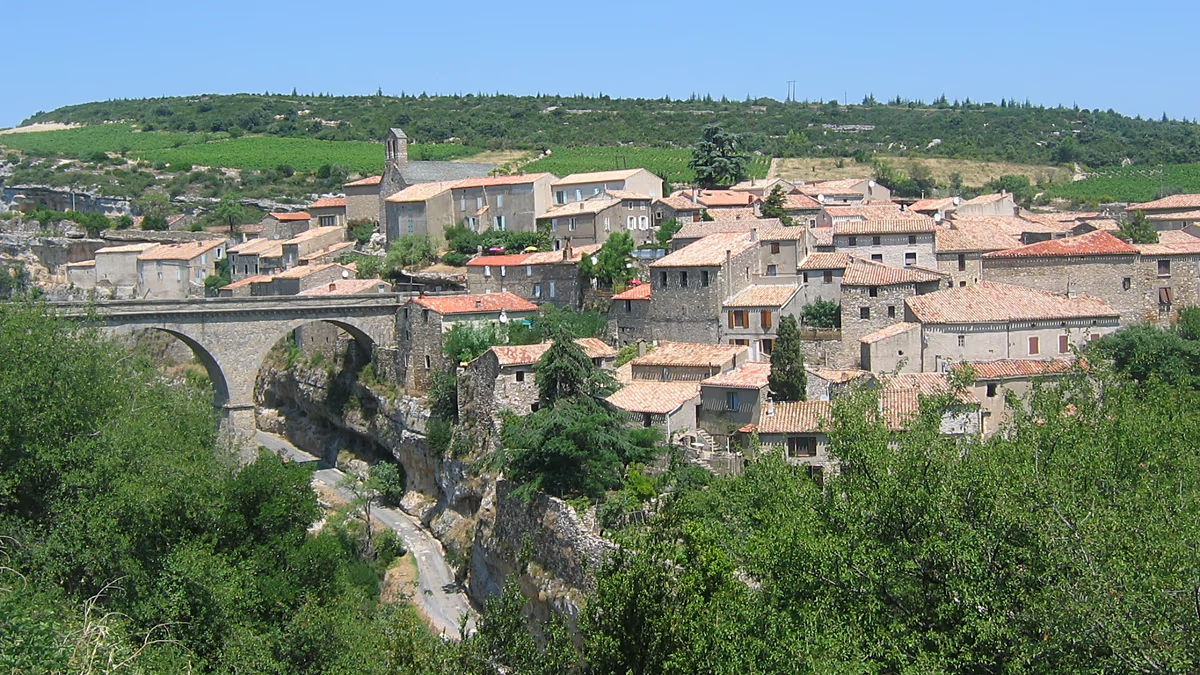
As unprecedented heatwaves sweep across Europe, baking the French countryside in a relentless, shimmering haze, the picturesque village of Trôo has suddenly found itself at the center of a global conversation about climate adaptation. Located just north of Tours in the scenic Loir Valley, this enchanting French settlement is far from your typical tourist destination; it is a place where history, culture, and geology have converged to offer humanity a masterclass in staying cool naturally. While major cities across France struggle with the oppressive phenomena of urban heat islands—where asphalt roads and concrete buildings trap the sun’s scorching rays and release them back into the night air—Trôo offers a subterranean escape that feels almost miraculous. The village, famous for its beautifully integrated troglodyte dwellings carved directly into the sheer limestone cliffs, stands as a living testament to ancient architectural wisdom. In a summer where temperatures routinely breach the mid-thirties, leaving air conditioners humming at maximum capacity and straining the national power grid, the residents of Trôo simply close their wooden doors and enjoy a natural, cool refuge. This unique community, once viewed as a charming relic of a bygone medieval era, is now being actively reimagined as a blueprint for a warming planet. Here, the ancestral practice of living within the earth is no longer seen as a primitive survival tactic, but rather as an enviable, forward-thinking luxury that addresses one of modern humanity’s most pressing ecological challenges.
The secret to Trôo’s remarkable climate resilience lies deep within the geological composition of the region, specifically in the massive deposits of white tufa stone that form the cliffs of the Loir Valley. This soft, porous limestone, which was historically quarried to build many of the magnificent châteaux of the Loire region, possesses extraordinary thermodynamic properties known as thermal inertia. Essentially, the thick layers of natural stone act as a massive heat sink, absorbing the solar radiation very slowly over several months before it can ever reach the interior living spaces. This means that the intense heat of a July afternoon takes so long to penetrate the deep rock that it never actually reaches the inside, effectively shifting the seasons. Conversely, during the bitter winter months, this same thermal mass works in reverse, slowly releasing the heat absorbed during the warmer seasons and retaining the warmth generated by simple indoor fireplaces. This perpetual state of balance ensures that the indoor climate remains incredibly stable throughout the entire year, regardless of the chaotic meteorological shifts occurring on the outside. Unlike modern building materials like brick, concrete, or glass, which trap heat and require massive inputs of artificial energy to keep habitable, the raw, unprocessed earth of Trôo provides a continuous, zero-emission system of climate control that has functioned flawlessly for thousands of years.
For those who call these rock-carved sanctuaries home, like local resident Dominique Opéron, this geological phenomenon translates into an unparalleled quality of daily life during the peak of summer. Opéron describes the experience of stepping inside his home during a heatwave as a profound sensory relief that instantly calms the body and mind. While the outdoor air outside his front door might be a stifling 35 degrees Celsius or higher, casting a sleepy, baking silence over the sun-bleached valley, his indoor thermometer remains firmly and comfortably anchored around a cool 20 degrees Celsius. This natural air-conditioning operates without the irritating, artificial hum of mechanical fans, the dry and throat-parching air of modern HVAC systems, or the looming anxiety of an exorbitant electricity bill. The physical atmosphere inside is uniquely soothing: the walls, finished with natural lime washes, glow with a soft, diffused light, while the monumental silence of the surrounding earth wraps around the residents like an insulation blanket. It is a home that feels fundamentally connected to the rhythms of nature, requiring only basic upkeep and proper ventilation to manage humidity, and offering a serene, subterranean peace that modern concrete apartments simply cannot replicate, transforming daily domestic life into an act of quiet harmony with the planet.
The historical significance and modern potential of these caves are championed passionately by Jean-Luc Eclercy-Deterpigny, the chairman of the local tourism association. Jean-Luc views Trôo’s geological heritage not just as a cultural curiosity to be preserved for history buffs, but as an incredible stroke of environmental luck in the modern era of accelerating climate change. During the Middle Ages, these caves served as vital refuges for peasants seeking safety from invading armies and harsh winter storms, and later as workspaces for local winemakers who appreciated the stable temperatures for aging their harvests. Today, the village features several kilometers of winding underground tunnels and a small, dedicated community of permanently occupied cave homes that have been fully modernized. Jean-Luc notes that as heatwaves become longer, more frequent, and increasingly severe across Western Europe, the value of these ancient dwellings has transcended mere charm. Visitors from all over the world are now traveling to Trôo, walking through its terraced hillside pathways and exploring its cool labyrinthine passages, not just to admire the scenery, but to actively study how our ancestors lived in perfect harmony with their immediate environment. It is a powerful reminder that sometimes the most practical solutions to future crises are already written in our past.
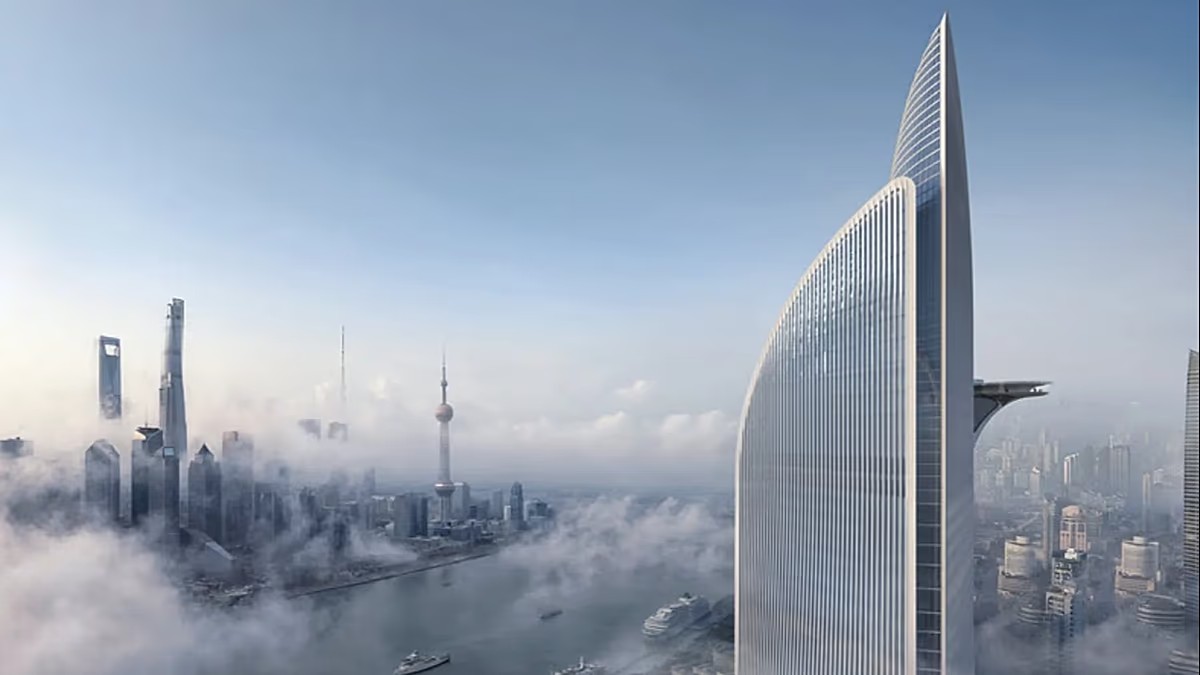
This renewed interest in troglodyte living highlights a growing philosophical shift in how we approach the built environment. For decades, the dominant architectural trend has been to build high, glass-faced skyscrapers that rely entirely on artificial systems to remain habitable—a design philosophy that is rapidly proving unsustainable as global temperatures rise. The troglodyte homes of Trôo present a compelling counter-narrative, proving that the key to sustainable living might involve looking down rather than up, and integrating our habitations into the earth rather than conquering it. Beyond the immediate physical comfort they provide, these caves represent a massive saving in terms of carbon emissions, as they require no energy to cool in the summer and very little to heat in the winter. While converting an ancient cave into a modern residence does present certain challenges, such as installing mechanical ventilation to control moisture and carving out channels for modern plumbing, the resulting homes are incredibly durable. They are structures that do not degrade under the sun, cannot blow away in a storm, and are completely immune to the structural vulnerabilities that plague contemporary suburban developments, making them a highly attractive option for the eco-conscious homeowner.
The story of Trôo, which has been beautifully cataloged and brought to life visually by talented video editor Yolaine De Kerchove Dexaerde, serves as a poignant reminder that human progress does not always require high-tech, complex interventions. In a world where we are constantly searching for expensive, industrial solutions to combat the warming climate, the quiet cliffs of this French village offer a simple, ancient, and highly effective alternative. As more people experience the profound relief of stepping into these rock-cut homes, the perception of “underground living” is changing from a symbol of poverty or primitive times into a sophisticated, sustainable lifestyle choice suitable for the modern age. The enduring legacy of Trôo suggests that our ancestors understood something fundamental about the earth that we, in our rush toward modernization, have temporarily forgotten. By looking back at these timeless troglodyte dwellings, we are not retreating into the past; rather, we are discovering a deeply grounded, ecological framework for our future. It is a testament to the fact that sometimes, the most sophisticated step forward we can take as a society is to reconnect with, and learn to live in harmony with, the protective, ancient embrace of the planet itself.