






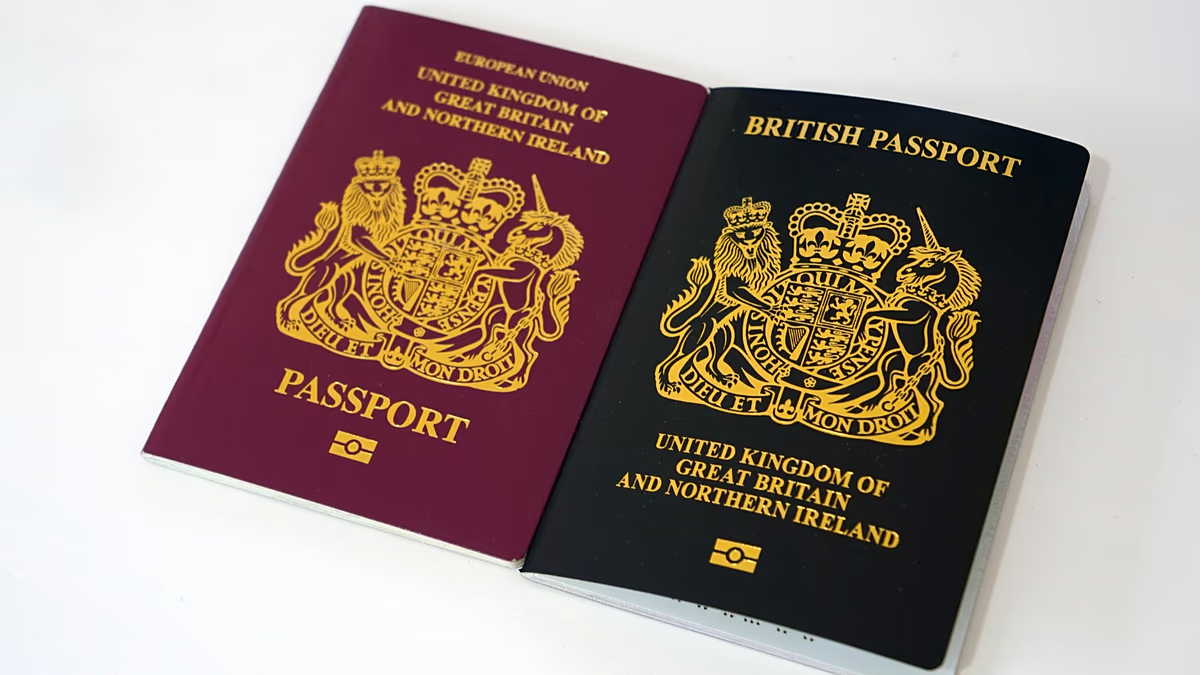
It is almost impossible to grasp that an entire decade has slipped by since the historic and deeply divisive Brexit referendum of 2016. In the ten years that have passed, the political firestorms, talk-show debates, and legislative wranglers have slowly faded into background noise, but they have left in their wake a very real, very tangible daily reality for millions of ordinary British holidaymakers trying to find a momentary escape under the European sun. What was once an effortless, almost thoughtless rite of passage—throwing a few clothes into a carry-on, grabbing a passport, and hopping on a flight to Spain, France, or Italy—has transformed into a psychological minefield of shifting rules, administrative jargon, and underlying travel anxiety. Recent travel industry research reveals a startling truth: the golden era of seamless European travel has been replaced by a persistent state of confusion, where even seasoned globetrotters are left second-guessing themselves. From the agonizing uncertainty of whether their passports will be accepted at boarding gates to the looming dread of hidden border taxes and digital authorizations, the modern British traveller is carrying a heavy pack of worry before they even leave their driveway. This new era of border control demands a level of meticulous planning that many are simply not prepared for, leaving families, solo adventurers, and retirees alike feeling like strangers in a continent that once felt like a natural extension of home. As we look back on this ten-year milestone, the sheer scale of the change becomes obvious; what used to be a stress-free escape has become a complex exercise in risk management, forcing travellers to become amateur legal experts just to enjoy a week on a Mediterranean beach.
Nowhere is this post-Brexit friction more visible than in the creeping dread surrounding the European Union’s brand-new Entry/Exit System, more commonly known as the EES. Designed as a high-tech solution to monitor non-EU citizens entering the Schengen Area, the system requires travellers from outside the bloc to submit biometric data, including facial scans and digital fingerprints, at physical border points. However, the reality of its implementation has been far from high-tech bliss, instead being plagued by technical glitches and inconsistent application that critics have openly labeled a “systemic failure.” For the average British family, this translates into a nerve-wracking waiting game in cavernous airport arrival halls, where different European countries turn the biometric equipment on or off sporadically just to keep the human traffic moving. Recent data from holiday booking experts at Holiday Extras reveals that nearly a quarter (23%) of UK travellers are deeply stressed about catastrophic border delays this summer, with 21% terrified that a long queue will cause them to miss their hard-won connecting flights, trains, or cherished hotel check-ins, while 16% report that the general uncertainty of waiting times is a major source of vacation anxiety. Standing in a slow-moving queue with young, tired children after a long flight, watching the minutes tick away while border guards struggle with digital scanners, has become the defining, stressful image of modern post-Brexit travel, proving that high-tech borders often come with a massive human cost of anxiety and exhausted patience. The continuous threat of these long lines has completely changed the pre-trip atmosphere, turning what should be an exciting countdown into a period of acute apprehension and logistical worry about the first few hours on European soil.
While the immediate queue crises dominate current headlines, there is another administrative storm brewing just over the horizon in the form of the European Travel Information and Authorisation System, or ETIAS. Scheduled to go live in the latter part of 2026, this digital pre-travel authorization will apply to all British travellers entering the Schengen zone, effectively acting as an electronic visa waiver similar to the American ESTA. For a family of four, this means logging online days before their trip, filling out detailed personal questionnaires, and coughing up an extra twenty euros per adult—an added expense and planning layer that many hard-pressed households could well do without. Yet, despite its massive scale and the profound impact it will have on how we plan our summer breaks, a staggering seventy-three percent of British travellers have admitted they have absolutely no idea how ETIAS will actually work, while an even more alarming half of the population are entirely oblivious to its existence. This massive gap in public awareness is a ticking time bomb for travel chaos, threatening to catch out hundreds of thousands of unsuspecting tourists who may show up at airport terminals only to be turned away because they failed to complete an online form they did not even know existed, turning dream holidays into administrative nightmares in the blink of an eye. The implementation of ETIAS represents yet another barrier, reminding us that the open-border ease we once enjoyed is steadily being replaced by digital walls that require time, money, and constant vigilance to clear.
Perhaps the most heart-wrenching and financially devastating trap of all, however, is the ongoing, profound confusion surrounding passport validity rules, a modern bureaucratic snare that continues to catch out unsuspecting holidaymakers every single day. Gone are the days when you could travel right up to the very last day printed on your passport cover; today’s post-Brexit rules require that a passport must have been issued less than ten years ago on the day you enter the EU, and must still have at least three to six months of validity remaining beyond your planned date of departure. This subtle but crucial distinction has led to absolute heartbreak at check-in desks across the UK, where almost half (44%) of surveyed travellers admit they do not fully understand these strict entry parameters, and one in four have already suffered the harsh consequences. Families have watched in absolute disbelief and tears as their hard-earned summer holidays are cancelled on the spot, or they are flatly barred from boarding their flights because of a technical issue with a date that they honestly believed was perfectly fine. This is not just a minor inconvenience of paying a small fine; it is a systemic issue that ruins honeymoons, cancels precious family reunions, and drains thousands of pounds from hard-working people who mistakenly trusted the expiry date printed on their official documents. The harsh reality is that a passport is no longer just a simple identity document; it is a complex legal contract with its own hidden clauses that must be carefully scrutinized months before any travel plans are finalized.
The vulnerability of British travellers in this new landscape extends far beyond passport control and into the vital domain of healthcare, where the safety nets we once took for granted are quietly beginning to unravel. Millions of holidaymakers are currently carrying Global Health Insurance Cards (GHICs)—the post-Brexit successor to the old European Health Insurance Card (EHIC)—unaware that over two million of these lifelines are set to expire this year, potentially leaving them completely exposed to eye-watering medical bills if they fall ill or suffer an accident while abroad. The GHIC is a rare and precious post-Brexit victory, offering Brits access to state-run medical facilities in Europe on the exact same terms as local residents, but its protection is only as good as its expiration date. Sadly, too many travellers treat healthcare as an afterthought, forgetting that a sudden injury on a Spanish beach or a sudden illness in a French village can completely bankrupt an uninsured family. While checking the expiry date on this free card is an absolute necessity, it must always be paired with a comprehensive, robust travel insurance policy purchased the very moment a holiday is booked—not on the day of departure—to ensure that unexpected events, from sudden family emergencies to sudden travel cancellations, are fully covered before a single foot is set on an airplane. Having both a valid GHIC and a strong insurance policy acts as a dual shield, offering total peace of mind so that you can actually relax and enjoy your well-deserved break without the constant background fear of a medical emergency.
Amidst this landscape of anxiety and tightening borders, there is one shining, deeply symbolic beacon of hope and positive transformation taking place in the sun-drenched territory of Gibraltar. The tiny British outpost, perched on the edge of the Iberian Peninsula, where an overwhelming ninety-six percent of the population fiercely voted to remain in the European Union during the 2016 referendum, is finally witnessing the physical dismantling of its dividing border fence to make way for a historic treaty. After years of tense, complex, and emotionally charged negotiations, this landmark agreement will see Gibraltar enter the Schengen Area under a unique shared administration, bringing an end to years of economic worry and political limbo for its residents and neighbours alike. For the thousands of locals and tourists who cross the border daily to work, shop, and explore, the elimination of this physical barrier and the shifting of security checks to airports and ports represents a monumental victory for human connection over political division. It serves as a powerful, comforting reminder that even in an era defined by new barriers and bureaucratic headaches, diplomacy and a shared human desire for community can still break down walls, paving the way for a smoother, more connected future for us all. As we navigate this complex post-Brexit world, stories like Gibraltar’s offer a glimmer of light, proving that with patience, adaptability, and preparation, we can still find ways to bridge the divides and keep our love for travel alive.