


European Activists Stage “Pyjama Parties” to Revive Night Train Network
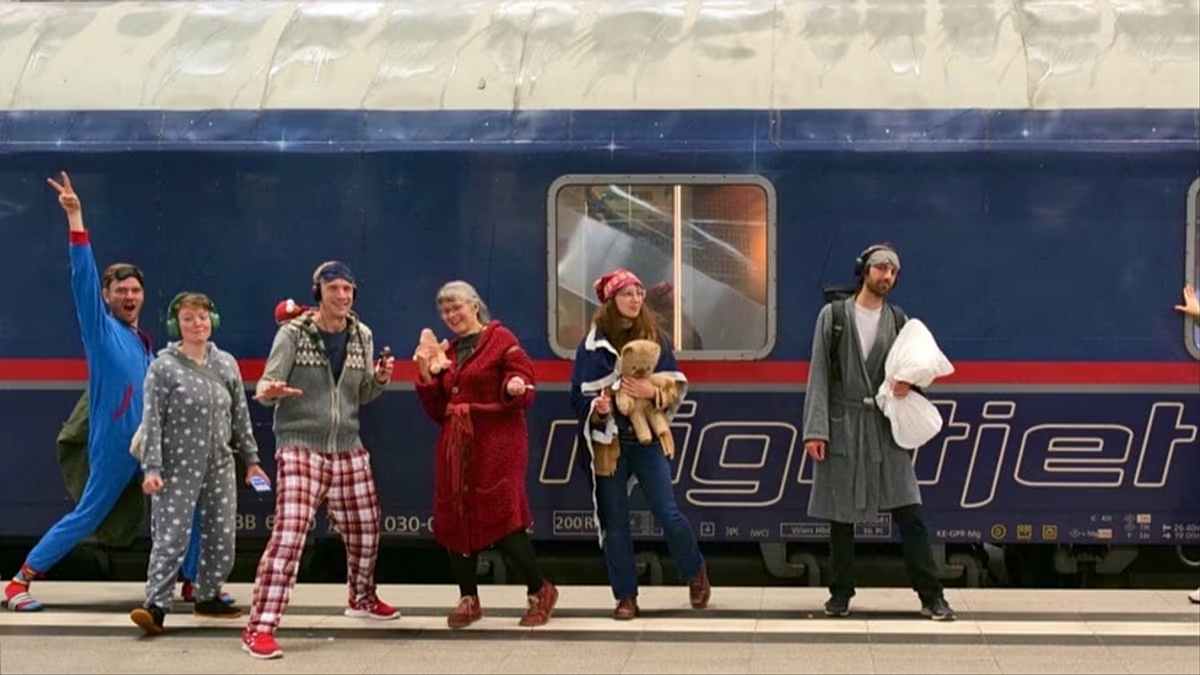
As Europe faces a critical moment in its rail transport history, climate advocates are taking a creative approach to highlight what they see as a pressing environmental and social issue. On December 12, travelers passing through major European train stations will encounter an unusual sight: activists in pajamas staging “pyjama parties” to demand greater investment in night trains across the continent. This coordinated demonstration, spanning nearly a dozen major railway hubs from Amsterdam to Helsinki, aims to spotlight the dramatic decline of international rail options and push for sustainable alternatives to air travel.
The protest comes at a significant moment for European rail travel, with the recent announcement that the Paris-Vienna night train service will be discontinued just four years after its launch. This cancellation, triggered by the French government’s withdrawal of funding, symbolizes a broader trend that has concerned environmental advocates for decades. According to the organizing groups—Back-on-Track Europe, Stay Grounded Network, and Aterra—today’s rail travelers face significantly fewer options than those in the 1970s. Many historic routes connecting regions across Europe have disappeared over time, pushing travelers toward aviation despite growing climate concerns. Other vital connections, such as the Lisbon-Madrid line and various routes linking southern and northern Europe, have either vanished entirely or face uncertain futures.
The demonstration’s format is as strategic as it is playful. Activists will gather at busy train stations dressed in sleepwear, carrying banners and dancing to music provided by DJs for Climate Action through silent disco headphones. This approach aims to create a visually striking yet non-disruptive event that organizers describe as a “brief artistic event.” Participants are encouraged to engage with travelers passing through the stations, asking them where they might like to travel by night train if more options were available. The organizers have prepared for potential interactions with authorities, advising participants to emphasize the peaceful nature of their demonstration and, if necessary, to move outside station entrances to form a “human train” of protestors.
The timing of these demonstrations reflects growing public concern about the climate impact of transportation choices. According to Inês Teles, a campaigner with the Stay Grounded Network, “Night trains are the best alternative to aviation, a sector that drastically needs to shrink as climate collapse accelerates.” The activists argue that the issue connects two pressing needs: reducing air traffic to meet climate commitments and securing major public investment in rail infrastructure to provide affordable, low-emission, and socially equitable options for cross-border travel. Their frustration is palpable as they witness route cancellations while aviation continues to expand, often with what they describe as environmental “greenwashing” rather than meaningful climate action.
The geographical spread of the demonstration underscores the continental nature of the issue. Confirmed “pyjama parties” will take place at major transportation hubs including Amsterdam Central, Basel SBB, Berlin Hauptbahnhof, Copenhagen H, Helsinki Central, Lisbon’s Santa Apolónia, Malmö Central, Paris Gare de l’Est, Stockholm Central, and Strasbourg-Ville. Activists in Southampton, UK, have also been in contact with organizers, though their participation hasn’t been confirmed at the time of reporting. Vienna’s demonstration at Wien Hauptbahnhof is scheduled for December 13, creating a two-day wave of activism across Europe’s rail network. This broad participation reflects concerns that transcend national borders and speak to a shared European interest in sustainable transportation.
Behind the playful facade of pajama-clad dancers lies a serious message about the future of European mobility. For these activists, the erosion of night train services represents not just a loss of transportation options but a step backward in addressing climate change. They argue that investing in an expanded, modern night train network could provide a practical alternative to short and medium-haul flights, which produce significantly higher carbon emissions per passenger. The demonstration comes as European climate policies face increased scrutiny, with transportation remaining one of the most challenging sectors to decarbonize. By bringing their message directly to train stations—the very infrastructure they hope to see revitalized—these activists aim to create a visible reminder of what has been lost and what could still be rebuilt with proper investment and political will.
These “pyjama parties” represent more than just a call for better train services; they embody a vision for a different approach to European connectivity—one that prioritizes slower but more sustainable travel over the convenience of quick flights. As travelers witness these unusual demonstrations across Europe’s railway stations, organizers hope to spark conversations about how transportation choices connect to larger questions of climate responsibility, accessibility, and the kind of cross-border mobility Europeans want for the future. With night trains becoming an increasingly visible symbol in climate debates, these activists are betting that their unconventional approach will help awaken public imagination to possibilities that many believe have been prematurely dismissed by transportation planners and policymakers focused on speed and profit over sustainability.