


Portugal Braces for Major Travel Disruption Amid Nationwide Strike
Portugal is preparing for significant travel chaos on December 11, 2025, as the country faces its first general strike in over a decade. Approximately half of Portugal’s workforce is expected to participate in the nationwide walkout, creating widespread disruption across transportation networks, particularly affecting air travel. The strike, called by Portugal’s two largest unions—CGTP and UGT—comes in response to controversial labor law reforms proposed by the minority right-wing government. These proposed changes would give employers greater flexibility to dismiss staff, extend fixed-term contracts, and expand the list of services required to maintain minimum operations during strikes, sparking strong opposition from workers across multiple sectors.
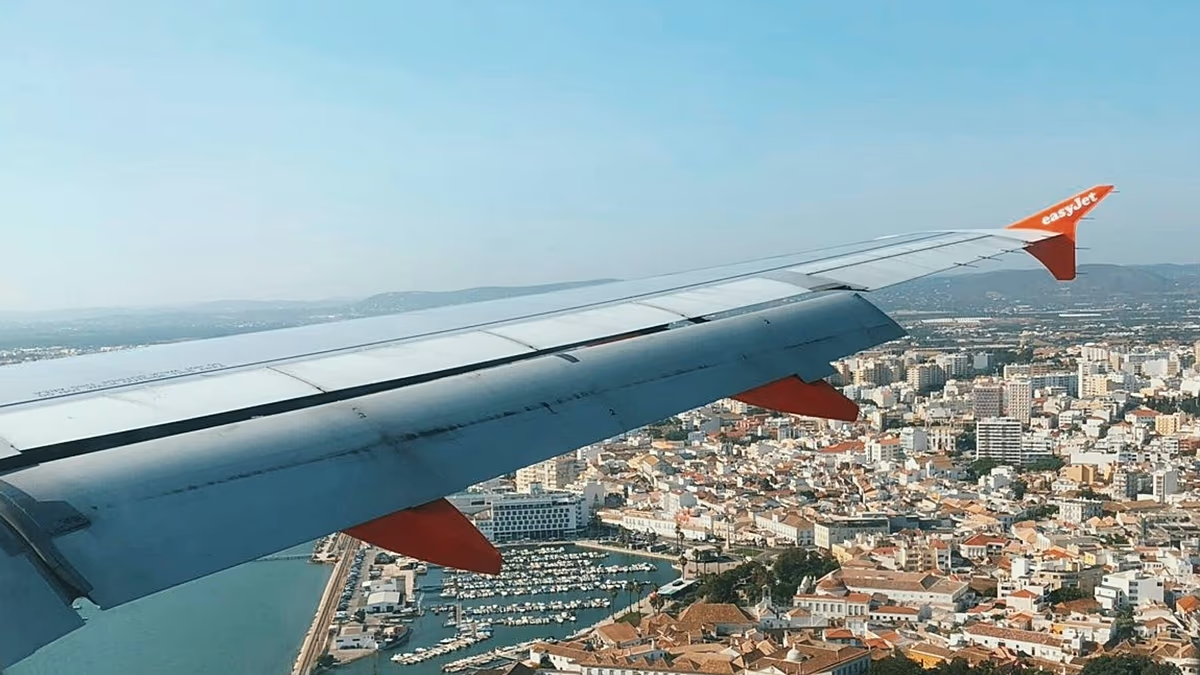
The impact on air travel is expected to be particularly severe, with national carrier TAP already beginning to cancel flights and notify affected passengers. Ricardo Penarroias, president of the SNPVAC cabin crew union, has warned it will be “very difficult to operate flights” during the strike period. The SNPVAC union represents approximately 5,000 TAP crew members as well as staff from other airlines including easyJet, Ryanair, and Azores Airlines. Public sector employees, teachers, healthcare workers, and transport staff are also expected to join the industrial action, further compounding the disruption. This level of participation reflects growing discontent among workers who feel their rights are being eroded by the proposed reforms.
Despite the extensive disruption, some limited flight services will still operate under agreements reached between airlines and unions. TAP has confirmed it will maintain a skeleton schedule, including three return flights to the Azores, two to Madeira, and single return services to several European destinations including Belgium, Luxembourg, the UK, Germany, Switzerland, and France. The airline will also operate services to Cape Verde, Guinea-Bissau, three return flights to Brazil, and two to the United States. Recognizing the inconvenience to travelers, TAP is allowing passengers to reschedule their trips at no additional cost for travel between December 8 and 14. Similarly, Azores Airlines and Sata will operate a combined 25 flights, primarily serving routes to and between the Azores islands.
For travelers caught in this disruption, it’s important to understand their rights under EU Regulation 261/2004, which remains applicable even during general strikes. Passengers whose flights are cancelled are entitled to choose between a full refund or rebooking on an alternative flight. Additionally, they have the right to meals, accommodation, and care during extended delays. Airport operator ANA has committed to ensuring the “strictly necessary means” to maintain legally required minimum operations, while handling company SPdH will work the limited flights that are scheduled to operate. However, most flights beyond these minimum services are expected to be cancelled, and travelers should prepare for significant disruption throughout Portugal’s transportation networks.
The compensation rules during strikes can be somewhat complex and depend on the specific circumstances of the disruption. According to EU Court of Justice rulings, strikes by airline staff such as pilots or cabin crew are not considered “extraordinary circumstances,” which means airlines are typically required to provide compensation if flight cancellations are not announced at least two weeks in advance. However, strikes by airport staff or air traffic controllers may qualify as extraordinary circumstances, potentially exempting airlines from compensation obligations, though they must still provide assistance and care to affected passengers. This distinction is important for travelers to understand when seeking compensation for disruptions caused by the December 11 strike.
As the strike date approaches, travelers with flights to or from Portugal on December 11 should closely monitor communications from their airlines, keep all receipts for expenses incurred due to the disruption, and consider rebooking their travel for different dates if possible. This nationwide strike, the first since Portugal’s financial crisis in 2013 when the country had to implement austerity measures to receive international aid, signals growing tension between workers and the government over labor rights. The extensive participation expected across multiple sectors reflects deep concerns about the direction of labor policy in Portugal, and the resulting disruption serves as a powerful reminder of workers’ collective bargaining power in the face of proposed reforms they view as threatening their job security and working conditions.