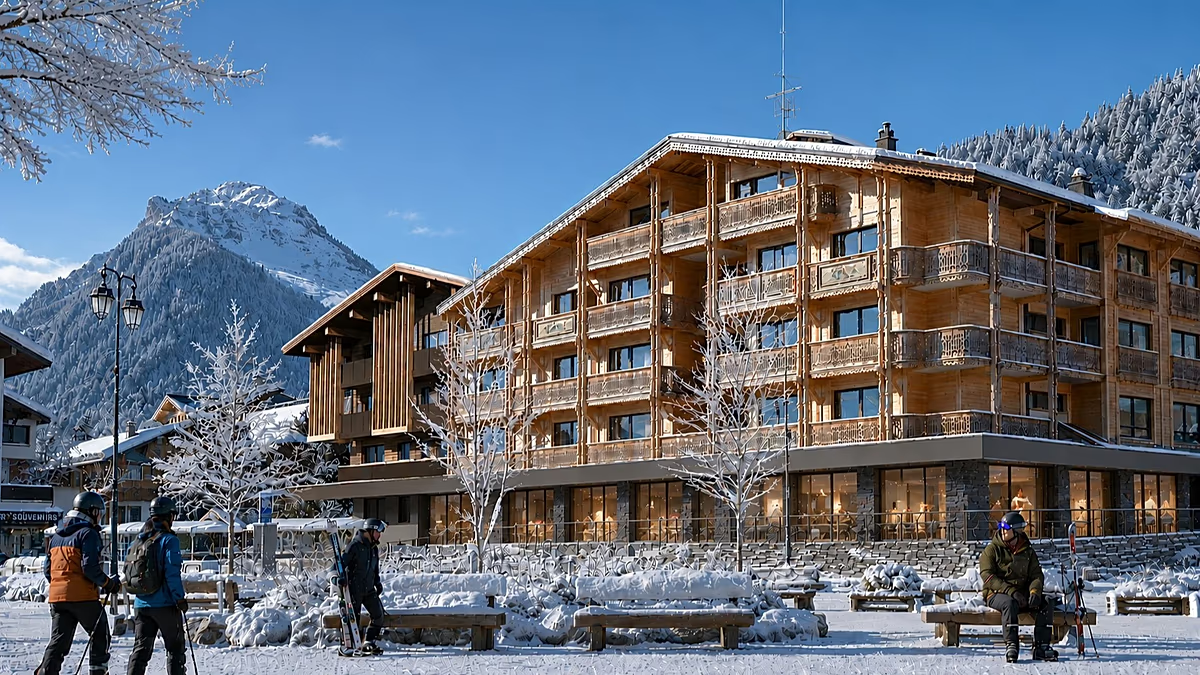




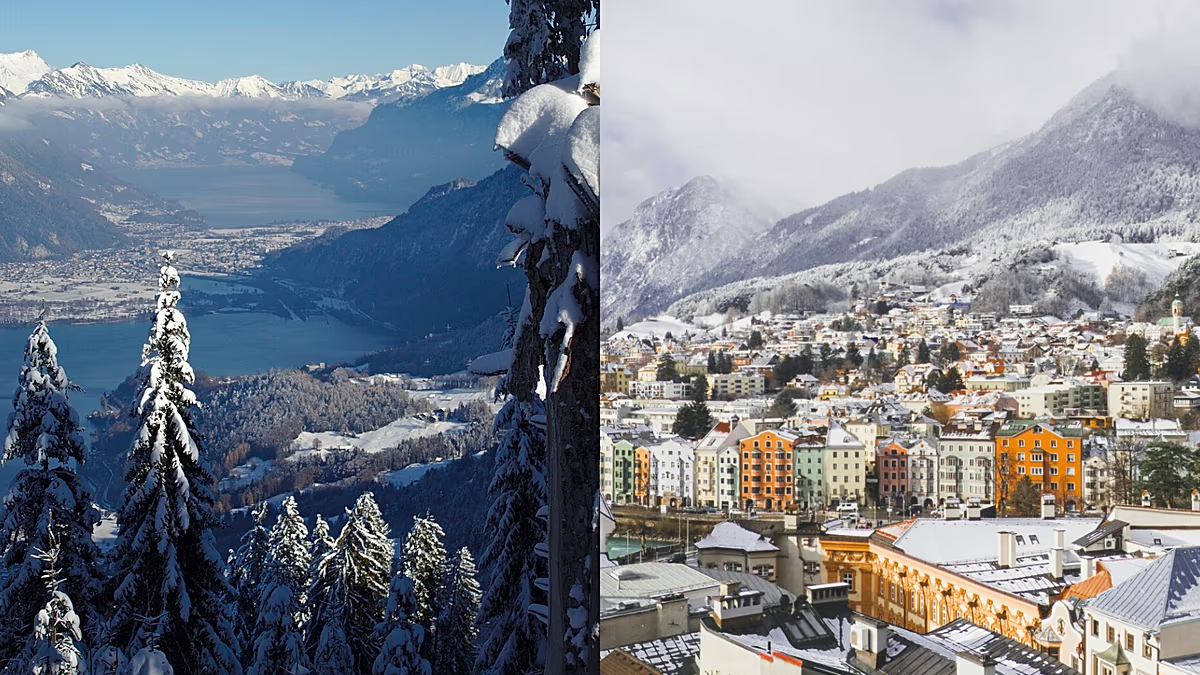
Winter in Europe carries a special kind of magic. The air turns crisp, snow dusts the rooftops, and the mountains seem to wake up for a season of adventure. For many travellers, that means one thing: a trip to the Alps. There is no shortage of places to ski, snowboard, hike, or simply soak in the alpine atmosphere, but two destinations keep rising to the top of the conversation: Interlaken in central Switzerland and Innsbruck in western Austria. Both sit in spectacular mountain settings. Both are magnets for outdoor lovers. And both have a claim to the title “capital of the Alps” – though Grenoble, France, might have something to say about that. Yet despite all the surface similarities, these two towns offer surprisingly different versions of a winter escape. Interlaken is tucked between Lake Thun and Lake Brienz, in the heart of the Bernese Oberland, with glacier-topped peaks and storybook villages around every corner. Innsbruck, named after the River Inn, is a city that blends urban culture with alpine grit, ringed by snowy summits and packed with sporting ambition. So when winter arrives and it is time to choose your next getaway, the big question is not where the snow is deeper, but what kind of adventure you actually want to chase. Do you want a peaceful, lake-side base with soft snowy landscapes, or a lively city pulsing with winter sports energy? The answer may decide everything.
Start with Interlaken, a place that feels like the postcard version of Switzerland, but with a surprising amount of winter flexibility. The region is a genuine playground for skiers and snowboarders, with five dedicated ski and snowboard areas: Beatenberg-Niederhorn, Brienz-Axalp, Diemtigtal, Habkern, and Aeschi-Aeschiried. In particularly snowy winters, Habkern and Aeschi-Aeschiried really shine. Habkern is small but sweet, where a single ski lift connects to four pistes ranging from gentle to challenging, so you can take your time finding your rhythm. Over in Aeschi-Aeschiried, the runs come with a panoramic backdrop of Lake Thun and the pyramid-shaped Niesen peak, which means even a simple run feels like a scene from a mountain film. But if your idea of winter sport does not involve skis strapped to your feet, Interlaken has other ways to get moving. The town is remarkably bike-friendly, and winter does not have to end the cycling season. A local company called Winterlaken by Yellow Velo offers a relaxed two-hour e-bike tour, led by a professional guide, that winds through Interlaken’s old town, passes the ruins of a 13th-century castle, and finishes in the traditional village of Bönigen. It is an easy, accessible way to see the area without needing to be an athlete, and it proves that winter cycling can be comfortable when you have the right guide and the right gear. Even on days when snow and ice make the roads a little tricky, the e-bike tour turns the season into an advantage, letting you glide through the winter landscape with minimal effort and maximum views.
Beyond wheels and skis, Interlaken also has an enormous network of hiking routes, with 220 kilometres of winter trails spread across the region. These paths are maintained through rain and snow, so you can pull on your boots and go for a walk even in the heart of winter. The circular Aeschi hike is a local favourite, in part because it stays within view of the Niesen, the mountain that seems to watch over everything. If you are willing to get on the water, Lake Brienz, just east of town, offers another kind of winter adventure. Yes, kayaking in winter sounds cold, but the experience is unforgettable. With a dry warm suit and a half-day tour, you can paddle across the lake’s turquoise water while snowy peaks rise all around you. It is serene, striking, and something you will not find just anywhere. When it is time to rest, Interlaken has accommodation for every taste, from hotels perched thousands of metres above sea level to cosy wellness retreats and campsites where you can sleep in camper vans, caravans, mobile homes, tents or bungalows. You could wake up with the clouds beneath your window or step straight from your tent onto a snowy trail. Getting there is simple, too. Trains connect the region every 30 minutes from major Swiss cities like Bern, Zurich, Geneva and Basel, and the town is part of Switzerland’s national road network. The nearest airports are in Bern, about 50 kilometres away, or Zurich, roughly 135 kilometres away, so the journey is straightforward even if the scenery makes you want to stop a few times along the way.
Then there is Innsbruck, a city that feels more energetic, more sporty, more “let’s go.” Its most thrilling winter attraction might be the toboggan run in the Kühtai ski resort. This is no ordinary sledding hill. Sitting at 2,127 metres above sea level, it is Tyrol’s highest toboggan run, stretching 2,020 metres down the mountain. It takes about 45 minutes to ride the lift back up, and the descent is fast, fun and, after dark, lit by floodlights so the fun does not stop when the sun goes down. For another kind of adrenaline, you can visit the Bergisel Ski Jump, a 50-metre-high landmark designed by the late architect Zaha Hadid. Even if you have no intention of launching yourself into the air, the viewing terrace offers incredible sights over the city, and the Bergisel Sky restaurant, with its floor-to-ceiling glass windows, is a great place to enjoy a meal while looking at the snow-covered mountains. If cross-country skiing is more your speed, Innsbruck has nearly 40 trails to explore. One of the most scenic starts at the Rinn cross-country ski centre. The Panoramaloipe trail winds through fields and down to Judenstein, about 900 metres above sea level. It is free to ski, and it includes both diagonal and skating tracks, so whether you are a classic purist or a skate-skiing fan, you will feel right at home. The sense of freedom out on those trails is hard to beat, especially when the only sounds are the whisper of your skis and the soft crunch of fresh snow.
After working up an appetite, Innsbruck knows how to feed you. One of the best spots is Graf Ferdinand Haus, a mountain hut open from December to April. Here you can warm up with the “hot stone” dining concept, where food is served on heated stones at the table. The menu is exactly what you want after a day in the cold: meat or cheese fondue – or if you are really hungry, both – along with a plate of their famous spare ribs. The sun terrace is a bonus, offering views of the surrounding peaks while you unwind with a hot drink or a hearty meal. The region also has some wonderfully unique places to stay. Local farmers rent out apartments, giving you a chance to experience Tyrolean country life up close, while mountain lodgings at various altitudes offer everything from rustic comfort to modern alpine luxury. Innsbruck is easier to reach than many mountain towns. It has its own airport, served by about 50 airlines, including Lufthansa, Icelandair, British Airways, easyJet and Finnair. On the ground, a dedicated coach terminal connects the city to destinations across Europe, and the main train station is a hub in its own right. Austrian, German, Italian and Swiss coaches roll in regularly, and trains from Vienna arrive 20 times a day, from Venice twice a day, and from Frankfurt once a day. No matter where you are coming from, the city is surprisingly well connected for a place that feels so deep in the Alps.
So which should you choose? If you are torn, think about the kind of winter you want. Interlaken is the softer, more scenic option, a place where you can combine a morning on the slopes with an afternoon on a quiet e-bike ride or a gentle hike along a lake. It is perfect for travellers who want the mountains without feeling they have to be in constant motion, and for those who like the idea of kayaking in winter, it offers a rare kind of magic. Innsbruck, on the other hand, is a city of high-energy sports and urban cool. The toboggan run, the ski jump, the cross-country trails and the lively après-ski scene give it a different rhythm. It is ideal for people who want to be close to the action, who love the idea of skiing all day and then eating fondue in a mountain hut, and who appreciate the convenience of an airport right on the doorstep. Neither choice is wrong. Both destinations share an Alpine setting and a serious appetite for outdoor pursuits, but they deliver completely different experiences. Interlaken invites you to slow down and soak in the views; Innsbruck challenges you to chase the thrill. The good news is that winter in Europe does not demand you make an either/or decision forever. You could start with the calm, lake-side beauty of Interlaken, then cross the mountains to the lively, snow-sport energy of Innsbruck. Or you could simply pick the one that matches your mood this season. Either way, the snow will be waiting, and the adventure will be whatever you make of it.