


As the vibrant, sun-drenched days of summer begin to recede and the first crisp hints of autumn arrive, the travel landscape transforms. The crowds that once thronged popular beaches and city squares start to dissipate, replaced by a slower, more contemplative pace of exploration. For many, this “shoulder season” has long been the secret window for securing a great bargain—a time when flights are cheaper, accommodation is more affordable, and destinations are far more manageable. However, the golden era of the guaranteed autumn deal is evolving. The travel industry is shifting, and with it, the pricing dynamics of the post-summer months. While the promise of a budget-friendly getaway still exists, it is no longer a blanket rule across the map. Instead, the savvy traveler must be more strategic than ever, armed with the right data to navigate a complex landscape where some cities are actually becoming pricier in the fall, while others remain wonderfully affordable.
Recent data from Expedia paints a nuanced picture of European travel in the autumn. It reveals a fascinating divergence: while some destinations see a significant drop in hotel rates once the peak season concludes, others—primarily in the UK—are experiencing a counterintuitive price surge. For those looking to stretch their travel budget, this means the choice of destination is now more critical than the choice of season. The most striking example of this is found in the United Kingdom, where a post-summer resurgence in domestic tourism, business travel, and city-break demand is pushing prices upward. Birmingham and Liverpool are the most notable outliers, with hotel costs increasing by a staggering 30% and 20% respectively compared to their summer rates. This indicates a robust demand for urban escapes in the autumn, potentially driven by conferences, sporting events, and the appeal of cozy, cultural city breaks as the weather cools. This trend serves as a crucial reminder that it’s unwise to assume that all travel gets cheaper after Labor Day; the old rules of supply and demand are still in play, just in unexpected ways.
Beyond the shores of the UK, however, the narrative returns to one of optimism and significant savings. Across continental Europe, the average hotel rate dips by about 7% when autumn replaces summer, providing a welcoming reprieve for international travelers. This average, however, masks some remarkable drops in specific regions that remain iconic for their summer appeal. The Algarve in Portugal, with its stunning cliffs and golden beaches, sees a substantial reduction in price point in towns like Albufeira and Faro, making the region’s natural beauty far more accessible. Similarly, the Greek Islands, known for their sun-drenched charm, offer exceptional value as the heat subsides; destinations like Mykonos and Kos see rates fall by as much as 30% compared to their July and August peaks. This trend extends to other perennial favorites: the bustling Spanish resorts of Benidorm and Alicante, along with the culturally rich city of Istanbul, all become noticeably less expensive during the ‘-ber’ months, with November emerging as the prime month for cost-effective travel. According to Melanie Fish, a travel expert for Expedia, November is the “sweet spot for savvy travelers,” with international stays averaging 10% cheaper than in the summer, allowing for a higher-end experience at a fraction of the cost.
The key to unlocking the best value during this transitional period lies in moving beyond the standard tourist trail. The most rewarding autumn deals are often found in the lesser-known, emerging destinations that don’t rely on summer sun-seekers for their annual revenue. Expedia’s research highlights a surge of interest in exactly these types of places, with travelers demonstrating a clear appetite for the “off the beaten track” experience. By looking beyond the familiar hubs of Paris, Rome, and Barcelona, tourists can discover authentic cultural experiences and significantly lower prices. The strategy involves identifying cities and regions that are culturally vibrant year-round but don’t experience the extreme overcrowding of the peak season. This allows for more immersive travel, where one can mingle with locals, enjoy unhurried meals, and feel a genuine connection to the place. For the autumn traveler, this shift towards the obscure is not just a trend for novelty—it’s a financial strategy that provides breathing room in both the schedule and the budget.
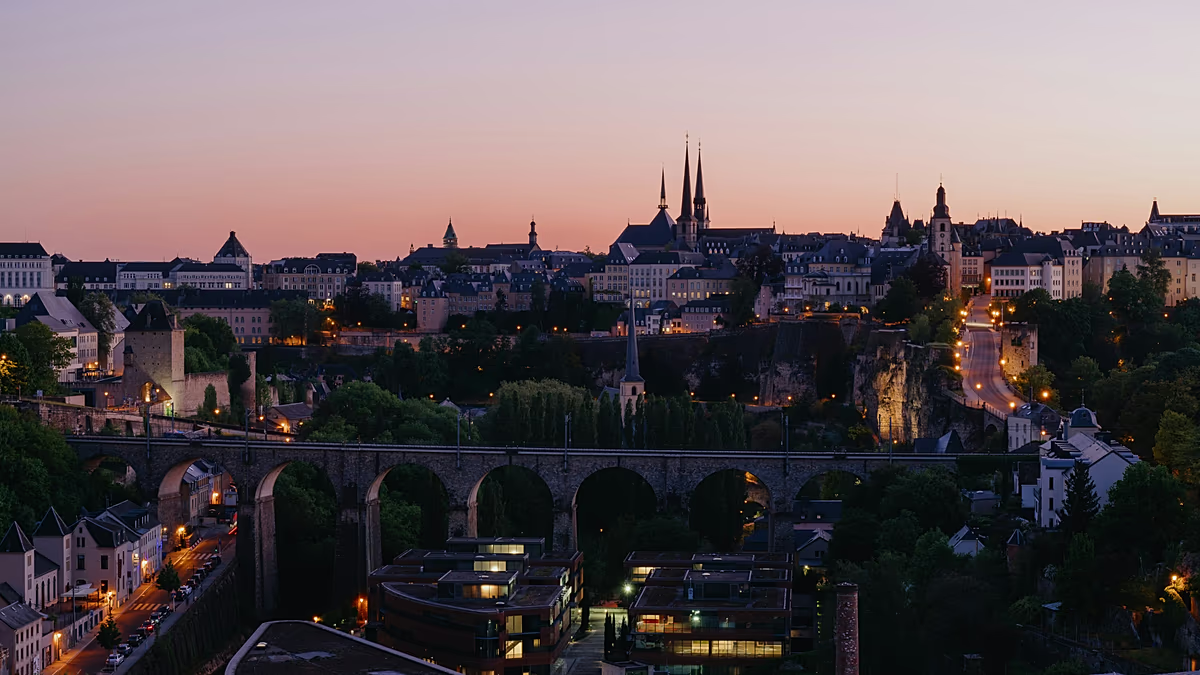
Expedia’s data for trending autumn destinations is a treasure trove for those seeking such hidden gems, revealing a top ten list that is dominated by European locales offering unique, crowd-free experiences. Taking the number one spot with a staggering 470% surge in interest from British travelers is Luxembourg. This small, prosperous nation, with a population of fewer than 700,000, is suddenly becoming a hotspot for city breaks, appealing to those who want to wander UNESCO-listed fortifications and charming old quarters without the hustle and bustle of more popular capitals. Moving into France, the pretty, canal-laced city of Strasbourg and the idyllic lakeside town of Annecy are seeing parallel booms, with search interest up by 170% and 165% respectively agenda. These locations offer the perfect autumnal backdrop, with early Christmas markets in Strasbourg and stunning fall foliage in the Alps surrounding Annecy. Italy, too, is represented with the ski resort of Cortina d’Ampezzo, which has seen a 115% increase in interest as travelers discover its beauty in the off-season, before the snow arrives, when hiking trails are quiet and the mountain air is crisp.
The remaining European entries on this trending list point decisively towards the Balkans and Eastern Europe, a region brimming with history, natural beauty, and remarkably low prices during the autumn. The Albanian coastal town of Sarandë, a gateway to ancient ruins and turquoise waters, has seen a 110% increase in searches, as travelers realize that its Mediterranean climate extends well into October. The Montenegrin town of Budva, with its medieval old town and stunning Adriatic coastline, follows closely with an 85% rise in interest. Finally, Ljubljana, the charming and green capital of Slovenia, rounds out the top ten with an 80% increase, drawing those who appreciate its fairy-tale architecture, vibrant café culture, and pedestrian-friendly center. This clear movement towards these Balkan destinations suggests a shift in traveler psychology; people are moving away from the overcrowded classics to find their own personal, undiscovered slice of Europe. It indicates that the modern traveler values authentic connection and sustainable tourism over the simple checkbox of visiting a famous landmark, and they are willing to travel to new, less-frequented countries to find it.
In conclusion, the autumn travel bargain is still readily available, but it requires a modernized approach. The days of simply booking any European flight in September and expecting a discounted rate are over; the market has matured and nuanced itself. The new calculus of the shoulder season involves steering clear of UK cities seeing a domestic boom IA and looking instead towards southern Europe and the Balkans. It’s about embracing the unexpected and venturing to places like Luxembourg or Slovenia, where the crowds haven’t convened but the cultural payoff is immense. The data suggests that the peak of value occurs in November, offering the perfect pre-winter escape. This is the time for long, scenic walks through autumnal forests, savoring hearty local cuisine in quiet trattorias, and exploring museums without the queues. The shift in traveler interest towards second-tier cities and emerging regions is a powerful testament to the changing priorities of modern tourism. It signals a move away from passive sightseeing towards active, authentic experiences飙a desire to truly live a place, even for a few days, rather than just tick it off a list. It’s about finding a connection, a story, and a memory, all within a budget. The autumn traveler is becoming a seeker of subtle landscapes, atmospheric cities wrapped in the golden and amber hues of the season, and the quiet satisfaction of having discovered a gem before the rest of the world catches on relays. The data from Expedia doesn’t just chart flight paths and price fluctuations; it maps a shift in the human desire for meaningful, sustainable travel. And in this shift, the off-season and the off-beat destination are not just where the bargains are, but where the heart of travel truly lies.