



New EU Border System Causes Major Delays for International Travelers
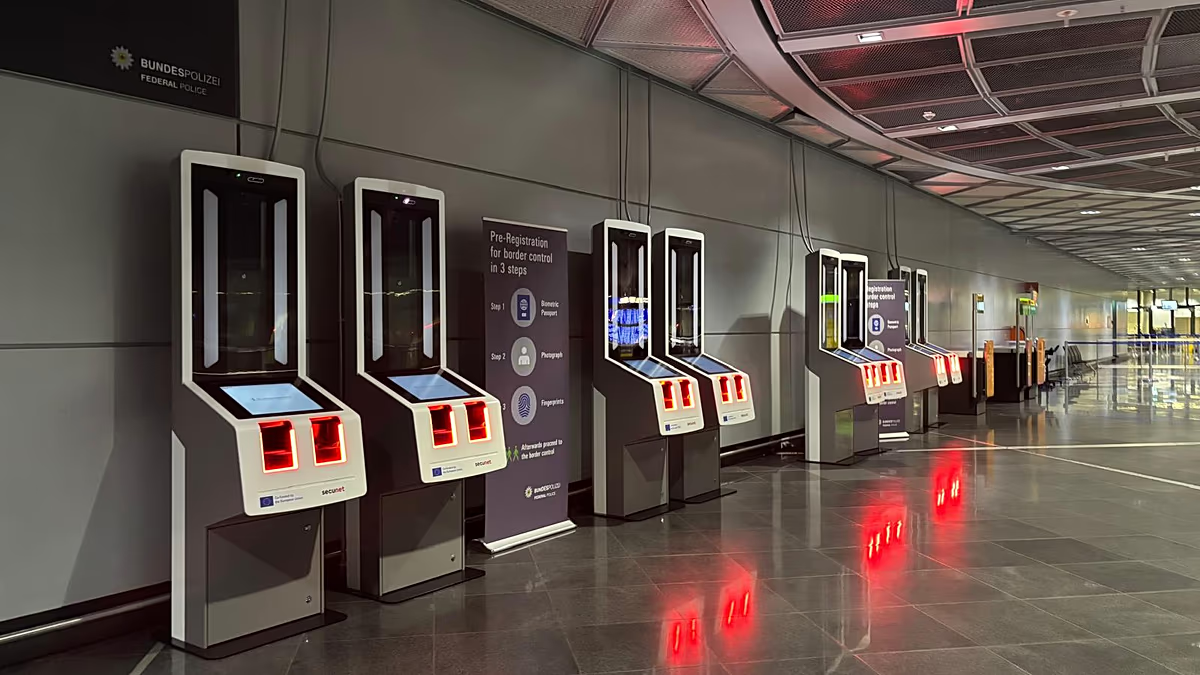
The European Union’s Entry/Exit System (EES) has begun its rollout, bringing significant challenges for non-EU travelers at Schengen border checkpoints. Introduced to modernize and strengthen border management, the system requires third-country nationals, including travelers from the UK and US, to register their biometric data at specialized kiosks. Though currently processing only 10 percent of eligible travelers, the system has already created substantial disruptions at major European airports, with some passengers experiencing waiting times of up to three hours during peak periods. This has led to missed flights and growing frustration among international visitors, prompting urgent calls for review from aviation industry representatives before the planned expansion of the system in January 2025.
According to a comprehensive report from Airport Council International (ACI) Europe, the implementation of the EES has increased border processing times by as much as 70 percent. Airports in France, Germany, Greece, Iceland, Italy, Portugal, and Spain have been particularly affected by these delays. The situation has become especially problematic during busy travel periods, creating bottlenecks at border control areas that were not designed to accommodate such extended processing times. For many travelers, this represents their first encounter with the new technology, which involves capturing fingerprints and facial images – a process that takes significantly longer than traditional passport checks, particularly for families and groups traveling together who must each complete the registration individually.
The rollout has been plagued by numerous technical and operational challenges that compound the delays. ACI Europe reports frequent system outages and persistent configuration problems with the self-service kiosks, creating unpredictable border operations that frustrate both travelers and airport staff. Another significant issue is the absence of an effective pre-registration app, which could potentially allow travelers to complete part of the process before arriving at the airport. Furthermore, chronic staff shortages among border authorities have meant insufficient numbers of border guards are available to assist with the new system, leaving many travelers to navigate the unfamiliar technology without adequate support. These combined factors have created a perfect storm of delays at affected airports.
Airport Council International Europe has raised serious concerns about the planned expansion of the system, which is set to increase the registration threshold from the current 10 percent to 35 percent of eligible travelers beginning January 9, 2025. Olivier Jankovec, Director General of ACI Europe, has warned that without resolving the existing operational issues, this escalation will “inevitably result in much more severe congestion and systemic disruption for airports and airlines.” More alarmingly, he cautioned that the situation could create “serious safety hazards” if large crowds of frustrated passengers continue to accumulate in airport terminals. With the full implementation of the EES across all Schengen borders planned for April 2026, there is growing pressure to address these problems before they affect more travelers.
The EES represents part of a broader shift in how the EU manages its external borders, with technology playing an increasingly central role. While the system aims to enhance security and replace manual passport stamping with digital records, its implementation highlights the challenges of transitioning to new border technologies at scale. Airports, which already operate under tight constraints regarding space and passenger flow, have struggled to accommodate the additional processing time required. The situation is particularly challenging for airports that serve high volumes of non-EU travelers, where the proportion of passengers requiring EES registration is significantly higher. Many industry experts are now questioning whether sufficient testing and preparation took place before the system’s public rollout.
In response to these mounting concerns, ACI Europe has called on the European Commission and Schengen Member States to consider allowing greater flexibility in the EES implementation timeline. Jankovec emphasized that if the current operational issues cannot be adequately addressed by early January, postponing the planned increase in registration thresholds may be necessary to prevent widespread travel disruption. The situation places European authorities in a difficult position, balancing security objectives with practical travel considerations. As international travel continues to recover from the pandemic, maintaining efficient border processes is crucial for supporting tourism and business travel across Europe. The coming months will be critical in determining whether the EES can be adjusted to fulfill its security mission without creating unsustainable burdens for travelers and the aviation industry.