



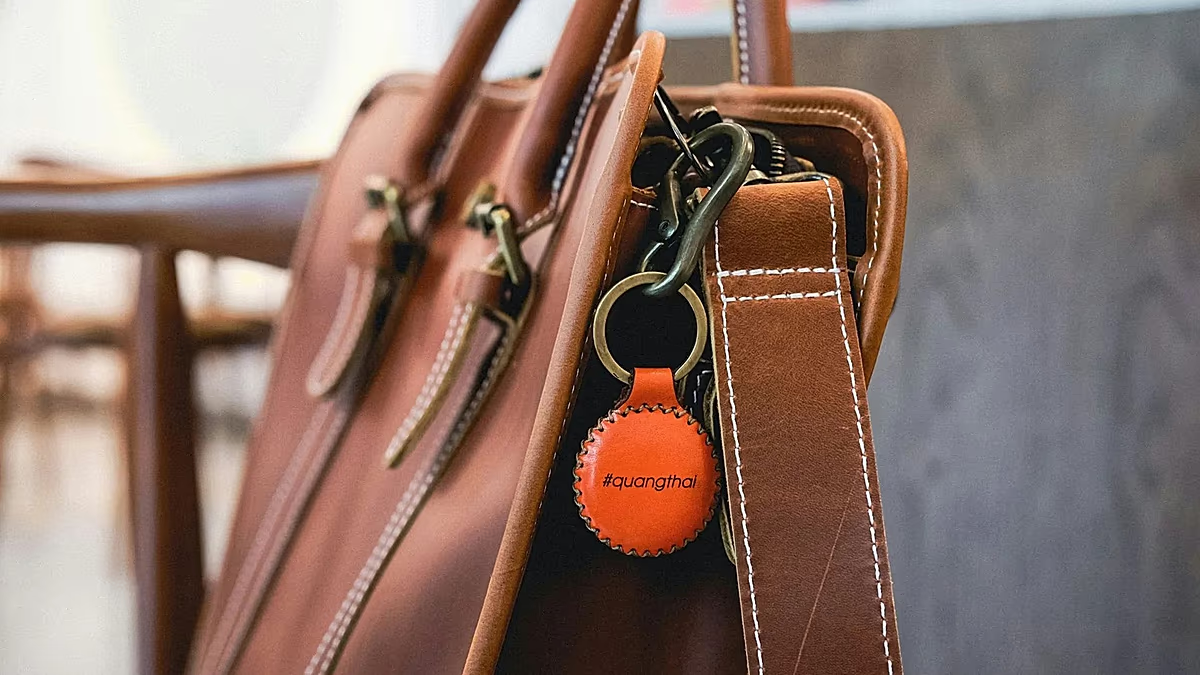
Modern travel has ushered in a new golden rule of packing: alongside the usual essentials like clothing and sunscreen, savvy globetrotters are now routinely tossing a Bluetooth tracker, such as an Apple AirTag, into their suitcases. This simple addition has revolutionized the travel experience, transforming the agonizing wait at the baggage carousel from a source of high-profile anxiety into a manageable, transparent process. Even when your suitcase fails to appear on the conveyor belt, knowing its exact location offers an invaluable sense of control and comfort, replacing blind panic with actionable data.
This shift in passenger habits is delivering concrete results, according to the latest 2026 Baggage IT Insights report by SITA. Utilizing data from WorldTracer—a massive baggage tracking system used by 500 airlines and 2,800 airports globally—the report reveals a dramatic reduction in lost luggage. Specifically, when suitcases are equipped with an Apple AirTag or a compatible Find My accessory, the likelihood of them being permanently lost plummets by a staggering 90%. While the vast majority of misplaced bags are eventually found, these tiny tracking devices have effectively eliminated the nightmare of a bag vanishing forever.
Furthermore, integrating these tracking devices with airline recovery systems has greatly accelerated the reunion process. Carriers that utilize Apple’s Find My technology and “Share Item Location” features through WorldTracer have slashed the recovery time for delayed luggage by 26%. Instead of navigating endless bureaucratic phone calls, passengers can instantly share their bag’s precise location with airline staff. This synergy between personal consumer tech and airport infrastructure has streamlined the recovery process, turning what used to be a multi-day ordeal into a swift, coordinated operation.
This technological evolution is part of a broader, highly positive trend in global aviation. In 2025, overall baggage mishandling rates dropped by 23%, and the total volume of mishandled bags fell by 19%. This marks the lowest number of baggage mishaps in industry history, excluding the anomalous, low-traffic years of the pandemic. While the industry still saw 24 million bags mishandled in 2025—averaging out to about 4.9 bags per 1,000 passengers—the steady decline proves that smarter tracking and airline system integrations are successfully tackling a decades-old headache.
To understand why bags still go astray, it helps to look at where the system breaks down. According to the data, the journey is most fragile during layovers, with transfer baggage mishaps accounting for 39% of all delayed luggage. Other culprits include ticketing errors, passenger bag-switching, and security issues at 18%, followed closely by a flat-out failure to load bags onto the aircraft at 16%. External factors like customs, weather, weight restrictions, and airport logistics make up 11% of delays, while loading mistakes (8%), tagging errors (4%), and arrival station mix-ups (4%) round out the rest.
Ultimately, the combination of smarter industrial systems and personal tracking tech is reshaping the relationship between travelers and their belongings. By taking matters into their own hands with inexpensive trackers, passengers are not only reducing their own travel anxiety but are actively helping airlines streamline their operations. As these systems continue to integrate and improve, the dread of the empty luggage carousel may soon become a relic of the past, ushering in an era of unprecedented peace of mind for passengers worldwide.