


Navigating Travel Strikes and Disruptions This Holiday Season
As we approach the New Year, travelers across Europe are facing a familiar challenge: strikes and disruptions during one of the busiest travel periods of the year. From Spain to Italy, worker walkouts are impacting airports and train services as employees fight for better pay and working conditions. These disruptions have become an unfortunate hallmark of the holiday season, requiring travelers to stay informed and prepared. The strikes come at a particularly challenging time, with many people trying to return home to celebrate with family or embarking on winter holidays. Adding to these complications is the rollout of new EU border procedures that are causing additional delays for international travelers. This overview will help you navigate the current and upcoming travel disruptions, understand your rights if affected, and plan accordingly to minimize stress and inconvenience during your holiday travels.
In Spain, ongoing strikes by Azul Handling staff, Ryanair’s ground handling partner, have been causing disruptions since summer and will continue until December 31st. These walkouts are occurring at multiple times throughout the day on Wednesdays, Fridays, Saturdays, and Sundays at twelve major Spanish airports including Barcelona-El Prat, Madrid-Barajas, and popular tourist destinations like Malaga and Tenerife South. Passengers should prepare for longer queues during check-in and luggage collection. Additionally, Madrid-Barajas airport faces separate ground handling strikes on December 30th and on January 2nd and 7th, primarily affecting IAG-owned airlines including British Airways, Iberia, and Vueling. These actions stem from workers’ demands for improved working conditions, better bonuses, and greater job stability. Airlines are contacting affected passengers about rebooking options or refunds, and those who booked through travel agencies are advised to contact their agents directly for assistance.
The New Year will bring further travel disruptions across several European countries. In France, easyJet cabin crew have planned a walkout on January 1st that will impact flights operating from Paris, Nice, Bordeaux, Lyon, and Nantes airports, with crews citing concerns over working conditions and operational problems. Portugal faces ground handler strikes by SPdH/Menzies workers on December 31st and January 1st, though Portugal’s arbitration court has mandated that minimum services must be maintained, including emergency services and certain connections to autonomous regions. This offers some relief, but travelers should still anticipate disruptions and potential last-minute changes to flight schedules. These coordinated actions demonstrate how workers across different countries are using the leverage of holiday travel demand to highlight their grievances and push for improvements in their employment terms.
Italy’s travelers face a series of strikes throughout January following earlier walkouts in December. On January 9th, the CUB Transporti union, representing ground staff across Italian airports, has called for a four-hour strike from 1-5 pm, which could result in flight delays and cancellations nationwide. Coinciding with this, Swissport Italia ground handling staff at Milan Linate airport plan a full 24-hour walkout on the same day. Later in the month, on January 31st, ENAV air traffic control staff at Verona airport will strike, potentially disrupting all flights to and from this popular northern Italian destination. Italy’s civil aviation authority (ENAC) publishes a list of guaranteed flights that will operate despite the strikes, providing some predictability for travelers with firm commitments. These rolling disruptions highlight the ongoing labor tensions in Italy’s aviation sector and the challenge of maintaining reliable transportation services during periods of industrial action.
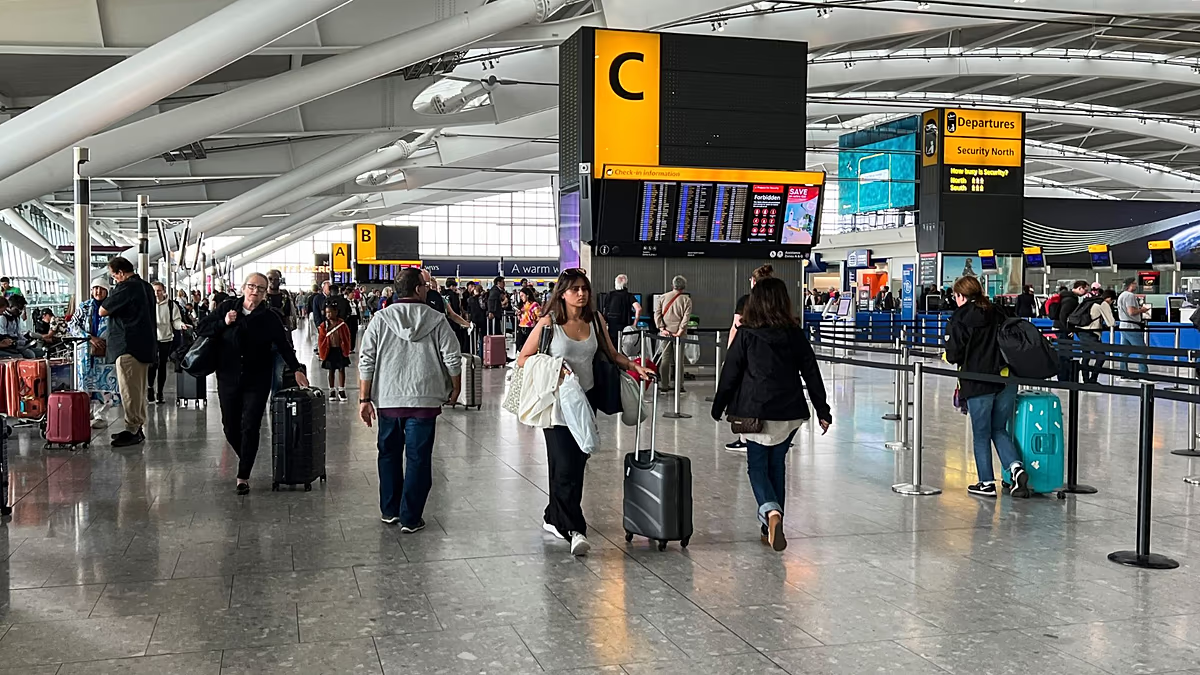
Beyond strikes, travelers entering the Schengen Zone are encountering a new source of delays with the implementation of the EU’s Entry/Exit System (EES). This new border control system requires non-EU nationals, including travelers from the UK and US, to register their biometric data at dedicated kiosks when entering Schengen countries. The rollout has created significant bottlenecks at many European airports, with passengers reporting extended wait times as people navigate the new procedures. According to Airport Council International Europe, waiting times at the most affected airports in France, Germany, Greece, Iceland, Italy, Portugal, and Spain can stretch up to three hours. These delays have proven so severe in some cases that passengers have missed their flights entirely. The combination of these new border procedures with the strike actions creates a perfect storm of travel disruption, particularly challenging for international visitors unfamiliar with the new systems.
If your travel plans are affected by strikes or delays, it’s important to understand your rights as a passenger. Under EU regulations, if your flight is cancelled, you’re entitled to either a full refund, a return flight to your departure point, or rebooking on an alternative flight. Depending on the circumstances, you may also be eligible for compensation. For train cancellations, similar protections typically apply. Planning ahead is crucial: check your travel provider’s website regularly for updates, consider downloading their app for real-time notifications, and arrive at airports earlier than usual to account for potential delays. Building flexibility into your itinerary, considering travel insurance that covers strike action, and having backup plans can significantly reduce stress if disruptions occur. While these strikes and new border procedures present challenges, being informed and prepared can help you navigate the complexities of holiday travel and hopefully reach your destination with minimal frustration. Remember that these workers are often striking over legitimate concerns about their working conditions, even as the timing creates inconvenience for travelers.