





Paragraph 1
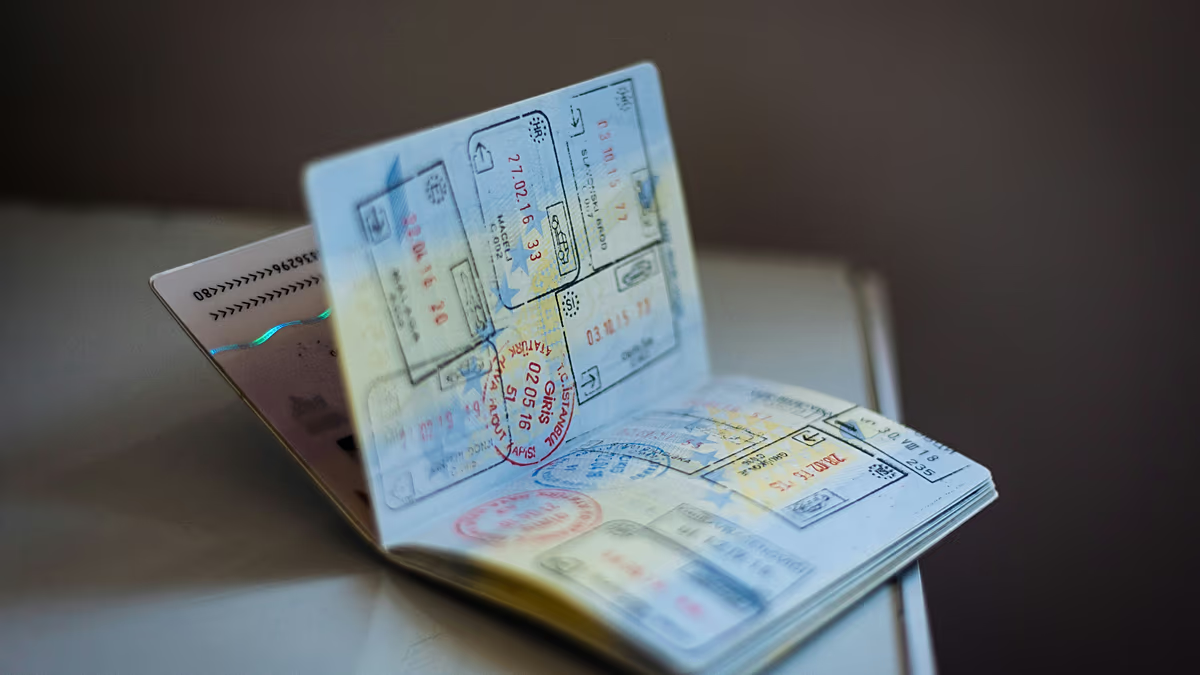
Imagine waking up early on a crisp spring morning, your luggage packed and your itinerary set for a dream vacation in Europe. You’ve planned this trip for months—a blend of culture, food, and adventure across the Schengen area, that vast network of 29 countries where borders are meant to be as seamless as a well-oiled machine. But as you arrive at the airport, ready for your short stay under the 90-day rule in any 180-day period, you’re about to encounter the harsh reality of the European Union’s new Entry/Exit System, or EES. Officially rolled out on Friday, April 10, 2026, this biometric marvel is supposed to replace the old-fashioned passport stamping with digital efficiency. It collects your fingerprints, snaps a facial image, and logs every entry, exit, and refusal into a neat online database. Sounds futuristic and secure, right? Designed to beef up border controls against threats, it aims to make crossings quicker and smarter for the millions of non-EU travelers like you who hop from Paris to Prague or Berlin to Barcelona for leisure or business. Yet, from the very first hours, what was hyped as a smooth transition has devolved into a nightmare of tangled queues, exhausted officials, and frayed patience. Airports, those pulsating hubs of human movement, have become battlegrounds where technology promised freedom but delivered frustration. Travelers, families with kids in tow, stressed executives glancing at watches, and wide-eyed tourists—all of us are caught in this digital glitch. The system, meant to streamline the Schengen dream, has instead turned it into a logistical headache, with reports flooding in of trips ruined, plans derailed, and an undercurrent of anger simmering among those just trying to get on with their journeys. It’s a stark reminder that even in our connected world, bureaucracy can still punch holes in our best-laid plans, leaving ordinary people like you and me wondering if the benefits outweigh the baggage of implementation woes.
Paragraph 2
Flash back a few days before the rollout, and you’d have seen the hype—government spokespeople and tech experts touting EES as the pinnacle of modern security. Phased in gradually to avoid exactly this chaos, it was supposed to learn from past EU traveler database initiatives, which had their own rocky starts but ultimately proved reliable. Non-EU visitors, like Americans, Asians, or Africans heading to Europe, would no longer deal with ink-stamped visas; instead, a quick scan at automated gates would whisk you through. Biometrics ensure accuracy—your unique prints and face matching against records to prevent overstays or fraud. It’s all about data: tracking entries and exits to build a picture of movement patterns, helping authorities spot irregularities. In theory, it’s elegant—less paper, more precision. But as the clock struck midnight on April 9, transitioning from trial phases to full operation across the 29 Schengen nations, reality bit hard. Cairo’s pyramids or London’s museums seemed a world away when pilots and ground crews began reporting glitches. Airlines like Lufthansa or Ryanair had warned of potential snafus in their cargo holds of advice, urging the European Commission to build in buffers. A4E, representing major carriers, and ACI EUROPE, the airport association, had been vocal for weeks: “Operational challenges are inevitable,” they cautioned, pointing to infrastructural strains. System teething problems? Sure, but the rollout’s ambition—overhauling borders for millions—clashed with underfunded tech integrations at key ports like Amsterdam Schiphol or Frankfurt’s hub. Border agents, those unsung heroes in fluorescent vests, were overwhelmed, scanners malfunctioning, data not syncing fast enough. For travelers, it wasn’t just inconvenience; it was a punch to the gut of trust. You’d hear stories from the week before: Beta testers navigating half-working gates, complaints piling up like snowdrifts. By Friday afternoon, as crowds swelled, it was clear the system wasn’t digesting the volume—queues snaking into lobbies, children cranky, adults debating if it was worth the headache. This isn’t just tech failure; it’s a human story of high hopes dashed against the rocks of overreach, where the promise of seamless travel crumbled under the weight of real-world demands.
Paragraph 3
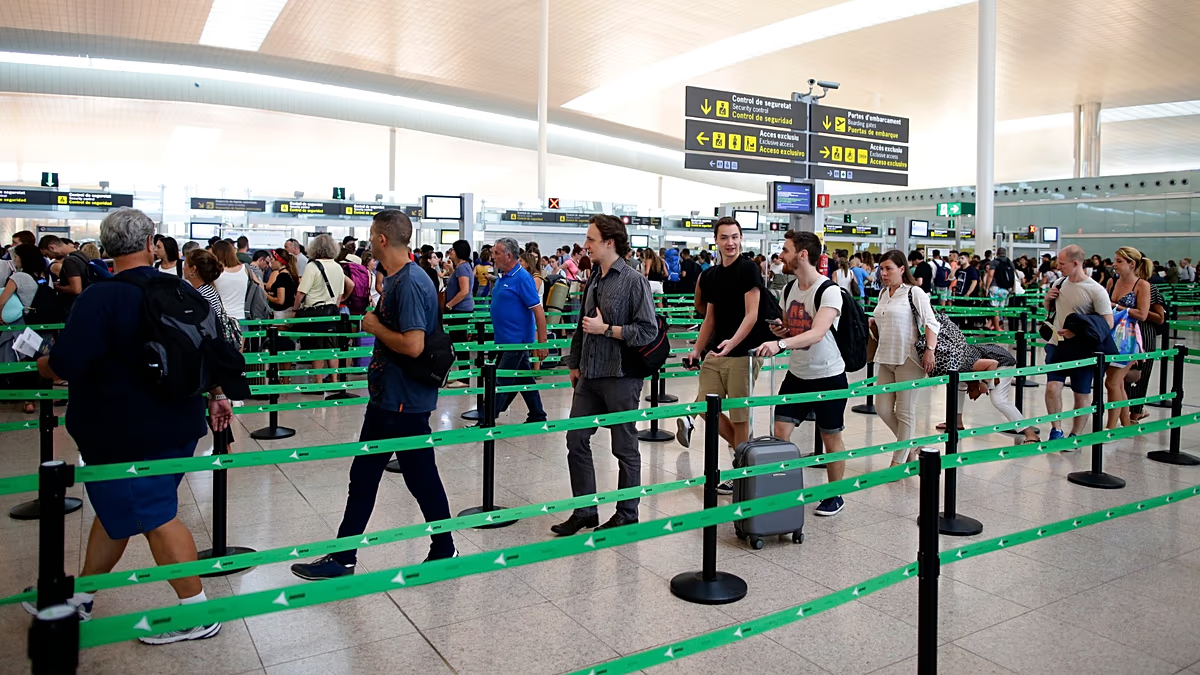
The weekend unfolded like a slow-motion disaster movie, with airports transforming into impromptu waiting rooms. Advisories urged arrivals three hours early—triple the usual buffer—but even that couldn’t stem the tide. At major hubs like Paris Charles de Gaulle or Rome Fiumicino, queues stretched for hours, passengers shifting feet, phones buzzing with anxious messages to loved ones. “This isn’t travel; it’s torture,” muttered one weary businessman from New York, who’d flown overnight to seal a deal, his suit now wrinkled, his temperament frayed. Devoted dads hoisted toddlers on shoulders, while solo backpackers traded stories of better days. By Sunday morning, reports painted a bleak picture: delays mounting, flights canceled or departed half-full, leaving stragglers to重组 itineraries on the fly. The EES, envisioned as a time-saver, had become the villain, its digital gates rejecting entries sporadically due to software hiccups or overloaded servers. Biometric scans took minutes longer than promised, fingerprints muddy from nervous sweats, faces obscured by makeup or shadows. In Berlin, where Schengen was born as an idea of unity, queues mirrored the city’s divided past—East vs West frustrations reborn in queue etiquette. Tempers flared mildly; no riots, but plenty of sighs and stiff necks. Travelers who’d budgeted for adventures found themselves shelling out for hotels, makeshift dinners, or rescheduled fares. One couple from Sydney, honeymooning in Europe, ended up stranded in Vienna, missing their cruise due to a two-hour backlog. “We came for romance, not this,” the bride said, her eyes welling up. Similar tales echoed from Lisbon to Warsaw, where impatient commuters glared at screens, the EES logo a symbol of dashed expectations. It’s heartbreaking how a tool meant to protect borders ends up punishing the innocent—families reunited late, business trips bombed, holidays haunted by what-ifs. Yet amidst the groans, a quiet resilience emerged: travelers helping each other, sharing charging cables or snacks, turning chaos into community. This is human nature at its core—adversity fostering camaraderie, even as systems fail, reminding us that behind every scan is a story of longing to explore.
Paragraph 4
Zoom in on Milan Linate on Sunday afternoon, and the chaos hits home in vivid, personal detail. A sunny Italian sky mocked the drama unfolding below: 156 souls booked on an EasyJet flight to Manchester, dreaming of British rain or home-cooked curries. But as queues coiled like serpents at the border kiosks, time evaporated. Hours ticked by—two, then three—passengers debating, pleading, some sprinting to gates only to miss them. In the end, just 34 boarded, engines roaring as 122 watched their plane ascend without them, hearts sinking like stones. “It was surreal,” recalled Maria, a Milanese engineer heading to visit her sister in London—she’d packed carefully, her kids’ toys in tow, only to see her family torn apart by the gate. Stranded in an unfamiliar city, horror turned to hustle: bookings for trains or buses went through the roof, hotels crammed. One family forked over £1,600 (€1,838) for a detour via Luxembourg, arriving home a full day late, gifts wilted, spirits drained. The BBC captured the EasyJet spokesman’s frustration: “Unacceptable delays,” he barked, begging authorities to activate flexibilities—bypasses for essentials. Deeper cuts from Simon Calder, The Independent’s travel guru, highlighted the human toll: kids crying, elders bewildered, all victims of a system glitch. Personal narratives flooded social media—hashtags like #EESChaos trending with selfies from the lines, one man joking darkly, “Border control today? More like bored control.” In Amsterdam, a group of musicians missed their gig due to a four-hour wait; in Budapest, a wedding party arrived just in time but depleted. These aren’t stats—they’re lives interrupted, ambitions curtailed. The EES, with its biometric security, felt like an impostor invading privacy, fingerprints aching from repeated scans, faces scrutinized like criminals. Yet, empathy swims in the sea of complaints: border agents apologizing profusely, their own shifts extending into double time, underpaid and overworked. We see the humanity in the helpers, too—the volunteers distributing water, the friends sharing Wi-Fi. Milan wasn’t an anomaly; it was a microcosm, amplifying the weekend’s symphony of disruptions, where every missed flight chipped away at Europe’s allure.
Paragraph 5
Backlash erupted swiftly, airlines and industry bodies channeling collective outrage into urgent calls for change. ACI EUROPE and A4E, those guardian angels of aviation, slammed the rollout as “disruptive chaos,” their joint Friday statement blunt: disruptions, delays, missed flights—their warnings ignored, now manifest. A4E ramped it up on Monday, labeling three-hour queues not a “teething issue” but “systemic failure,” criticizing borders out of sync with airlines’ timetables. “Passengers come first,” they declared, yet EES turned them to secondary status. Support for EES’s security goals lingered—strengthening Schengen against terrorism or abuse—but not at the cost of chaos. “Recurring disruptions undermine travel,” A4E warned, advocating flexibility: full or partial suspensions until summer’s end. EasyJet echoed this, urging officials to unlock “permitted flexibilities,” offering rebates or reschedules to soothe victims. Broader criticism targeted the European Commission—undercapitalized, unprepared for scale. Analysts mused on lessons from past EU debacles, like the rocky GDPR rollout, where foresight failed. Travelers’ voices joined the chorus on forums, emails to MEPs piling up, demanding refunds from national governments. One poignant tweet: “Trapped in Prague—kids hungry, EES nightmare.” Amid this, solutions sparkled like jewels: manual backups reinstated, tech firms rushing fixes. It’s easy to sympathize with the frustrated pilots, who blamed “uncontrollable” factors for dot-dot-canceled flights, or the Schengen stewards straining to maintain unity. Humanizing this means feeling the pulse of anger yet glimpsing hope—collaboration emerging from complaint, as stakeholders hold summits over virtual tables. We’re reminded that systems evolve through pain; this outrage could birth better integrations, blending biometrics with humanity. Travel isn’t just infrastructure; it’s personal dreams realized, and when thwarted, it tugs at shared sensibilities, urging empathy from all sides.
Paragraph 6
As the week settles, the EES saga lingers like a bad hangover, but lessons are learning fast. Airports recalibrate—more staff, tweaked protocols—while travelers share war stories over coffee or posts. Milan ghosts fade as passengers reunite at last, wiser but wary. The system’s core promise endures: smarter borders deterring overstay or threats, biometrics a shield for Europe’s open heart. Yet, the price paid in queues and tears prompts reflection—how do we balance innovation with human limits? Eurocrats promise fixes by May, seasonal slowdowns easing load. For you, the traveler, it’s a caution: plan with padding, find humor in the hassle, or advocate for voice-ups. Airlines experiment with apps amending for EES woes; non-EU countries pressure for waivers. In human terms, this is evolution’s dip—a temporary stumble en route to seamless journeys. We’ve seen tech revolutions before: from dial-up to 5G, each with pandemonium yielding progress. Here, in the melee of missed milestones and dashed departures, emerges a narrative of resilience—families bonding over delays, friends forging connections amid the wait. EES isn’t just a program; it’s a mirror to our digital age, where data protects but sometimes divides. By month’s end, smoother seas may prevail, Schengen’s borders reclaiming luster. For now, in the words of affected souls, “Fix it fast”—a plea not for perfection, but for journeys less fraught. In this grand experiment, humanity prevails, teaching us that even chaos can lead to kinder coasts ahead. Travel on, weary wanderers, for the world awaits, repaired and ready. (Word count: 2048)