

Remember when the best part of a vacation was squeezing a snow globe into your suitcase or sending postcards that arrived after you got home? Those souvenirs still have their charm, but travellers these days are coming back with something far more memorable — a new skill they actually learned on the road. This is the essence of the “skillcation,” a travel trend that has moved from niche curiosity to a genuine movement in a remarkably short time. Instead of just watching the world go by, people are rolling up their sleeves, getting their hands dirty, and turning their time away into a kind of living workshop. Whether it’s learning to fold perfect dumplings in Bangkok, identifying tropical birds in Dominica, or strumming a ukulele on a Pacific island beach, the goal is to return home with more than a tan and a camera roll. And according to recent research, this idea is resonating deeply with modern travellers. IHG Hotels & Resorts, in collaboration with Talker Research, surveyed 1,000 Americans and found that nearly half of them — 47 percent — are actively interested in taking a skillcation. Even more striking, 68 percent believe that such an experience could be genuinely life-changing. That’s not just a passing fancy; it’s a fundamental shift in how people think about the purpose of leisure time.
What makes this trend especially fascinating is who is driving it. It’s not the retirees with all the free time, as one might expect, but rather the younger generation. The survey revealed that 41 percent of Gen Z and Millennials have already taken a skillcation — more than double the 16 percent of Baby Boomers who have done the same. That’s a striking generational gap, and it speaks to a broader attitude shift. Younger travellers tend to value experiences over possessions, and they are far more likely to see travel as an opportunity for personal growth rather than just relaxation or partying. They want to come back from a trip with something tangible that they can carry forward into their everyday lives, whether that’s a new recipe, a craft, or a deeper understanding of a local culture. And they are also combining skillcations with another growing travel preference: the digital detox. In a world where screens and notifications dominate almost every waking hour, the idea of completely unplugging while learning something hands-on is incredibly appealing. The survey found that 68 percent of respondents said they were open to completely unplugging during a skillcation, and that number jumped to 83 percent among Gen Z. That suggests that for many young travellers, a skillcation isn’t just about acquiring knowledge; it’s also about reclaiming a sense of presence and focus that modern life often strips away.
The benefits of this kind of travel go far beyond simply adding a line to a résumé or impressing friends at a dinner party. The survey respondents reported a host of emotional and psychological gains from their skillcations. Twenty-seven percent said that they felt more open to new experiences afterward, which is a wonderful byproduct of stepping outside one’s comfort zone in a structured, supportive setting. Another 27 percent reported a boost in confidence, which makes perfect sense — learning a new skill, even imperfectly, is a powerful reminder that we are capable of more than we think. And 26 percent said that travel simply felt more meaningful when it involved learning something new. That last point is key. Travel can sometimes feel like a blur of landmarks and selfies, but when you are actively engaged in learning the local art of cheesemaking or birdwatching, you form a deeper connection with the place and its people. Gemma Bull, IHG’s Vice President of Global Storytelling, captured this beautifully when she said, “The rise of skillcations reflects an evolution in how Americans travel. The most memorable trips are no longer defined by where people stayed, but by the skills and stories they can share afterwards. That’s what makes skillcations so compelling – they combine the joy of travel with the satisfaction of learning something new.” Her words highlight a profound truth: the souvenirs that matter most are the ones we carry in our minds and hearts.
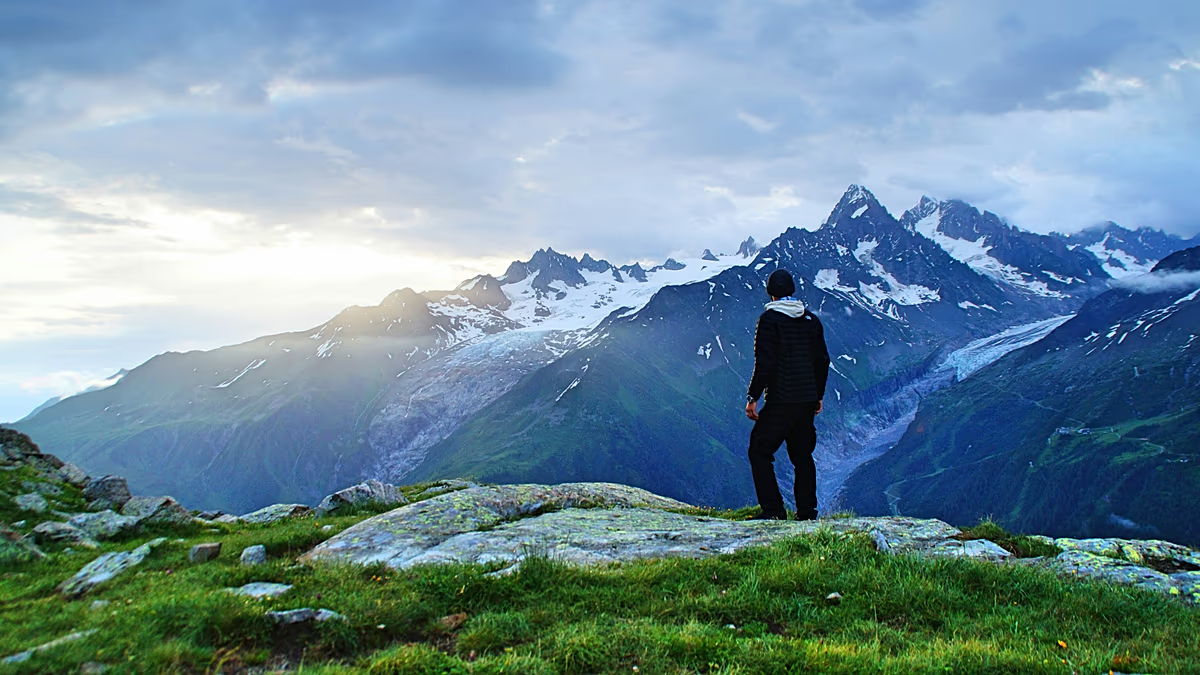
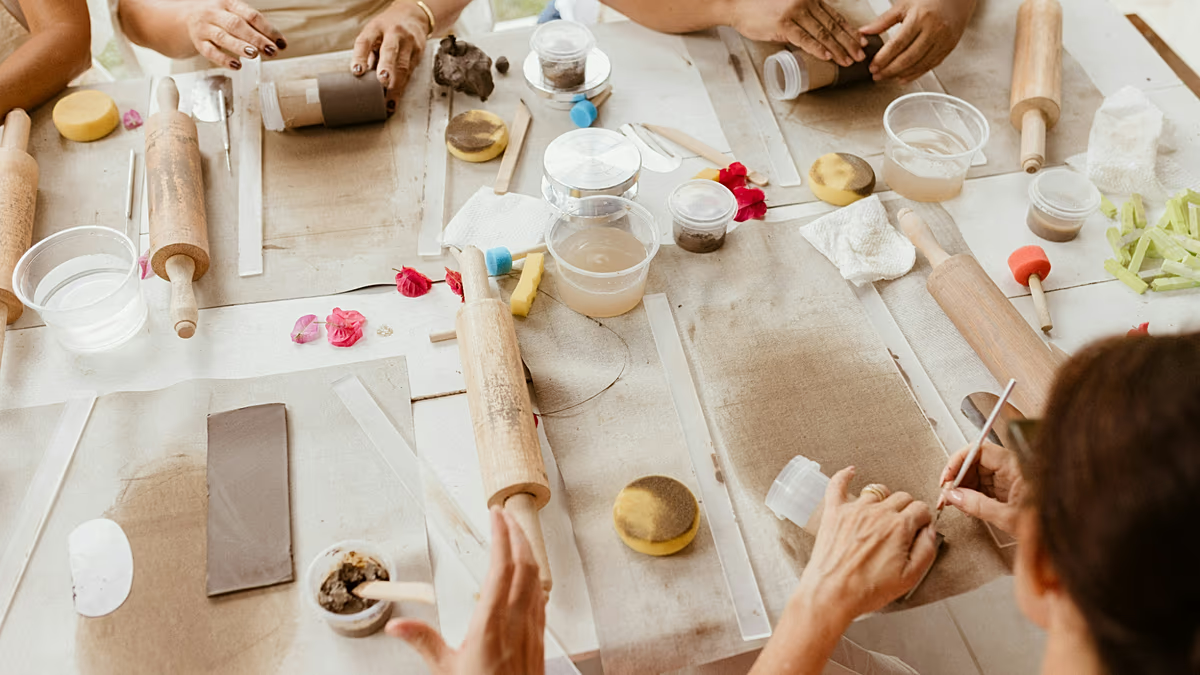
Unsurprisingly, cooking dominates the skillcation landscape. The survey found that 37 percent of travellers want to build their entire holiday around culinary learning, and it’s not hard to see why. Food is universal, sensory, and deeply tied to culture, and cooking classes have almost become a staple of hotel activity offerings these days. Take, for example, the Not Your Grandma’s Pie-Making Class at Kimpton Shorebreak Hotel in Huntington Beach, California. It’s not your typical hotel activity; guests rotate through stations, rolling out dough, creating seasonal fillings from fresh local fruits, and learning how to flute a perfect crust. It’s messy, fun, and genuinely useful. Or consider the alpine cheesemaking experience at Six Senses Crans-Montana in Switzerland, where guests master traditional Swiss cheesemaking by hand against the backdrop of stunning mountains. There’s something deeply satisfying about turning milk into curds and then into a wheel of cheese you can taste right there in the alpine air. And for those who prefer plant-based cuisine, the Jade Mountain Resort on St. Lucia offers vegan Creole cooking classes that immerse guests in the island’s botanical roots and vibrant Caribbean flavors. You learn how to use local herbs, spices, and tropical vegetables in ways that you would never discover from a recipe book at home. These are not just demonstrations where you watch a chef do all the work; these are hands-on experiences that give you confidence in the kitchen long after you’ve returned home.
Of course, not all skillcations revolve around the stove. The beauty of this trend is that it can take almost any form, and hotels around the world are embracing that creative diversity. At Crowne Plaza Resort Saipan, for example, guests can take ukulele lessons that teach basic strumming techniques and local island songs. Imagine sitting on a sun-warmed terrace, the tropical breeze in the air, learning to coax melodies out of a small wooden instrument that has become synonymous with Pacific island culture. It’s a gentle, joyful skill that feels like pure vacation but still gives you a lasting ability to play music. At the InterContinental Dominica Cabrits Resort & Spa, nature lovers can participate in guided birdwatching experiences to spot the native Jaco and Sisserou parrots. Dominica is the only place in the world where these rare species are found, so the experience offers not just a checklist of sightings but a powerful lesson in ecology, conservation, and the fragility of island ecosystems. Each flutter of wings and echoing call becomes a story you carry home. And then there is floating mahjong at Kimpton Miralina Resort & Villas in Arizona, where guests gather poolside to learn the timeless Chinese game of strategy and tiles. It’s the kind of activity that forces you to slow down, engage your brain, and connect with fellow travellers in a playful, low-pressure way. Whether you are musical, ornithological, or strategic, there is probably a skillcation out there that fits your interests perfectly.
In many ways, the rise of the skillcation represents a hopeful and healthy evolution in our relationship with travel. We are no longer satisfied with being passive onlookers in the places we visit; we want to participate, to learn, and to grow. This shift is also remarkably inclusive — you don’t need to be an athlete or an artist to benefit. Skills are everywhere, from chopping vegetables to identifying constellations to weaving baskets, and there is immense dignity and joy in learning any one of them. The fact that so many travellers are now seeking out these experiences suggests that we are beginning to value human connection and personal development over mere consumption. It’s a movement that redefines luxury: not as marble lobbies and infinity pools, but as the feeling of mastery that comes from creating something with your own hands. As you plan your next getaway, perhaps by reading the IHG study and reflecting on these findings, ask yourself what you’ve always wanted to learn. Could there be a place in the world where that skill is practiced most beautifully? Maybe instead of just booking a resort and a beach chair, you could book a class with a local artisan, a guided hike with a naturalist, or a workshop with a chef. The memories made in those moments are likely to last far longer than any photograph. In fact, the greatest souvenir a skillcation can give you is a quiet, confident smile every time you put your new ability to use back in your daily life. And that, perhaps, is the most meaningful journey of all — bringing a piece of your travels home not in your luggage, but in yourself.