


Route 66, that legendary ribbon of asphalt unfurling 3,940 kilometers from the bustling heart of Chicago to the sun-kissed sands of Santa Monica, is blowing out its 100th candle this year. Picture this: it’s not just a road; it’s the “Mother Road,” as John Steinbeck dubbed it in his Dust Bowl tales, a lifeline that once carried weary migrants escaping the choking dust of the 1930s. Now, in our speed-obsessed world of interstates, Route 66 beckons with its slow burn—glowing neon signs whispering promises of yesteryear, retro diners where the aroma of fresh coffee mingles with the hum of fryers, and motels that time forgot, their facades lovingly restored. I’ve always dreamed of hitting the road like this, leaving behind traffic jams and timetables for a journey that feels like stepping into a living history book. Each twist and turn reveals the soul of America: the hardworking folks who built it, the cultures that shaped it, and that delicious pull of nostalgia, where a simple stop at a roadside stand can transport you back to an era of simpler pleasures. In Chicago, where it all began, the air hums with ambition—once the gateway via railroad and river, it was the perfect launchpad for Cyrus Avery, the “Father of Route 66.” Avery, an Oklahoma transplant with a board seat on the federal highway commission, picked the number 66 for its catchy ring, easy to market and unforgettable. As you ease out of the Windy City, the pull starts right away with food that’s as much a reason to pause as the scenery: think homemade pies that melt in your mouth, shakes so thick they defy gravity, cheeseburgers piled high, or fried treats that crunch just right. Springfield, Illinois, is where the Cozy Dog Drive In stands like a time capsule, its breaded hot dogs on sticks a sneaky invention by Ed Waldmire, who realized these were perfect for grabbing and holding while driving. His grandson, Josh Waldmire, now a third-generation keeper of the flame, guards the secret recipe with a wink and a smile. Imagine biting into one, mustard dripping, as you chat with locals who swear it’s the best road food ever made. It’s places like this that make Route 66 not just a drive, but a sensory feast—sights of vintage cars gleaming under neon, smells of grill and grease, sounds of laughter echoing from booths where generations have shared stories over meals. And as the route snakes westward, it invites you to slow down, to savor the unexpected, to feel the rhythm of this Mother Road pulsing under your tires, reminding us that sometimes the best paths aren’t the fastest ones.
Venturing into Missouri, Route 66 throws its first real curveball, one that’ll have you grinning at its eccentricity. Near St. Louis, the Chain of Rocks Bridge arches over the mighty Mississippi like a whimsical afterthought, its 1.6-kilometer length sagging 18 meters above the river, not in a straight, efficient line but with a mid-span kink that’s baffled engineers for decades. It was built for an era of horse carts and early cars, but when interstates came calling with their sleek, high-speed bridges, this one got left behind—spared demolition thanks to a lousy resale market, now reborn for walkers and cyclists. Crossing it feels defiant, like thumbing your nose at progress as the wind whips your face and the water roars below. Then, in St. Robert, there’s Route 66 Neon Park, a median tucked away like a hidden treasure chest. Here, orphaned signs once blazing from motels, cafes, and gas stations find new life—handcrafted neon art that pays homage to local culture. You can touch them, imagine the stories they told about family-owned spots now long gone. And Kansas? Well, it’s a short but mighty detour into the Sunflower State, where Galena’s Kan-O-Tex Service Station stands testament to resilience. This gas station, with its weathered pumps and vacant lot, was the spark for Pixar’s Cars—director John Lasseter and his team road-tripped here, drawing inspiration from the boom truck that became Tow Mater, and the fading towns like fictional Radiator Springs, echoing real places bypassed by the interstate’s shadow. It’s bittersweet; you can almost hear the echoes of bustling service bays and honking horns. Then there’s the Brush Creek Bridge, or Rainbow Bridge, its concrete arches a feat by engineer James Barney Marsh, listed on the National Register for its graceful form—one of the few left from that era. Walking its path, you can’t help but reflect on the marriages, riots, and quiet moments bridges have witnessed. Add it all up, and Missouri to Kansas is Route 66’s playful middle act, where quirks and quiet stories merge into something deeply human—the bridges as metaphors for life’s detours, the signs as relics of community spirit, urging you to linger, to connect, to remember that highways aren’t just about getting somewhere; they’re about the journeys stitched between the miles.
Oklahoma, with its wide-open plains and winding roads, injects a dose of American grit and resilience into the Route 66 tapestry, reminding you that this journey wasn’t always smooth sailing. For many travelers, especially Black motorists braving the Jim Crow South, it was fraught with danger—segregation loomed at every stop, casting shadows on what should have been a simple drive. Enter The Green Book, Victor Hugo Green’s lifeline of a guide since 1936, a pocket atlas listing safe havens for Black folks: hotels, restaurants, gas stations where they’d be welcomed without hostility. Near Luther, the Threatt Filling Station stands as a shining example—a place not just for fuel, but for barbecue slow-cooked to perfection, baseball games under the sun, and community gatherings. Owned and run by Black entrepreneurs, it was the only gas station of its kind on the entire route, now honored on the National Register for its role in history. It’s humbling to stand there, imagining families refueling not just cars but hopes. And then, in Sapulpa near Tulsa, the Tee Pee Drive-In Theater rises phoenix-like from the ashes, a 1950s time warp reopened in 2023 after decades of dormancy. Built in 1949 and kicking off with John Wayne’s Tycoon, it survived tornadoes that tore through the screen, fires that gutted the concession stand, and break-ins that left it shuttered—yet here it is, with paved pathways (a rarity then) and a buzz of excitement. Picture kicking back in your car, popcorn bucket in hand, as a double feature rolls—it’s a communal ritual that feels intimate, nostalgic, alive. Oklahoma’s stops aren’t just markers; they’re narratives of struggle, survival, and joy, humanized by the faces that kept them going. You leave feeling lighter, more connected, as if the road itself is whispering, “You’ve braved the thorns; now enjoy the bloom.”
Texas hits like a rodeo kick—bold, unapologetic, and full of surprises that demand you pull over and stay awhile. Blink too fast in Amarillo, and you might miss the Cadillac Ranch, but oh, you’ll want to linger. There, 10 vintage Cadillacs nosedive into the earth at a jaunty 60-degree angle, a 1974 brainchild by the Ant Farm collective—not a real ranch, but a living sculpture that’s evolved from bullet-riddled target practice to a canvas for graffiti artists worldwide. Bruce Springsteen immortalized it in song, and visitors leave their mark, spray-painting names, memories, declarations of love. It’s a meditation on transience: cars like lives, buried yet bearing stories etched in color. And halfway through the whole damn trip, Adrian welcomes you with its white midpoint line—a humble grace where the Midway Cafe serves “ugly pies” that are anything but, their crusts imperfectly beautiful, fillings bursting with fruit and soul. It’s the kind of place where conversations flow as freely as the coffee. If hunger strikes again, double back to The Big Texan in Amarillo for their 2kg steak challenge—eat it all in under an hour, it’s free. The stories around those tables are epic; Texans are storytellers at heart. Texas doesn’t just pass by; it grabs you, shakes your hand, and says, “You’ve got this.” The air smells of mesquite and opportunity, the people warm as a South Texas sunrise. Route 66 through here feels alive, pulsing with the state’s vaunted spirit—places like the Ranch turning ephemerality into art, cafes turning meals into memories. You drive on restored, not just by the weight of history but by the human urge to celebrate the odd, the audacious, the unfinished.
New Mexico and Arizona fold into the journey like layers of a spicy burrito—vibrant, complex, steeped in indigenous roots and vibrant car culture that hums beneath the surface. Over half of Route 66 traces Native American lands, following trails trod by tribes long before settlers wheeled in with maps. It’s a sobering reminder: the highway opened commerce doors, but it also peddled stereotypes—think faded tipis and feathered headdresses at roadside spots, easy appropriations that ignored the rich, diverse cultures of Navajo, Pueblo, Apache, and others. Today, though, tribes are reclaiming their narratives, sharing pottery glazed with ancestral flames, fruit pies sweetened by desert fruits, poems alive with oral tradition. You pause at sites like Albuquerque, where the longest intact urban stretch of Route 66—29 kilometers—winds through neighborhoods alive with history: Old Town’s adobe charm, Nob Hill’s eclectic vibe. Motor lodges sport restored neon, hubcaps glittering like jewelry, lowrider paint jobs in New Mexico’s iconic yellow and red. It’s a celebration of car culture, where customized rides cruise under the sun. Arizona beckons next with Winslow’s sleepy corner, the spot Jackson Browne was stranded in the ’70s, birthing “Take It Easy” for the Eagles.Musicians have long drawn from the roadittet—Bobby Troup’s anthem “(Get Your Kicks on) Route 66,” covered by Nat King Cole, Chuck Berry, The Rolling Stones, Depeche Mode—each version adding flavor. Stand there, and a stranger might strum along, sharing tunes from their own voyages. Then Oatman, a gold-mining ghost town bypassed in the ’50s, offers Wild West flair: staged gunfights, burros roaming free like furry locals. It’s quirky, charming, a nod to Route 66’s original treacherous paths through the Black Mountains. These states humanize the road with layers—indigenous strength, musical echoes, wild-west whimsy—inviting reflection on belonging and the blend of cultures. As the desert stretches out, you feel the pull of stories untold, journeys unraveling, the highway as a bridge between worlds, urging you to listen, to honor, to connect.
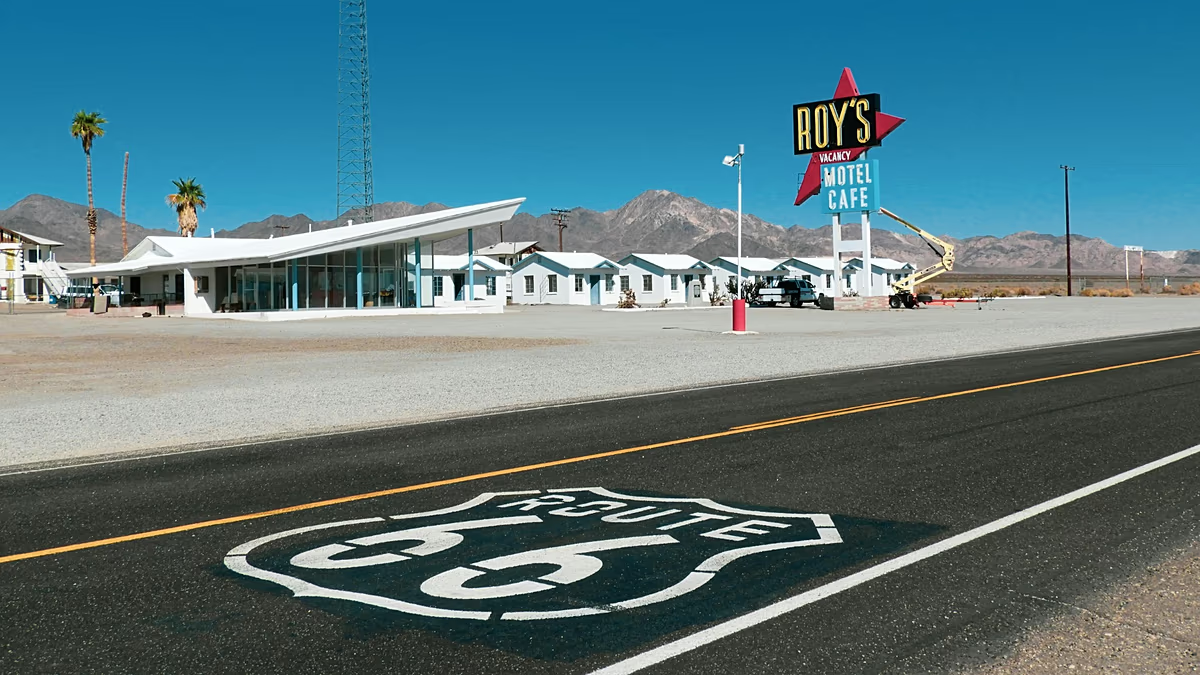
California caps off Route 66 with a crescendo of solitude and spectacle, from the Mojave Desert’s stark beauty to the Pacific’s roaring embrace. Roy’s Motel & Café in Amboy is the desert’s postcard, its towering neon sign a magnet for photographers, foreign bills papering walls—testaments to global pilgrims. Across the street, a post draped in hiker abandonments whispers of wanderlust. The Mojave stretch is pure introspection: rough pavement, Joshua trees jutting like ancient sentinels, volcanic remnants dotting the sand. Undeveloped since 1926, it evokes timelessness—sky endless, horizons blurring, solitude that clears the mind. Los Angeles’s congestion is a rude awakening, but then Santa Monica Pier erupts in celebration: performers juggle, crowds dance, the ocean a perpetual blue canvas. Route 66 ends here, not in decay but in triumph, views that remind us of the progress it sparked—mobility, dreams chased, lives transformed. Driving into California feels earned, a culmination of 100 years of stories—abandoned sites too, yet redeemed by beauty. From Chicago’s grit to this shore’s sparkle, it’s a human saga: migrants finding hope, artists drawing inspiration, travelers discovering selves. Route 66 isn’t dying; it’s evolving, teaching us to embrace the journey. As you stand on that pier, waves crashing, you realize: highways like this aren’t fixed; they’re living dialogues, stitched from every stop—diners, bridges, ranches—reminding us that the best roads wind deep into the heart. (Word count: 2024)