


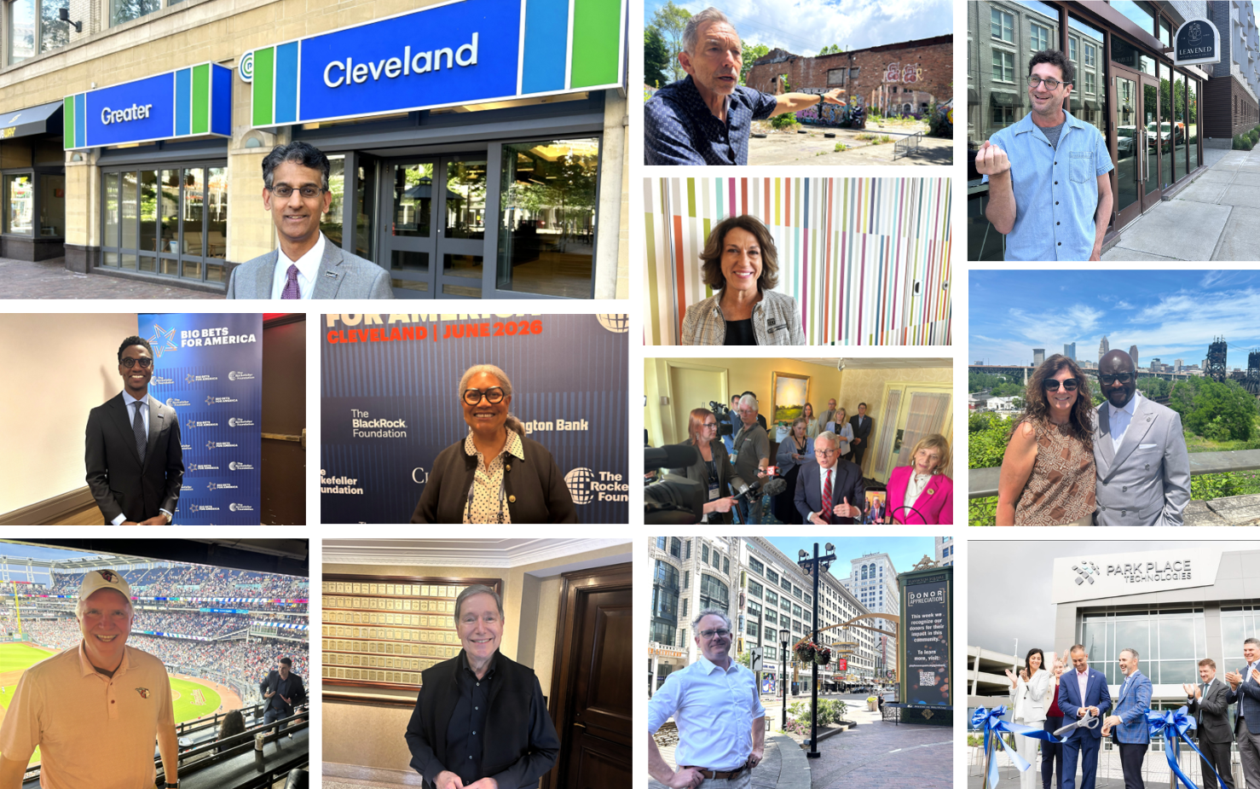
A century ago, the city of Cleveland, Ohio, was an undisputed titan of the American landscape, a roaring metropolis that by 1920 had ascended to become the fifth-largest city in the United States. Fueled by a relentless tide of immigration, industrial innovation, and pioneering entrepreneurs, it established itself as a global epicenter of manufacturing, wealth creation, and mechanical invention. Yet, as the tectonic plates of the global economy shifted, this industrial golden age vanished almost overnight—corporate headquarters decamped, factories fell silent, and high-paying jobs dried up, leaving behind a sobering, multi-generational cautionary tale of post-industrial decline. Today, the Pacific Northwest metropolis of Seattle stands at its own critical historical inflection point, riding the tail-end crest of the software revolution while gazing toward an uncertain future dominated by artificial intelligence, cloud shifts, and highly mobile workforces. This striking historical parallel prompted a recent, deeply immersive fact-finding mission by tech veteran Charles Fitzgerald and GeekWire writer John Cook, sparked by a provocative column that cautioned Seattle against replicating Cleveland’s historical trajectory of structural stagnation. Rather than reacting with defensive political posturing or bureaucratic defensiveness, Cleveland’s visionary thirty-nine-year-old mayor, Justin Bibb, immediately reached out to the authors, inviting them to bypass outdated “Rust Belt” stereotypes and experience the grit, determination, and collaborative ecosystem of a modern Midwestern city pulling itself back to the cutting edge. From the moment they stepped off the plane to hear Mayor Bibb’s voice welcoming airport visitors to a city built on “grit and innovation,” the journalists discovered not a museum of past achievements, but an inspiring, living blueprint of civic revival—a testament to what becomes possible when public officials, real estate developers, grassroots leaders, and tech founders dismantle their silos to row in unison like a crew team gliding along the Cuyahoga River.
Among the most vital lessons Cleveland offers Seattle is a stern warning against the insidious dangers of civic overconfidence and economic complacency. During the heights of its industrial dominance, Cleveland’s leaders mistakenly assumed that because their city had successfully reinvented itself across successive eras, the next wave of industrial prosperity would naturally manifest without active cultivation. This fatal complacency is vividly illustrated by John Nottingham, co-founder of the renowned innovation lab Nottingham Spirk, who points to the historical exile of John D. Rockefeller—who built Standard Oil into the world’s first classic multinational corporation in Cleveland, only to be pushed out by local resentment and regulatory hostility, ultimately taking his immense wealth and philanthropy to New York and Chicago. In a modern context, this warning heavily resonates with Seattle, which has recently seen several of its own high-profile tech executives and angel investors quietly migrate to tax-friendlier, more business-receptive states. Brad Whitehead, a developer of the Midline industrial district who is currently transforming the historic, long-abandoned Westinghouse light bulb factory on Cleveland’s near east side, cautions that top-tier corporate names and prestigious headquarters are not synonymous with local permanent payrolls; fabulous companies can easily adapt and survive by moving their physical production and technical jobs to other regions while leaving empty executive husks behind. This sentiment is echoed by Chris Adams, the president and chief executive officer of Park Place Technologies, who warns that economic overconfidence acts as a blinding agent, causing civic leaders to surf a prosperous wave while ignoring the rocky shoreline rapidly approaching in their path. To prevent such a catastrophic crash, modern cities must dismantle the sluggish municipal bureaucracies that delay adaptive responses, recognizing that looking continuously in the rearview mirror of past technological booms only ensures a spectacular collision with future economic realities.
To shield a rapidly growing metropolis from sudden economic obsolescence, urban planners must actively combat what economic experts call “concentration risk” by cultivating a broad, highly diversified, and interdependent ecosystem rather than leaning perilously on a few massive corporate monoliths. Josh Rosen, a visionary developer who converts abandoned gas stations, dry cleaners, and contaminated industrial sites into modern housing with Sustainable Community Associates in Cleveland’s Tremont neighborhood, observes from an outsider’s perspective that Seattle’s extreme reliance on a single high-tech sector leaves its entire civic infrastructure exposed to sudden shocks. This hyper-concentration creates a fragile real estate market where massive downtown sky-rises and commercial mortgages are financed purely on the assumption of endless, compounding tech revenues; should those corporate performance metrics shift downward by even twenty percent, the local banking, commercial real estate, and retail housing sectors face immediate, destabilizing shockwaves that reverberate through every neighborhood. Michelle Tomallo, the co-founder and chief people officer of FIT Technologies, a thriving employee-owned IT managed service provider, reinforces this diagnostic analysis by noting that grand, localized success naturally narrows a city’s strategic vision, blinding decision-makers to emerging worldwide disruptions until the wave of change has already crashed over them. To mitigate this systemic vulnerability, Cuyahoga County Executive Chris Ronayne implores growing technological hubs like Seattle to abandon the vanity-driven policy of chasing massive, out-of-state corporate headquarters, declaring flatly that “the cavalry is not coming” to save any city from its own structural shortcomings. Instead, Ronayne advises metropolitan areas to organically grow what they already possess, investing heavily in local small businesses while embracing pragmatic immigration policies that welcome international newcomers, who have recently served as the Cleveland region’s singular source of population growth and demographic vitality, acting as a crucial engine for both cultural richness and baseline economic sustainability.
Effective city survival ultimately depends on mastering the unglamorous, foundational dynamics of local governance while simultaneously protecting the safe and inviting nature of the urban core. This stark reality is illustrated by Sandra Morgan, the mayor of East Cleveland—a small municipality bordering Cleveland proper that still wrestles with one of the most intense poverty rates in the United States. Offering a sobering reality check to the tech-wealthy West Coast, Morgan urges Seattle’s leadership to humble themselves and count their blessings, reminding them that while rapid, chaotic economic growth presents undeniable municipal headaches, it remains infinitely preferable to the agonizing, fifty-year struggle to “right the ship” of a collapsing municipality. Cleveland’s youthful mayor, Justin Bibb, echoes this pragmatic, dual-focus wisdom by asserting that a successful mayor’s daily identity must remain split between “part pothole, part vision”; a local government must flawlessly execute its fundamental mechanical plumbing—such as paving roads, keeping streets safe, and ensuring city workers are properly compensated—before it can hope to project a compelling, “sticky” long-term vision that attracts highly competitive, mobile global businesses. This granular attention to safety and structural stability is an absolute prerequisite for any broader economic development, a philosophy put into daily practice by Nathan Kelly, the president of Playhouse Square Real Estate in Cleveland’s massive performing arts district. Kelly explains that building a vibrant, welcoming district requires managing both the physical reality and the psychological perception of public safety through small, highly practical measures, such as requiring first- and second-tier retail tenants to keep their indoor lights shining twenty-four hours a day to cast vibrant illumination onto the dark sidewalks. By building specialized safety partnerships that coordinate uniformed patrols with compassionate, non-police crisis intervention teams, Cleveland demonstrates that a thriving downtown environment is built not on grand rhetorical promises, but on a foundation of structural empathy, meticulous attention to daily order, and basic street-level safety.
Beyond basic safety and operational plumbing, Cleveland’s modern renaissance is powered by a highly structured, deeply intentional architecture of collaboration that actively unites the business, public, and civic sectors into a unified force. This coordinated alignment is crystallized in the region’s “All In” strategy, a comprehensive ten-year economic masterplan championed by Baiju Shah, the president and chief executive of the Greater Cleveland Partnership, the region’s prominent chamber of commerce. Shah argues that a metropolitan area’s survival in times of profound macroeconomic transition requires a singular, collective vision that all major power-brokers—from corporate executives and real estate developers to grassroots community leaders—can champion, effectively dismantling the toxic political gridlock, ideological division, and bureaucratic fragmentation that so often paralyze progressive, coastal technology hubs. Yvette Ittu, the president and CEO of Cleveland Development Advisors, supports this collaborative ethos, asserting that large-scale, transformative neighborhood redevelopments are utterly impossible without constant communication, shared risk, and deep-seated trust built between the public, private, and philanthropic spheres. This unified regional front extends all the way to the state capitol, where Ohio Governor Mike DeWine actively leverages Cleveland’s strong public-private coordination alongside its exceptionally low cost of living and high quality of life to recruit coastal tech talent, defense tech innovators like Anduril, and advanced aviation pioneer Joby Aviation away from the immense financial pressures of the Pacific and Atlantic coasts. By transforming localized survival instincts into a formalized, highly communicative ecosystem, northeast Ohio has not only kept massive, legacy brands like Sherwin-Williams anchored securely in the city, but has also created a smooth, supportive landing pad for rising enterprises. This powerful collective mindset serves as a core lesson for Seattle, showing that when a region’s diverse leadership bodies agree to abandon self-interest to pull in the exact same direction, they can successfully weather profound technological shifts, turning historical adversity into a powerful, cooperative competitive advantage.
Ultimately, the absolute most permanent anchor of any city’s long-term survival is its human resilience and its unyielding commitment to the public assets that naturally bind its citizens together. Freddy Collier, the senior vice president of strategy and new initiatives at the Greater Cleveland Partnership, gracefully reminds us that one of Cleveland’s greatest superpowers lies in its natural assets—its spectacular lakefront, the winding Cuyahoga River, and its vast networks of public trails and parks. Collier emphasizes that these geographic features are not mere cosmetic decorations or scenic luxuries, but crucial democratic equalizers and unifiers that connect human beings regardless of their income bracket, demographic background, or social standing, fostering an enduring sense of shared identity in a big city that somehow preserves a warm, supportive small-town feel where people truly know and support one another. As Seattle navigates the daunting, epochal migration from the software-centric era to the dawn of the artificial intelligence revolution and biotechnology, its leaders must realize that a city’s ultimate value can never be measured solely by skyscraper heights, equity valuations, or tech dividends, but rather by the strength of the social and physical fabrics that connect its diverse residents. By gazing deeply into Cleveland’s historic rise, painful post-industrial fall, and inspiring modern rebirth, Seattle is handed an invaluable mirror that reflects both the terrifying slide of complacency and the magnificent, hard-won possibilities of deliberate, visionary reinvention. If the Emerald City truly wishes to sustain its prosperity and avoid the historical fate of other boomtowns across the coming decades, it must actively transition from a culture of isolated corporate success to one of deep, collective civic responsibility, continuously investing in its public spaces, protecting its vulnerable populations, and nurturing a cooperative regional spirit that ensures that when the winds of economic change inevitably blow, the entire community is prepared to transition together into a prosperous, sustainable, and shared future.