



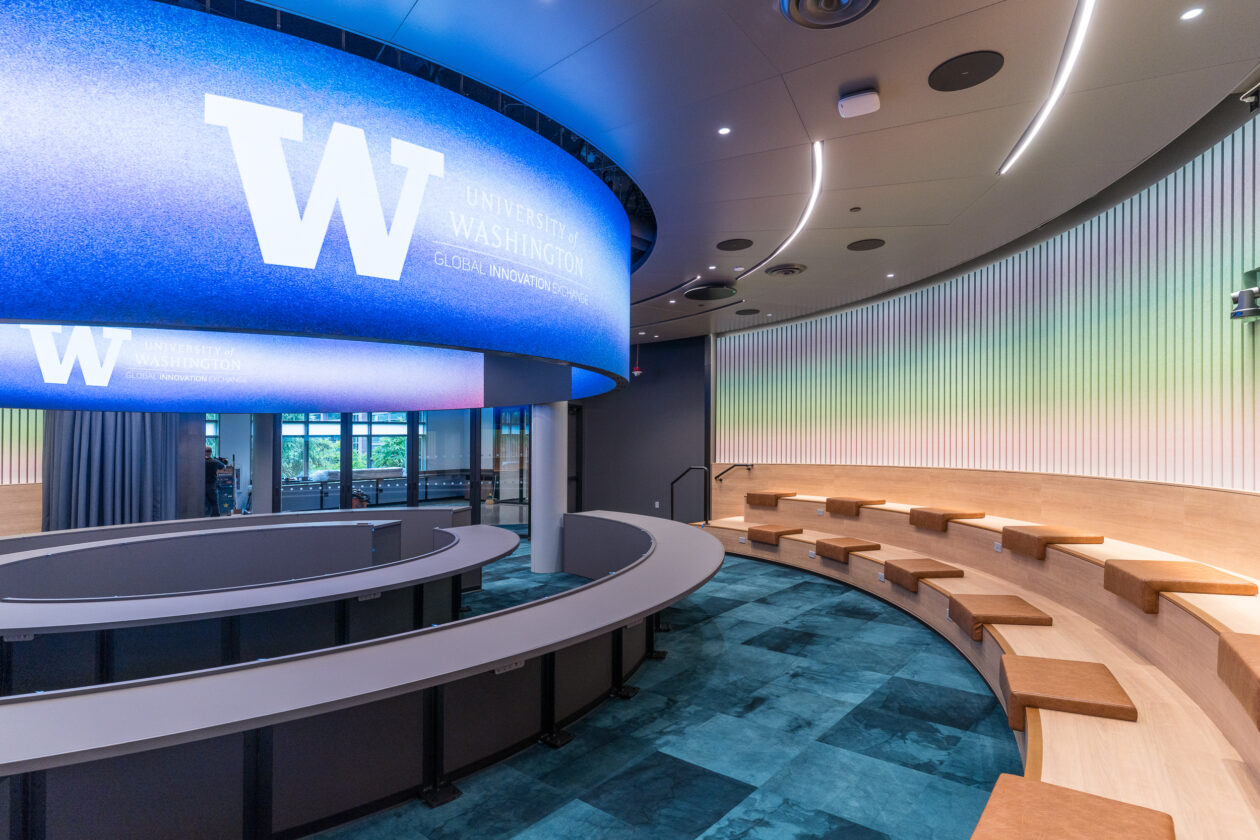
On September 30, 2026, the University of Washington and Microsoft gathered in Redmond to mark a milestone: the opening of a permanent home for the UW’s Global Innovation Exchange, known as GIX, on Microsoft’s sprawling campus. It’s a big deal for both institutions, but perhaps even more for the students and researchers who will pass through these doors. GIX is the first UW program to put down full-time roots at Microsoft, and the company has provided a $42 million in-kind donation to make it happen. The UW is leasing the new 48,500-square-foot space in Microsoft’s Building 92 rent-free. In an era when artificial intelligence is rewriting the rules of work and education, that physical proximity matters. Microsoft President Brad Smith put it well: “At a time when AI is transforming how we learn and work, that proximity will create new opportunities for University of Washington students, Microsoft employees, and researchers to learn from one another and accelerate innovation.” The building sits just across Lake Washington from the university’s Seattle campus, but the cultural and intellectual distance between a public research university and a global tech giant feels much smaller here. This is not just office space; it’s a bridge between two worlds that need each other—academia’s long view and industry’s fast pace. The hope is that students won’t have to wait until graduation to understand how their work fits into the real world; the real world will be just outside the lab.
GIX is not a typical engineering school. Its mission is to provide interdisciplinary graduate and professional education to technology leaders. Each year, more than 150 students enroll in the Master of Science in Technology Innovation program, which offers both in-person and hybrid online options. The emphasis is on innovation, collaboration, and the messy, human process of turning ideas into products. Sean Carr, GIX’s executive director and CEO, emphasized the institute’s philosophy: “At GIX, we keep people — not technology — as our focus, recognizing that technological change is not an end unto itself. Its value depends on how people use it to create opportunity, strengthen institutions, and contribute to broader social progress.” That philosophy is built into the design of the new facility, which includes classrooms, laboratories, prototyping and makerspace facilities, and a high-tech remote learning studio. Students can move from whiteboard discussions to 3D printers to pitch sessions without leaving the building. The journey to this permanent home began in 2017, when GIX opened in Bellevue’s Spring District. Between then and 2023, Microsoft contributed $70 million in endowment support, facility improvements, and lease payments—an investment that helped the program find its footing. In July, GIX moved to its new Redmond home. The space is more than a set of rooms; it’s a statement that the university is serious about innovation. It also gives students a unique chance to interact with Microsoft’s ecosystem. The building is on a campus filled with engineers, product managers, and researchers who work on the same technologies—cloud computing, artificial intelligence, mixed reality—that GIX students study. That kind of serendipitous interaction cannot be replicated in a traditional classroom. It’s the difference between reading about technology and living with it.
The story of GIX, however, is not just about real estate or corporate partnerships. It’s also a lesson in how ambitious international collaborations can shift over time. GIX was originally created as a partnership between the UW and Beijing’s Tsinghua University. The idea was to offer graduate technology degrees for American and Chinese students, with Tsinghua establishing a physical presence in the United States. It must have seemed like a promising bridge between two countries with deep ties to science and engineering. But the arrangement did not come together as planned. Today, the GIX website mentions that students can earn dual master’s degrees—one from the UW and one from Tsinghua—but the links to Tsinghua are dated. The “global experiences” section lists a two-week immersion program held the previous summer for students from National Taiwan University to study in Seattle. The trajectory is a reminder that international education partnerships are complicated, shaped by geopolitics, cultural differences, and institutional priorities. None of that diminishes what GIX has become. The new facility is designed to welcome participants from around the world, connecting them with scholars, researchers, technologists, and business professionals from around the world who are onsite at Microsoft. The university has adapted, and the program remains as relevant as ever—arguably more so, as global challenges like climate change, cybersecurity, and public health demand collaborative solutions across borders. For students, this means an education that is not just technical but global in its outlook, even if the physical classrooms happen to be in Redmond. It also means learning to navigate ambiguity and change—skills that are essential for anyone who wants to lead in a world where the only constant is transformation.
What makes GIX different is the ecosystem that surrounds it. The new facility sits at the center of a remarkable network of partners. Some are tech giants like T-Mobile, Amazon, Meta, and Cisco. Others are more specialized, like Aigen, Mitsubishi, Vaisala, and AI2. There are public agencies such as King County Metro and Sound Transit, as well as research units like the UW’s Applied Physics Laboratory and Urban Freight Lab. The list also includes Responsible Innovation Labs, a nonprofit focused on ethical technology. This is not just a list for show; these partners bring real problems, real data, and real mentors into the program. They offer students a chance to work on challenges that matter—whether that’s making transit more efficient, building sustainable energy systems, or designing AI tools that respect privacy and equity. For industry partners, the payoff is access to fresh thinking and new talent. For students, it’s a chance to build a professional network before they even graduate. The variety is intentional. GIX does not want its students to become narrow specialists who only understand code or circuits. It wants them to understand the social, environmental, and economic contexts in which technology lives. That’s why the curriculum spans business, design, and engineering. It’s why students work in teams, not solo. And it’s why the new space includes plenty of room for collaboration, both formal and informal. The building is designed to encourage chance encounters—bumping into a Microsoft engineer in the hallway, grabbing coffee with a visiting scholar, or staying late to tinker in the makerspace. In an age of remote work and digital everything, there is still no substitute for being physically present in a community of curious, driven people.
One of the most important aspects of the GIX model is its financial and academic structure. GIX is a self-sustaining unit of the University of Washington. It does not receive operational funding from the university or the state. That means it has to be entrepreneurial, resourceful, and responsive to what students and employers need. At the same time, it operates in partnership with the UW’s College of Engineering and Foster School of Business, ensuring that academic rigor and independence are maintained. This arrangement is unusual, and both the UW and Microsoft know it. As they said in a release, it “demonstrates how a public research university can engage deeply with industry without sacrificing its academic independence or public purpose.” That’s a delicate balance. Universities are often criticized for becoming too corporate, chasing funding at the expense of their educational mission. But GIX seems designed to avoid that trap. Microsoft’s support—the $42 million in-kind donation, the rent-free lease, the earlier $70 million investment—is substantial, but it is not a takeover. The curriculum is still the university’s. The degrees are still awarded by the UW. Students are educated as critical thinkers, not trained as corporate employees. The independence matters, not just for the university’s reputation, but for the quality of the education. It allows faculty and students to ask hard questions, challenge assumptions, and explore ideas that may not have immediate commercial value. It also ensures that GIX remains focused on the public good, not just the bottom line. For public universities, this kind of partnership could serve as a model. With budgets squeezed and expectations high, institutions are looking for ways to connect students to the real world without becoming beholden to private interests. GIX offers one answer. It shows that with clear principles and thoughtful governance, a public university can open its doors to industry—and still maintain its values.
In the end, the new GIX space is about more than square footage or strategic partnerships. It’s about people. It’s about the student who arrives with a vague idea for an app and leaves with a startup. It’s about the researcher who uses AI to help emergency responders make better decisions. It’s about the engineer who learns that the best algorithm in the world means nothing if it doesn’t work for the people it’s supposed to serve. GIX was built on the belief that technology is not an end in itself. It’s a tool for creating opportunity, strengthening institutions, and contributing to social progress. That belief is embedded in every aspect of the program, from the curriculum to the design of the building. The new facility is bright, open, and flexible—a physical manifestation of the program’s philosophy. It has rooms for quiet focus and spaces for noisy collaboration. It has high-tech studios for remote learning and low-tech corners for sketching and thinking. It is, in many ways, a blank canvas. And that is exactly the point. The students who come here will shape not only their own futures but the future of technology. They will face challenges that do not yet exist, using tools that have not yet been invented. If they are lucky, they will have learned how to ask good questions, work with people who see the world differently, and keep people at the center of their work. That is what GIX is trying to teach. The opening on September 30, 2026, was not the end of a long journey. It was the beginning of a new chapter—for the University of Washington, for Microsoft, and for the generations of students who will call this place home. If the promise of this partnership holds, the next great wave of innovation will be born not in a vacuum, but in the messy, exciting, deeply human space where ideas meet people.