



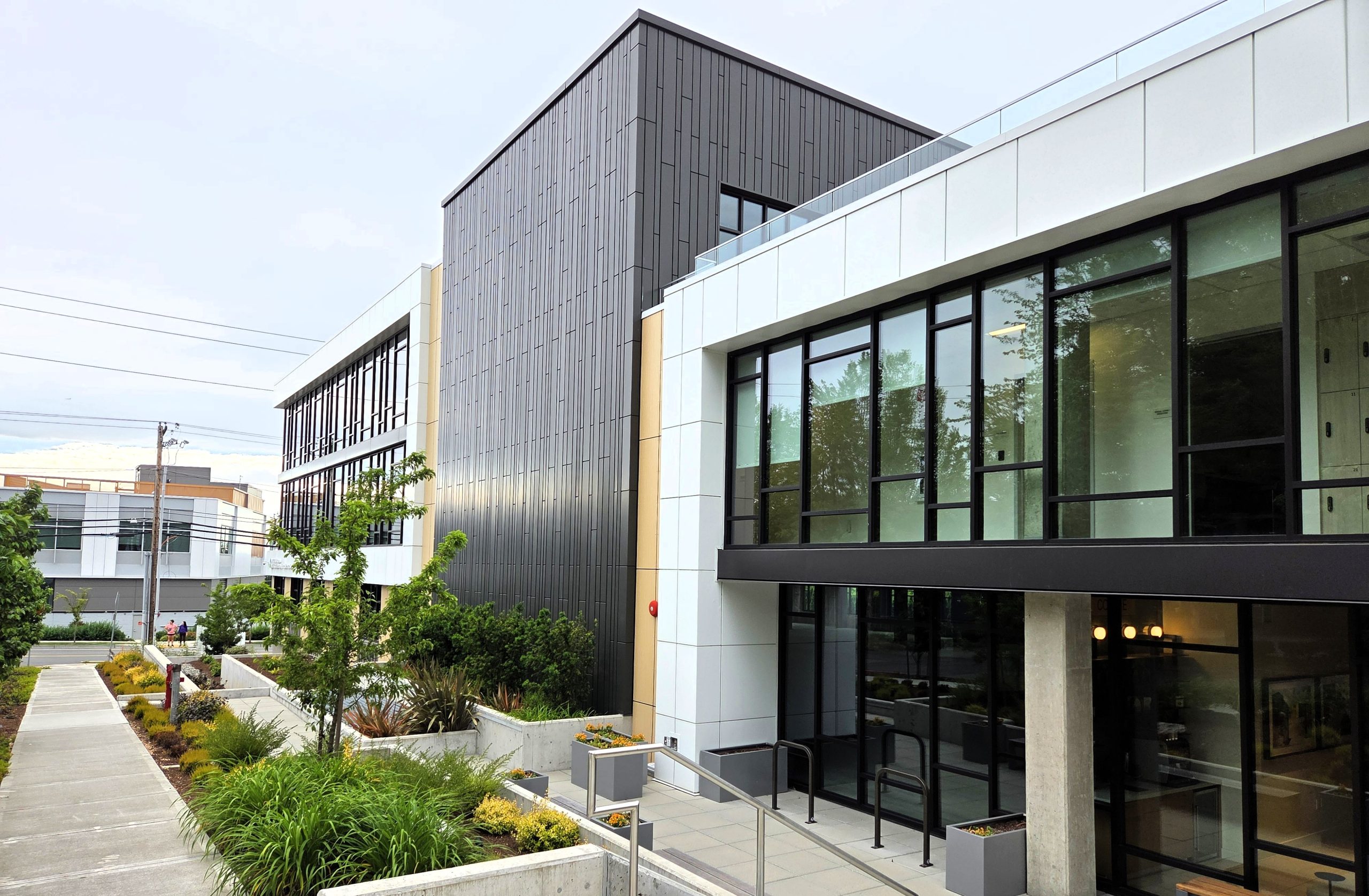
The morning mist rising off Lake Washington has long quieted the high-tech corridors of the Pacific Northwest, but this autumn, a new kind of energy is set to hum through the classrooms of Kirkland. Alpha School, a highly talked-about, AI-driven private school chain born in the tech-forward ecosystem of Austin, Texas, is officially planting its roots in the Seattle area. Taking up residence in a modern facility at 620 Fifth Ave. S.—just a stone’s throw from Google’s sprawling Kirkland campus—and launching weekly summer programs on Microsoft’s Redmond campus starting this late June, the school brings with it a radical promise: to teach children their entire core academic curriculum in just two hours a day. By leveraging highly adaptive artificial intelligence, Alpha claims it can compress traditional schooling to a fraction of the time, freeing up the remaining hours of the day for hands-on projects, public speaking, physical education, and life-skills workshops designed to build character and resilience. With a strict “no homework” policy built directly into its philosophy, the school seeks to return evenings to families, giving children the mental space to play sports, explore hobbies, and simply be kids. For a region populated by tech innovators, engineers, and parents constantly seeking the cutting edge of personal development, this model represents either the ultimate education breakthrough or a provocative experiment in childhood optimization.
At the heart of Alpha School’s philosophy is a deeply human attempt to resolve one of the most agonizing dilemmas of modern parenting: the battle over screen time. In an era where screens are often viewed as digital pacifiers or cognitive hazards, Alpha’s co-founder, MacKenzie Price, argues that our collective societal anxiety misses a crucial distinction. There is a vast, qualitative chasm between passive digital consumption—such as minds drifting endlessly through short-form social media feeds, cartoons, or video games—and an active, highly engaging, mastery-based digital tutoring experience. To achieve this, Price’s team, backed by veteran tech entrepreneur and ESW Capital founder Joe Liemandt, has designed a platform that carefully excludes what she calls “cheat bots”—generative AI chatbots that do the critical thinking for the student. Instead, their software acts as an invisible, tireless diagnostic cartographer, mapping out exactly what a child has mastered and where their conceptual gaps lie, adjusting the pace and style of lessons in real-time. This active interaction turns the laptop from a passive distraction into a mirror of the child’s mind, ensuring that no student is left behind to drown in confusion, nor left to wither in boredom while waiting for a traditional classroom of thirty peers to catch up to their pace.
To step into an Alpha classroom is to witness a profound reimagining of the age-old dynamic between student and teacher. The school has discarded the traditional concept of the lecturing educator, replacing it with what they call “guides.” These guides do not spend their evenings grading papers or their mornings standing at whiteboards repeating standard lessons; instead, they operate on a highly intimate 5-to-1 student-to-guide ratio. Paid significantly above traditional public school salaries, these adults are selected not for their ability to deliver lectures, but for their high emotional intelligence, empathy, and coaching abilities. By outsourcing the dry transfer of academic content to highly efficient, personalized algorithms, the human guides are freed to focus entirely on what machines cannot do: mentoring, motivating, building emotional intelligence, and helping children navigate the interpersonal dynamics of collaborative projects. This structural shift aims to strip the friction out of the teacher-student relationship, transforming the adult in the room from an authority figure delivering grades into a trusted coach cheering the student on from the sidelines of their academic journey.
Yet, this utopian vision of accelerated, algorithmic education is not without its staunch critics and skeptical observers in the educational community. Many traditional educators and child developmental psychologists look at Alpha’s bold declarations of hyper-efficiency with a degree of healthy skepticism, questioning whether the deeper, slower cognitive pathways associated with deep reading, creative contemplation, and communal struggle can truly be accelerated by an algorithm. Critics argue that learning is not merely a sequence of information-retrieval milestones to be unlocked like levels in a video game, but a deeply social, messy, and organic process that benefits from collective discussions, shared diversions, and even classroom boredom. Furthermore, skeptics suggest that Alpha’s impressive student outcomes—such as their consistently top-tier placement on the NWEA MAP, a highly regarded standardized test used across the United States—might say as much about the self-selecting demographic of highly motivated, affluent families who enroll their children there as it does about the revolutionary nature of the methodology itself. Alpha, however, stands firmly by its empirical data, arguing that their students’ high performance under standardized metrics proves that when you remove the wasted hours of traditional classroom administration, children can achieve academic excellence with far less stress and cognitive fatigue.
This fascinating intersection of technology, childhood development, and high-performance culture has caught the attention of some of the most influential figures in global technology, most notably Microsoft CEO Satya Nadella. During a recent podcast crossover of No Priors and Latent Space hosted in tandem with Microsoft’s annual Build developer conference, Nadella spoke thoughtfully about the future of education, revealing that he had met with the minds behind Alpha School to study their pedagogy. For Nadella, the company’s approach is a compelling blueprint for how society might begin to rethink the very nature of human learning in an age defined by artificial intelligence, musing that the next great startup and cultural success story might not be an application or a software product, but an entirely new way of teaching human minds. This elite endorsement within the local landscape was nurtured organically by Caitlin McCabe, Nadella’s vice president and chief of staff. Engaging with Alpha initially not in her corporate capacity but as a local mother looking for educational alternatives for her young children, McCabe became a passionate advocate, championing the school’s expansion to the Seattle metro area and serving as a bridge to other local tech-sector families who felt the traditional school system was failing to prepare their children for the realities of a post-AI workforce.
As the physical campus in Kirkland prepares to welcome its first cohort of up to 150 students this autumn, local families are getting a low-stakes preview of this educational experiment through the upcoming summer programs on Microsoft’s Redmond campus. Scheduled to run for eight consecutive weeks from late June through late August, these weekly camps are designed to mimic the rhythm of a typical Alpha school day, offering the public a tangible window into how the balance of intensive technology-guided learning and active, real-world team challenges works in practice. Priced at $1,500 a week—with a substantial 50% discount offered to Microsoft employees—the summer camps are serving as both an educational proof-of-concept and a clever community-integration strategy. Meanwhile, as families weigh the long-term commitment of enrolling in the fall, Alpha’s administrators are finalizing their standard tuition rates, though they have already announced a generous $10,000 discount for the “founding families” bold enough to join the inaugural Kirkland cohort. Ultimately, Alpha’s arrival in the Pacific Northwest represents more than just the opening of another private school; it is a high-profile case study in whether we can successfully integrate artificial intelligence into the delicate fabric of early childhood development, optimizing how kids learn while preserving the essential, irreplaceable human warmth that helps them grow.