


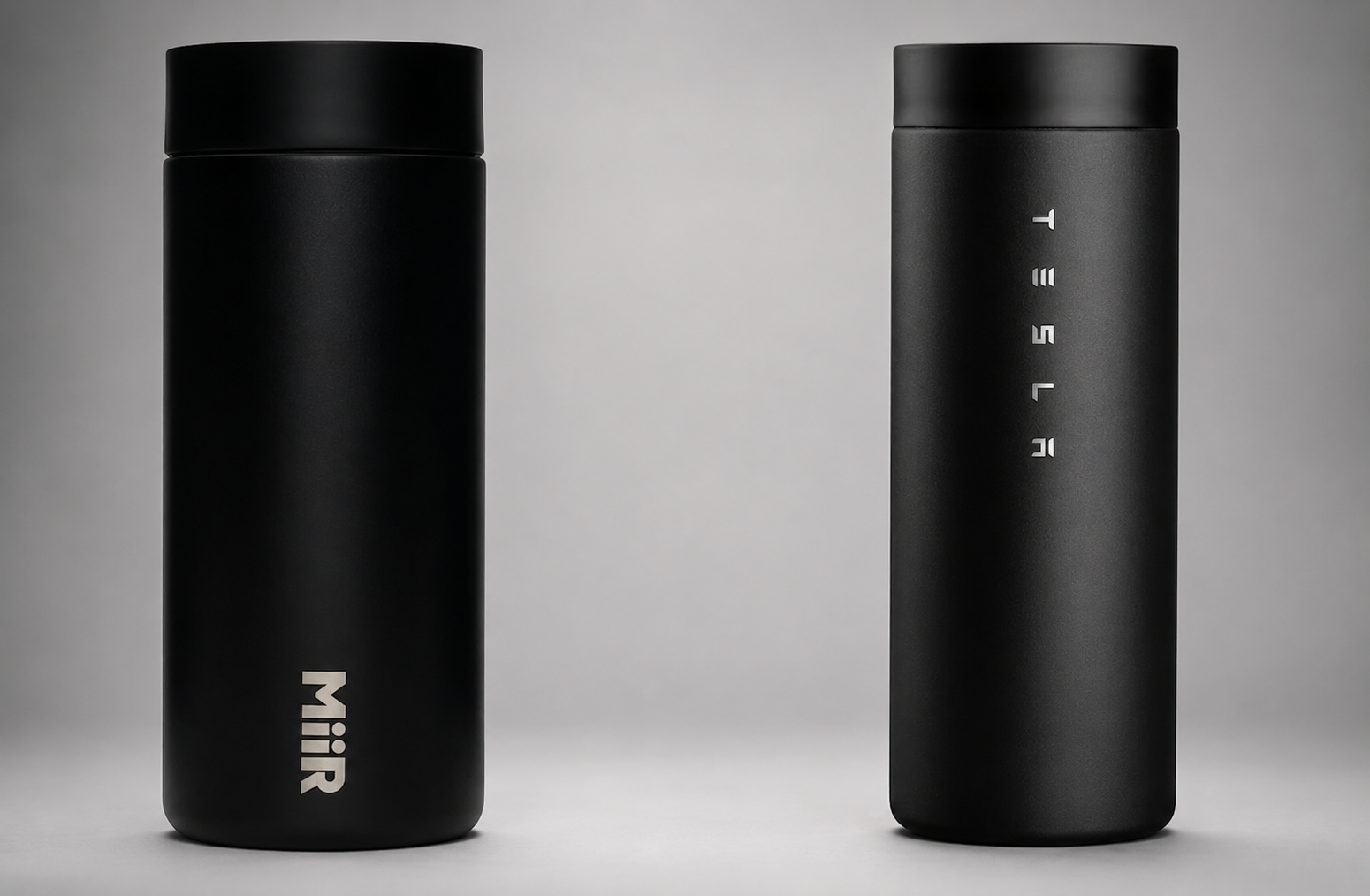
In an era where our morning rituals are anchored by the simple, comforting weight of a travel mug, the vessels we use to carry our daily caffeine have transitioned from mere utility to deeply personal statements of identity, design, and ethics. The Pacific Northwest, with its globally renowned coffee culture, has long served as a fertile incubator for this aesthetic evolution, giving rise to brands that treat drinkware as a precise marriage of form, function, and philosophy. It is within this highly competitive design ecosystem that a dramatic legal confrontation has emerged, pitting a beloved, community-oriented Seattle brand against one of the most powerful and aggressive corporate giants on Earth. On May 28, MiiR Holdings LLC officially filed a sweeping lawsuit in the U.S. District Court in Seattle against Tesla Inc., the electric vehicle empire steered by billionaire Elon Musk. The legal complaint alleges that Tesla chose to bypass the grueling, costly road of original industrial creation, opting instead to shamelessly duplicate MiiR’s signature drinkware designs. Specifically, MiiR claims that Tesla’s newly introduced “On The Road Tumbler” represents a blatant, bad-faith imitation of its own meticulously engineered, award-winning “360 Traveler Tumbler,” stepping directly on MiiR’s hard-won intellectual property rights to profit off a look that took years to cultivate.
To truly understand why this battle is about far more than just metal travel cups, one must look at the human-centric history of MiiR. Founded in 2010 with a vision to prove that business can be a powerful force for global good, MiiR has spent over a decade quietly revolutionizing how everyday objects are designed, Manufactured, and valued. Rather than pursuing raw, unchecked profit, the active lifestyle brand structured its entire business model around a generous philanthropy program, committing a portion of the revenue from every single sale to clean water initiatives, environmental conservation, and vulnerable communities worldwide. For years, their flagship retail location and bustling coffee shop in Seattle’s Fremont neighborhood—sitting proudly alongside the headquarters of Brooks Running—served as a vibrant community hub where coffee aficionados, designers, and local outdoor enthusiasts gathered. Over time, as MiiR’s distribution scaled and operations transitioned to a larger, state-of-the-art production hub further north in Marysville, Washington, the company’s dedication to uncompromising industrial aesthetics remained its lifeblood, earning coveted accolades from prestigious institutions like the Industrial Designers Society of America. To have their intellectual property allegedly harvested by a multi-billion-dollar conglomerate strikes at the very heart of MiiR’s creative soul and financial sustainability.
Tesla, meanwhile, has evolved far beyond its core identity as a pioneer of battery-powered transportation, transforming itself into a comprehensive, high-status lifestyle ecosystem. Under Musk’s leadership, the Texas-headquartered giant has learned that its fiercely loyal, tech-forward fanbase is eager to purchase almost anything stamped with the sleek, metallic “T” logo, leading to a highly lucrative expansion into branded apparel, novelty items, and lifestyle merchandise. From expensive decanters to minimalist outerwear, Tesla’s digital store operates as a high-margin playground of modern aesthetics, allowing consumers to display their brand allegiance even when they are far away from their cars. However, according to the lawsuit, when Tesla decided to enter the competitive, premium drinkware market, it chose to skip the traditional phases of independent experimentation, prototyping, and styling. MiiR’s civil complaint reveals a particularly stinging detail: Tesla was already deeply familiar with MiiR’s premium product line because it had previously purchased MiiR drinkware and actively contemplated collaborative business partnerships. Instead of choosing to formally partner with the Washington-based B-Corp or invest the hours needed to “innovate and develop its own unique style,” Tesla allegedly took the shortcut of lifting MiiR’s design files, selecting a path of direct replication over creative authenticity.
At the absolute center of this legal and artistic dispute is a revolutionary piece of lid technology that MiiR carefully protected under a United States design patent, officially registered in February 2024. The lawsuit details how MiiR’s $34, 16-ounce “360 Traveler Tumbler” redefined a crowded market by introducing a “solid, saucer-shaped circular lid” designed to sit perfectly perpendicular to the sleek walls of a cylindrical container, allowing a user to sip comfortably from any angle without spilling. This stark, clean linear style became instantly recognizable to design-conscious buyers, creating an immediate, organic association with the MiiR brand name. Tesla’s counter-offering, the 14-ounce “On The Road Tumbler” retailing for $32 on its official website, matches this silhouette with striking precision, featuring an incredibly similar saucer-like lid configuration and rounded baseline. Beyond the mechanics of the lid, MiiR asserts that Tesla actively copied its distinctive “trade dress”—the overall commercial look and feel of a product that helps consumers distinguish it on store shelves. This includes the highly specific, clean vertical placement of the laser-etched brand name, an artistic choice MiiR has continuously utilized on its stainless-steel drinkware since 2011 to establish its unique visual signature in the marketplace.
Seeking justice in their home territory, MiiR is represented by the formidable Seattle-based global law firm K&L Gates, signaling that they have no intention of backing down from a protracted, high-stakes legal fight against Tesla’s massive regulatory apparatus. The lawsuit’s legal strategy is multi-pronged, going beyond basic patent infringement to levy a heavy accusation under the Washington Consumer Protection Act. MiiR argues that Tesla’s mimicry is so thorough that an “ordinary observer” shopping in the real world would easily be deceived into thinking the two tumblers are identical, or that Tesla’s product was officially created in collaboration with, or endorsed by, the Seattle design house. This kind of visual copycatting doesn’t just cut into MiiR’s direct sales; it threatens to dilute their hard-earned brand authority, muddying their reputation as a premium, socially responsible creator by associating their sleek design language with a controversial automaker without their consent. To remedy this overreach, the lawsuit asks the federal court for a permanent injunction that would immediately force Tesla to pull the copycat tumbler from its online stores and physical showcases, alongside a demand for actual damages, a full hand-over of all profits Tesla has generated from the tumbler’s sales, and reimbursement for all associated legal fees.
Furthermore, the legal complaint asks the presiding federal judge to declare Tesla’s patent infringement as “willful,” an essential legal designation that, if proven true, could hit the automotive giant with massive treble (triple) damages. This David-and-Goliath dispute highlights a growing, deeply human concern in the modern global economy, where smaller, independent creative houses constantly face the devastating risk of seeing their passion, laboratory testing, and refined ideas absorbed into the portfolios of massive, fast-moving corporations that possess the capital to manufacture and market duplicate goods at blinding speeds. As local and global retail enthusiasts watch the Pacific Northwest courts await formal responses from both legal teams, the true stakes of the conflict become clear. This litigation is not merely a disagreement over the placement of a metal logo or the curve of a plastic lid; it is a vital, public crusade to defend the sanctity of original human artistry, the value of small-scale corporate ethics, and the fundamental right of a dedicated, community-first creator to protect the fruits of their labor from being swallowed up by corporate giants.