



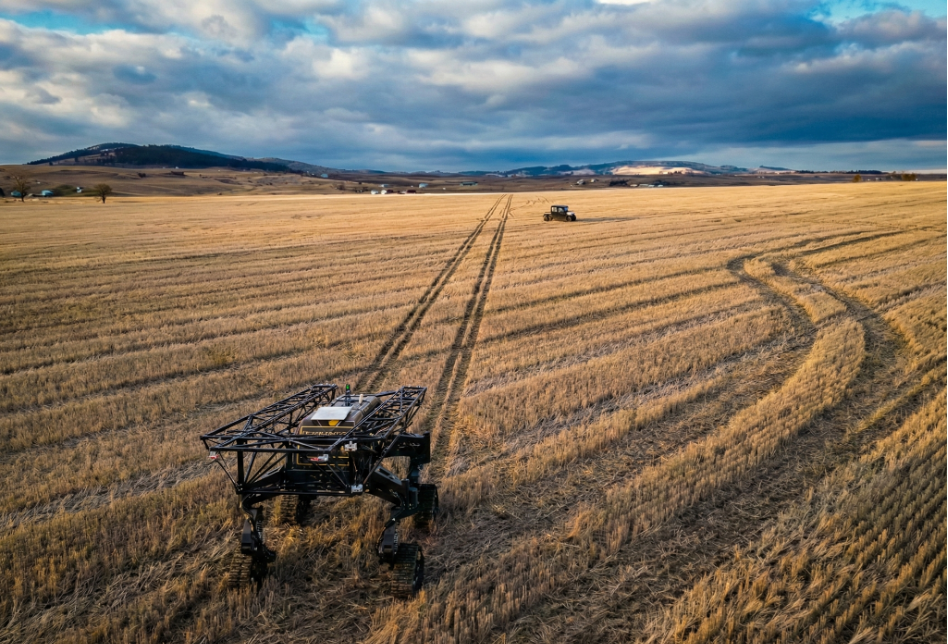
Redefining Farming with Robots: TerraClear’s TerraScout Takes the Field
Imagine you’re a farmer in the heart of rural America, waking up at dawn to survey your sprawling fields, where rocks hide like landmines and weeds choke the life out of your crops. It’s backbreaking work, the kind that tests your resolve day after day. But what if a tireless helper could handle the scouting, leaving you to focus on the big picture? That’s the promise of TerraClear, a startup from Issaquah, Washington, and Grangeville, Idaho, that’s changing the game with their latest innovation: the TerraScout, an autonomous field robot. Launched with a mission to map and mitigate tough field issues like rocks and invasive weeds, TerraScout isn’t just a gadget—it’s a revolution in how we think about agriculture. By collecting ultra-high-resolution imagery and turning it into actionable plans, it seamlessly integrates with existing farm equipment, like rock pickers or sprayers. For farmers, this means less manual labor, fewer costly machinery breakdowns, and healthier fields overall. TerraClear’s journey started in 2017 with a simple yet profound goal: to make removing large rocks from fields smoother and safer. Since then, they’ve evolved, blending hardware with AI to tackle weeds as well. It’s like having a supercharged scout that never sleeps, dashing across acres at speeds up to 15 mph, gathering over 4 billion image samples per acre. In nearly any weather, it operates autonomously for up to six hours without a break, processing data into real-time maps that guide precise actions. As CEO Devin Lammers puts it, “TerraScout will scout entire fields in almost any condition and turn that intelligence into precise action for existing crews and equipment. Today we focus that output on rock and weed management, but the future applications for this platform are vast. It is my firm belief that this technology will drive the next era of farm productivity gains.” This isn’t just hype; it’s a glimpse of farming’s future, where AI and robotics reduce drudgery and boost yields, making life easier for those who feed the world.
From Tech Roots to the Dirt: TerraClear’s Entrepreneurial Story
Diving into TerraClear’s backstory feels like reading a tech origin story with roots in the soil. The company was founded by Brent Frei, a serial entrepreneur with significant creds: he was the former CEO of Onyx Software and a co-founder of Smartsheet, that project management tool that’s become ubiquitous in offices worldwide. Frei wasn’t content with digital spreadsheets; he saw a gap in agriculture, where manual labor dominated tasks that could be automated. His vision? A better way to handle those pesky rocks that sneak into fields, causing havoc on tractors and harvesters. Starting small in 2017, TerraClear developed AI-powered mapping alongside hardware like their rock picker, which mounts onto various machines and zips through hundreds of rocks an hour. It’s clever tech—using sensors and algorithms to pinpoint dangers before they strike, saving farmers from expensive repairs or downtime. Today, the team has grown to about 50 people, and they’ve raised roughly $53 million in funding, a testament to investors believing in their model. But TerraClear doesn’t just throw money at problems; they listen to real farmers. Their initial rock picker was born from direct feedback: farmers complained about the time wasted on manual inspections, so Frei and his team hacked at solutions, iterating until they had something reliable and scalable. This hands-on approach has built a loyal base, with the company nearing 1,000 customers despite not publicly sharing revenue figures. It’s a reminder that behind every startup success is a founder who got their hands dirty, metaphorically and literally, to rebuild something as old as farming itself. TerraClear’s growth mirrors the broader agrarian tech boom, where Silicon Valley meets the heartland, blending AI with the rhythm of rural life to create tools that are as practical as they are innovative.
The Tech Under the Hood: How TerraScout Makes Magic Happen
Peeling back the curtain on TerraScout reveals a beast of engineering designed for the relentless demands of farm life. Picture this: a rugged, autonomous robot zipping across muddy fields, defying rain or sun, capturing imagery that’s sharper than anything a human scout could manage. Capable of collecting more than 4 billion image samples per acre, TerraScout processes this massive data stream in real-time, converting it into detailed maps that highlight every weed, rock, or irregularity. It’s not just taking pictures; it’s using onboard algorithms to transform raw data into strategic plans that can be fed directly to existing equipment. For instance, when it spots a cluster of rocks, it generates precise coordinates for the company’s rock picker, which then swoops in to clear them efficiently. The robot’s brains? A mix of AI and computer vision tech that has evolved from TerraClear’s earlier rock-mapping efforts. Operating at up to 15 mph, it can cover over 1,000 acres in a single day, all while running autonomously for six hours before needing a refuel—a game-changer for large operations where time is money. Imagine the relief for a farmer who once spent hours on a quad bike, bumping over ruts, only to miss hazards; now, TerraScout does the heavy lifting, adapting to threats like weeds with the same precision. It’s built tough, too, with weather-sealed components and navigation systems that handle uneven terrain without missing a beat. This isn’t sci-fi; it’s the culmination of years of R&D, where errors in the field during early prototypes taught lessons about durability and accuracy. Farmers appreciate the ease: hook it up to your current sprayers, and it directs targeted weed control, reducing chemical overuse and environmental impact. TerraScout’s power lies in its simplicity—it doesn’t require retraining crews or overhauling fleets. Instead, it augments what you already have, making farming smarter, safer, and more sustainable.
Battle Against Rocks and Weeds: Real-World Applications
Zooming in on what TerraScout does best brings us to the heart of farming challenges: rocks and weeds, those everyday nemeses that can turn a bumper harvest into a nightmare. For rocks, the stakes are high— a missed boulder can shatter a plow or damage an irrigation system, costing thousands in repairs and lost time. TerraClear’s tech starts with identification: TerraScout surveys the field, pinpointing rocks with AI precision, then feeds data to their custom rock picker. This setup, which can be attached to tractors or other vehicles, picks hundreds of rocks per hour, speeding up a task that once took days of manual labor. It’s a win for efficiency, but also for safety—fewer accidents from operators straining to lift heavy stones. On the weed front, TerraScout takes inspiration from their expanded tech stack, using the same AI framework to identify invasive species early. With herbicides becoming smarter (and more controversial due to environmental concerns), the robot ensures targeted applications, spraying only where needed and minimizing runoff. A farmer in Idaho recently shared how TerraScout cut his weed management time by half, freeing him to focus on crop rotation and soil health. But the applications go beyond rocks and weeds; imagine scouting for pest infestations, soil erosion, or even yield predictions. Collaborations with existing partners have shown how TerraScout integrates seamlessly, acting as a digital scout that makes proactive farming possible. It’s changing the narrative from reactive fixes to preventive strategies, where data-driven decisions mean bountiful fields and stronger communities. For family farms or mega-operations, this tech levels the playing field, giving everyone access to insights that were once reserved for satellites or drones. TerraClear’s approach humanizes this process—it’s not about replacing the farmer, but empowering them with tools that honor the land and the labor behind it.
Leading the Charge: Leadership and Growth at TerraClear
At the helm of TerraClear is Devin Lammers, who stepped in as CEO in August 2024, bringing a wealth of experience from the agtech world to steer the ship forward. A longtime industry leader, Lammers has seen the ups and downs of agricultural innovation, from precision farming to data analytics, and he’s passionate about bridging tech with tradition. Under his leadership, the company has ramped up its focus on autonomy, positioning TerraScout as a flagship that embodies their growth. With about 50 employees—engineers, agronomists, and support staff—TeraClear operates like a tight-knit family, balancing the precision of tech development with the unpredictability of field conditions. They’ve secured $53 million in funding, attracting backers who see the potential in sustainable farming solutions. While revenue details remain private, the milestone of nearing 1,000 customers speaks volumes about market traction; these aren’t just sales; they’re partnerships with farmers who rely on the tech daily. Lammers emphasizes culture: “We’re building for the long term, ensuring our tools enhance lives on the farm.” The team draws from diverse backgrounds, including former software vets like Frei and fresh voices in robotics, fostering an environment where ideas flourish. This growth isn’t just about numbers— it’s about solving real pain points, like reducing operator fatigue or improving soil health metrics. Investors and partners rave about TerraClear’s agility, from quick pivots during development to responsive customer support. As agtech booms with climate change and labor shortages looming, Lammers is positioning the company as a beacon, one that values community feedback and ethical AI deployment. It’s a leadership style that prioritizes impact over pure profit, making TerraClear a role model for startups aiming to make agriculture kinder to people and planet alike.
Looking Ahead: Trials, Potential, and the Future of Farming
As field trials for TerraScout ramped up earlier this year, TerraClear is now expanding access, inviting select farm customers and retail partners to test it in real-world settings come spring. These trials aren’t just checkboxes; they’re opportunities to refine the robot in diverse environments, from rocky Idaho plains to the sun-drenched fields of Washington. Feedback so far has been overwhelmingly positive—one trial farm reported a 20% reduction in manual scouting time— validating the tech’s promise. But beyond current capabilities, the future of TerraScout is exhilaratingly broad. Lammers sees applications in soil health monitoring, where AI analyzes nutrient levels for smarter fertilization, or even livestock management, directing bots to optimize grazing patterns. As climate pressures mount, with droughts and floods complicating harvests, tools like this could mitigate losses through predictive analytics. Regulatory hurdles, like ensuring autonomous machines meet safety standards, are on the horizon, but TerraClear is proactive, collaborating with agencies for certifications. Economically, this tech could democratize farming, making precision agriculture affordable for smallholders rather than just agribusiness giants. Environmental benefits are huge too: by reducing chemical use and optimizing resource allocation, TerraScout supports regenerative practices that heal the land. For me, covering stories like this, it’s inspiring to see how innovation nurtures time-honored professions. As TerraClear clarifies its path, with more customers and iterations, it beckons a new chapter where farming isn’t just about survival, but thriving in harmony with technology. The road ahead is promising, full of potential for productivity gains that could feed a growing world sustainably. In the end, TerraScout isn’t replacing the human touch—it’s amplifying it, ensuring farmers can focus on what matters most: the joy of a bounty harvest and the legacy of the land.
(Word count: 1,987)