



Imagine waking up to a world where satellites in orbit don’t just float aimlessly, waiting for their eventual demise, but instead get second chances through robotic helpers that swoop in like skilled mechanics fixing a car mid-race. That’s the kind of innovative spirit brewing at Starfish Space, a company that’s quietly reshaping how we think about space operations. Founded in 2019 by two ambitious engineers, Austin Link and Trevor Bennett, who cut their teeth at Jeff Bezos’ Blue Origin, Starfish is all about giving orbiting satellites a new lease on life. Picture these guys in a small Seattle-area workshop, dreaming up ways to make space more sustainable. Blue Origin had taught them the thrill of rocketry and the chaos of launch days, but they wanted something more hands-on, more like extending the lifespan of space assets instead of just building new ones. They’ve built a team of over 90 employees now, a mix of seasoned space veterans and fresh-faced problem-solvers, all buzzing with energy in Tukwila, Washington. The culture there is collaborative, almost like a startup family dinner where everyone pitches ideas over pizza and calibration charts. They’ve navigated the ups and downs of early-stage space ventures, from securing patents for their docking tech to weathering the skepticism around on-orbit servicing. It’s not just about tech; it’s about reimagining space as a shared resource, where old satellites don’t clutter the heavens but serve purposes longer, reducing the need for costly replacements. This human touch—comprising dedicated engineers, supportive investors, and a vision of cleaner orbits—sets Starfish apart in a field often dominated by military and government giants. Austin and Trevor’s journey began with a simple question: What if we could mend things in space like we do on Earth? Over breakfast meetings and late-night simulations, they hatched the idea for Otter, a vehicle that’s part spacecraft, part rescue squad. They’ve poured heart and soul into it, ensuring it’s not just functional but reliable, because in space, there’s no room for half-baked solutions. Starfish’s story is one of perseverance, blending youthful passion with the patience required for long-term innovation, and it’s just getting started as they prove that space can be more than a frontier— it can be a garden worth tending.
Diving into the latest chapter of Starfish’s tale, they’ve just secured a hefty $110 million in a Series B funding round, a vote of confidence from some of the savviest investors around. It sounds like a scene from a Hollywood montage: high-fives in conference rooms, calls from venture capitalists eager to back the vision. Leading the charge was Point72 Ventures, a firm with a knack for spotting groundbreaking tech early, alongside Activate Capital and Shield Capital as co-leaders. They weren’t alone; major players like Industrious Ventures and NightDragon jumped in, bringing deep pockets and expertise. This round also rekindled support from Starfish’s early backers—familiar names like NFX, Munich Re Ventures, Toyota Ventures, and PSL Ventures— and introduced fresh energy from newcomers Nomi Capital, Gaingels, and Overlap Holdings. Imagine the founders, Austin and Trevor, having that eureka moment when the first check clears, knowing this isn’t just capital; it’s fuel for their dreams. This influx pushes Starfish’s total funding over $150 million, building on previous raises in 2021, 2023, and 2024. For a company that’s only a few years into its journey, this feels like a milestone, a testament to the undeniable potential they’ve shown. The investors see beyond the numbers—they’re drawn to Starfish’s hands-on approach, where everyday engineers are solving real orbital problems. In a cozy investor meeting, perhaps over virtual cappuccinos, the team shared projections that made jaws drop: market analyses showing billions in saved costs from extended satellite life. It’s not just philanthropy; it’s smart business, appealing to defense contracts where uptime means national security and commercial ventures striving for efficiency. Austin Link later recalled how, during the pitches, they didn’t just talk tech but stories—of satellites prolonging global communications, weather monitoring, and even spy missions. This funding round humanizes the whole venture: it’s investors trusting in people, not just ideas, betting on a team that can execute on the starry-eyed ambitions they sell. Without it, Otter might have stayed a blueprint; with it, it’s set for liftoff, blending ambition with accountability in a way that keeps everyone glued to the progress.
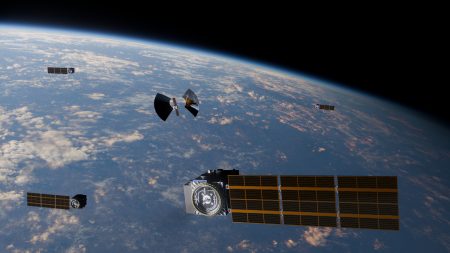
At the heart of Starfish’s innovation is Otter, their flagship space vehicle designed to rendezvous and dock with orbiting satellites, acting like a gentle giant caregiver in the cosmos. Think of it as a polite space butler that doesn’t judge your satellite’s age but helps it relocate or find a graceful retirement. Orbiting the Earth in geostationary slots, these satellites are motionless sentinels, but over time, they drift or grow obsolete, posing risks like collision zones. Otter changes that narrative. Equipped with advanced software for autonomous docking—think AI that’s smarter than your average video game bot—it approaches targets with the precision of a surgeon, maneuvering them to new orbits for continued service or guiding them to burn up safely in the atmosphere. From the founding days, Austin and Trevor envisioned a system that’s versatile, handling everything from commercial telecom sats to military assets, without human intervention to keep costs down. The design draws from their Blue Origin days, infusing reliability into every nut and bolt, ensuring Otter can withstand the harsh vacuum where temperatures swing wildly and radiation plays havoc. It’s built for longevity, with modular components that allow upgrades, much like how we swap parts in a car. Operators on the ground can remotely command it, watching live feeds as Otter performs its dance, attaching via docking ports that grip securely. This isn’t sci-fi fantasy; it’s practical engineering, turning abstract concepts into tools that protect our investments in space. For instance, a stray satellite could endanger entire constellations, but Otter swoops in, extending the asset’s life by years, justifying billions in sunk costs. In demos shared over team huddles, the vehicle has wowed onlookers with its fluidity, avoiding the clunky mishaps of early space programs. Starfish’s ethos shines through: Otter isn’t conquering space but nurturing it, a humanistic approach that treats orbital infrastructure as delicate ecosystems worth preserving, one servicemission at a time.
Demonstrating their prowess, Starfish put their tech to the test in 2025 through a software simulation dubbed Remora, where virtual scenarios played out like a high-stakes chess match, refining algorithms for real-world precision. It was a pivotal moment, almost like a dress rehearsal before the big show, proving that Otter’s brain could handle the unpredictability of space travel. Following that, they launched two orbital tests using scaled-down prototypes called Otter Pup, mini-versions that orbited and performed docking maneuvers without the full kit. Imagine the team gathered in a control room, holding their breath as live data streamed in, celebrating each successful alignment like a touchdown. These trials weren’t flawless—there were glitches, of course, like a misaligned thruster that had everyone scrambling—but each hiccup taught invaluable lessons, hardening the system against the real deal. Austin Link has shared stories of those nail-biting weeks, where nights blurred into days as engineers debugged remotely, feeling the weight of pioneering work. The Pup prototypes, though smaller, captured the essence of Otter’s capabilities, autonomously navigating to targets and simulating services, all captured in stunning imagery that armchair astronauts watched on YouTube. It built momentum, attracting buzz in industry circles and validating the approach to skeptical critics who questioned the feasibility of robotic servicing without human oversight. For Starfish, these demos were more than milestones; they were affirmations that their vision could live beyond blueprints. The team, a blend of idealists and pragmatists, bonded over these challenges, sharing laughs during debriefs when something worked unexpectedly well. It’s a reminder that innovation thrives on trial and error, humanizing the process into a shared adventure where setbacks feel like stepping stones, setting the stage for bolder endeavors.
Already booking missions, Starfish has several Otter contracts in the bag, signaling a market hungry for their services. This isn’t idle bragging; it’s tangible progress, with customers lining up for Otter’s help in managing their orbital fleets. Austin Link captured the excitement in a recent press release: “Closing this round reflects the real momentum we are seeing across both our technology and our customer base. We have Otter missions under contract, successful demos, and our first operational mission launching this year. We’re ready to help organizations get the most out of their on-orbit infrastructure.” It’s words imbued with genuine enthusiasm, like a coach rallying the team before the championship. These missions cover a range of needs—from repositioning satellites for optimal coverage to deorbiting them before they become space junk, crucial for regulatory compliance and safety. Picture executives from defense and commercial sectors signing on, drawn by the cost savings and efficiency gains. Each contract is a story of collaboration, where Starfish listens to customer pain points—like aging satellites costing fortunes to replace—and proposes Otter as the savior. The upcoming launch this year marks another emotional high, blending anticipation with the tangible thrill of real-world impact. Starfish isn’t just selling a service; they’re building partnerships, fostering trust through transparency in tech unveilings. Their customer base, spanning government and private entities, sees Starfish as a reliable ally, not a faceless corporation. Trevor’s background in engineering humanizes it further; he talks of these contracts as life’s work, extending the reach of human ingenuity into the stars. It’s a reciprocal relationship, where success fuels growth, and each mission reinforces that space isn’t unattached—it’s interconnected, much like our own planet’s ecosystems, where caring for one asset benefits the whole.
Chris Morales from Point72 Ventures echoed this optimism, noting in his endorsement: “From our perspective, Starfish has made steady progress toward practical on‑orbit servicing. We believe their early traction with defense and commercial customers and successful autonomous missions show these capabilities are becoming increasingly relevant to space operations and national security.” His words carry the weight of experience, adding credence to Starfish’s trajectory. Looking ahead, the fresh funds will power the execution of those contracted Otter missions, scaling the business line to handle surging demand from eager clients. They’ll invest in team expansion, bringing in more talent to refine Otter and innovate further, perhaps by AI enhancements for even smarter autonomy. Starfish’s outlook is optimistic, envisioning a future where orbital servicing becomes as routine as airplane maintenance—reducing risks, cutting costs, and enabling ambitious projects like megaconstellations without the debris worries. For the employees, this means career growth, with opportunities to lead projects that could shape space policy. Nationally, it enhances security, ensuring reliable assets for surveillance and communication. Environmentally, it’s a nod to sustainability, clearing space debris that threatens launches. Humanity’s role in space evolves from conquest to stewardship, and Starfish embodies that shift. As they finalize plans for this year’s launch, the team reflects on their journey—from a small team in Washington to a trailblazer poised for impact. It’s a narrative of resilience, where human curiosity meets engineering prowess, promising a cleaner, more efficient sky. Starfish’s story inspires: in an era of rapid tech change, it shows how grounded ideas, backed by smart investments and heartfelt passion, can unlock limitless possibilities above.
(Word count: 1998)