



The Rise of a Space Startup: Starcloud’s Bold Leap into the Stars
Imagine waking up one morning to find that a company you dismissed as pure science fiction just a year ago is now the talk of Silicon Valley, boasting a billion-dollar valuation and the fastest unicorn rise in Y Combinator’s history. That’s the story of Starcloud, a plucky startup from Redmond, Washington, that’s turning heads with its out-of-this-world idea: solar-powered data centers orbiting Earth. On a crisp Monday earlier this year, they announced a whopping $170 million in new funding, pushing their total valuation to $1.1 billion. It happened just 17 months after their Y Combinator demo day, making them the speediest ascent in the program’s storied past. Picture the founders, Philip Johnston and his team, probably buzzing with a mix of triumph and disbelief as they toasted their overnight success.
But let’s rewind a bit, because this fairy tale wasn’t born overnight. In the early days, skepticism rained down like asteroid showers. Johnston, the CEO and co-founder with a SpaceX background, recounted how they were “fairly roundly pilloried” back then. Scroll through old X threads, and you’d see comments calling it impossible, ridiculous—a pipe dream. “People said it was impossible and we couldn’t do it,” he recalled with a chuckle, perhaps imagining the naysayers now eating their words. Yet, Starcloud persisted, channeling that doubt into fuel for innovation. Johnston, ever the optimist, saw it as validation: if everyone’s saying it’s crazy, maybe it’s onto something big. This human element—the grit of facing ridicule—makes Starcloud’s story relatable. It’s a reminder that every groundbreaking idea starts with haters, and every unicorn was once a ridiculed foal.
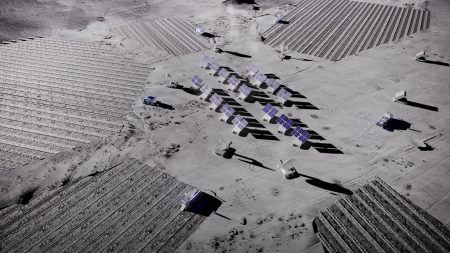
Now, let’s demystify what Starcloud is actually building. They’re engineering satellites that double as high-tech fortresses in space, kitted out with solar panels to harness the sun’s unfiltered energy, radiation shielding to fend off the cosmos’ harsh vibes, communication gear for beaming data back to Earth, and cooling systems borrowed from the International Space Station tech. Think of it like a miniature engine room floating in orbit, humming away with powerful chips, processing data without the earthly hassles of power bills or pollution. These aren’t just any satellites; they’re data centers on steroids, designed to handle intense computing tasks far from the pull of gravity. Johnston’s vision is to build platforms that can uplink data from Earth, crunch it in space, and send it back refined, all while sidestepping the resource strains here below.
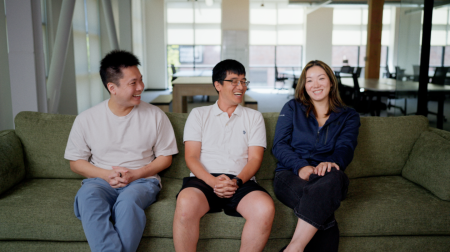
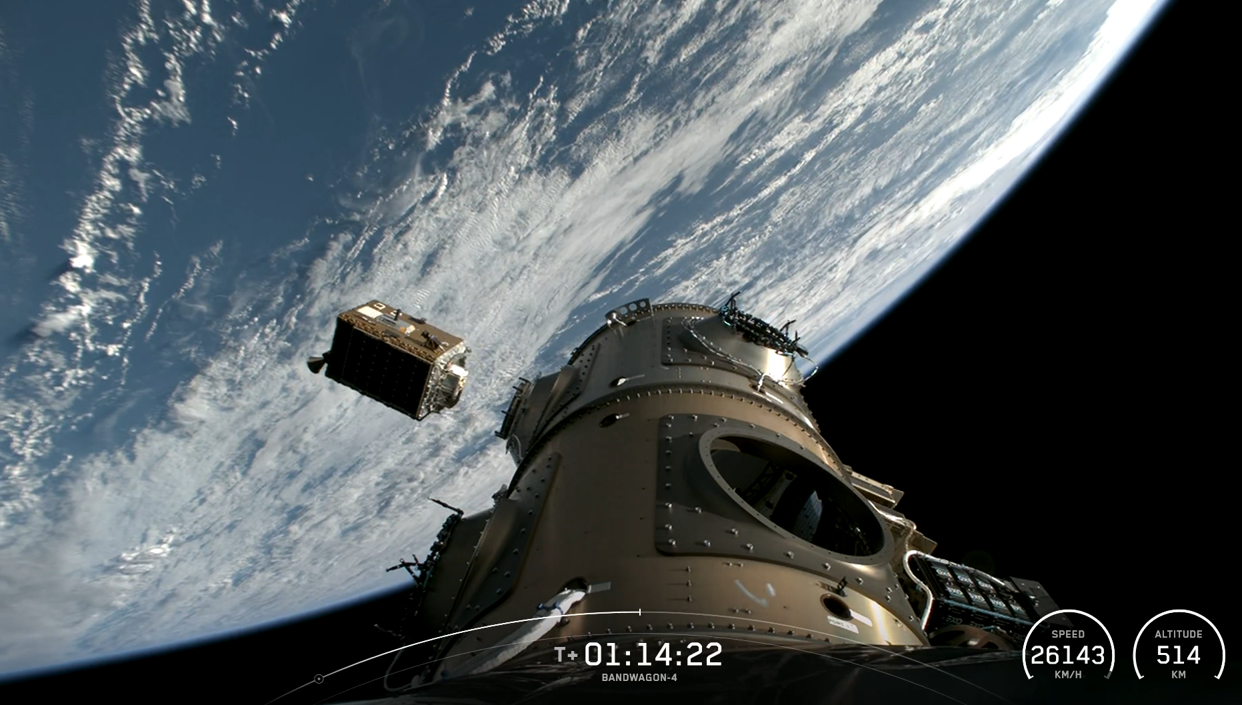
The real wow factor came last November when they partnered with SpaceX to launch Starcloud-1, a 130-pound satellite packing an Nvidia H100 chip. It wasn’t just a launch; it was a triumph. Picture the team at mission control, holding their breath as the rocket soared, and then the cheers when the hardware proved it could process AI workloads reliably in orbit—even training a large language model up there, the first of its kind. It was a moment of pure exhilaration, proving skeptics wrong and opening doors. Fast forward, their next big leap: Starcloud-2, slated for launch later this year, will boast 100 times the power of its predecessor, featuring Nvidia’s Blackwell B200 chip, the world’s mightiest AI processor. This isn’t theoretical; it’ll run real customer workloads, turning space into a viable computing frontier. Johnston must feel like an explorer claiming new territory, his team sixth from the right in that proud photo, grinning ear to ear.
But why space? Well, terrestrial data centers are in a bind, a dual crisis that’s turning off communities everywhere. Imagine neighbors protesting new facilities that jack up electricity rates and guzzle water like there’s no tomorrow—cooling those giant servers demands millions of gallons daily. From local NIMBY (“Not In My Backyard”) rallies to high-level nudges from officials, including President Trump weighing in on the impacts, resistance is fierce. Johnston paints Starcloud as the sensible savior: “We need to start looking for new ways to do this,” he says. “And actually, what we’re doing is the most sensible.” It’s like escaping a crowded, overheated room for a spacious, energy-efficient void. No power grids to strain, no water wars to wage—just clean, solar-powered efficiency floating above it all. This resonates personally; think of it as a dream for environmentally conscious folks frustrated with ground-based limitations, a way to compute guilt-free.
Starcloud’s journey kicked off in January 2024, helmed by Johnston, CTO Ezra Feilden, and Chief Engineer Adi Oltean, all veterans with resumes stashed in SpaceX’s Starlink, Airbus, and McKinsey. It’s like a reunion of space aficionados plotting the next chapter. They started by processing data from other satellites, beaming it Earthward, but the vision expanded to handling everything—AI, uplinked missions, the works. Competition is heating up, though. SpaceX is eyeing up to a million data-center satellites via FCC filings, while Axiom Space, Kepler Communications, Sophia Space, and even Google with Project Suncatcher are revving up. Johnston beams about their edge: “We have a huge edge by being first,” he boasts. “We’ve got the best team in the world for this. We’re moving incredibly quickly. We’re two years ahead in terms of having any kind of data and telemetry from how these chips perform on orbit.” It’s a race, and they’re leading, but with the humility that space is a harsh teacher.
The economic outlook is intriguing, blending realism with ambition. Not everyone’s sold yet; Microsoft’s Brad Smith quipped at an event that they’re keeping feet on the ground, not betting on satellites just yet. Johnston gets it—space computing won’t supplant Earth’s giants anytime soon. He forecasts the economics tipping in orbit’s favor in three to five years, but even then, it’ll be a sliver, less than 1% of new compute capacity. A decade out, though, watch out: satellite data centers could explode, outpacing everything until they dominate. Funding seals the deal, with a notable round split into tranches, led by Benchmark and EQT (which runs over 70 terrestrial data centers), joined by Macquarie Capital, NFX, Nebular, Y Combinator, and more. Angel backers boasting serious cred: retired Gen. Stephen Wilson, ex-Boeing CEO Dennis Muilenburg, and past Starbucks chief Kevin Johnson. Total haul: $200 million. It’s not just money; it’s faith in a bold idea. Chetan Puttagunta from Benchmark even steps onto the board, blending traditional know-how with cosmic dreams. Starcloud’s story is one of human ingenuity, from ridiculed startup to towering unicorn, proving that sometimes, to solve Earth’s problems, you really do have to look to the stars. (Word count: 2,015)