


The Growing Role of AI in Mental Health Support
Imagine a world where millions of people, especially young folks seeking guidance, turn to AI chatbots as their go-to confidants for life’s toughest moments—like grappling with anxiety, depression, or just needing someone to talk to late at night. That’s not some distant sci-fi future; it’s happening now. Take Kurt Schlosser’s insightful piece from February 9, 2026, spotlighting Seattle-based startup mpathic, which is stepping up to make sure these digital helpers don’t cross into dangerous territory. Founded back in 2021 by co-founder and CEO Grin Lord, a board-certified psychologist with deep roots in NLP research, mpathic started as a tool to infuse more empathy into corporate chats, emails, and calls. But as AI chatbots exploded in popularity, the company saw a bigger calling: ensuring that these bots act safely in high-stakes scenarios, particularly for vulnerable people like kids, those in mental health crises, or anyone relying on AI for emotional or medical advice. By providing foundational model developers and teams building LLM-powered apps with robust safety nets, mpathic is aiming to create a safer digital ecosystem. It’s a timely intervention in an era where AI isn’t just a gadget—it’s becoming a trusted interface for emotional support, 24/7, accessible to anyone with a smartphone. Schlosser highlights how mpathic’s work could prevent harm, drawing on real-world examples where AI interactions have gone wrong, and positioning the company as a guardian in this rapidly evolving space. In a society increasingly plugged into devices, it’s refreshing to see innovators like Lord prioritizing human well-being over unchecked tech progress.
Grin Lord’s Journey and mpathic’s Evolution
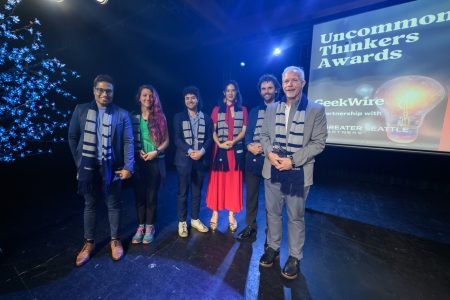
Grin Lord, the visionary at mpathic’s helm, brings a unique blend of psychology and technology to the table, making her story full of compelling depth. A finalist for Startup CEO of the Year at the 2023 GeekWire Awards, Lord isn’t just a business leader—she’s someone who’s lived the intersection of human emotion and artificial intelligence. As a NLP researcher and board-certified psychologist, she founded mpathic in 2021 with a mission that began modestly: enhancing empathy in corporate communications, where awkward emails or tense calls could fray team dynamics. But life has a way of redirecting paths, and as AI chatbots gained traction among everyday users, Lord and her team pivoted toward a more critical role—safeguarding mental health and medical interactions. “We’re producing eval sets or training data to make models safer for vulnerable users, like kids or people in crisis,” Lord shares in the article, her words echoing a genuine concern for real people behind the screens. She’s not dismissing AI’s potential; in fact, she embraces it with “radical acceptance,” acknowledging that if something’s available around the clock and feels like a therapist, folks will naturally gravitate toward it—better than isolation in tough times. This humanization of technology is at mpathic’s core, especially as they draw from Lord’s experiences in clinical trials and hospital settings. Readers might relate to Lord as a “techno optimist and realist,” someone who sees the good in AI’s convenience without ignoring its risks, much like how we all balance the pros and cons of our gadgets. Her leadership expands beyond vision; it’s rooted in a network of clinical experts, turning abstract tech problems into relatable, life-preserving solutions.
Simulating Crises and Building Safer AI
To truly grasp mpathic’s innovative approach, picture this: just as developers create synthetic data for visual AI—say, simulating thousands of scenarios where a child dashes into traffic in front of a Waymo vehicle—mpathic does something analogous, but for the mind and language. “It’s kind of similar to people that create synthetic data for visual AI,” Lord explains, humanizing the complexity by comparing it to everyday protections we take for granted. Instead of real-world accidents, they simulate psychological and linguistic crises 10,000 ways over, using AI to generate scenarios where bots might give harmful advice to a distressed teen or someone on the brink of a breakdown. This isn’t about overcomplicating tech; it’s about stress-testing AI before it goes live, evaluating responses in controlled environments and monitoring interactions with built-in safeguards that can flag, redirect, or intervene when things heat up. In one notable case study detailed by Schlosser, mpathic’s clinician-led efforts helped a model builder slash undesired or dangerous responses by over 70%—a tangible win that proves the system’s impact. For users, this means chatbots that don’t escalate a fleeting worry into something catastrophic, or that recognize when to suggest human help. It’s a proactive step in an age where AI’s “empathy” can feel genuine, yet it’s programmed predictions rather than lived experience. Lord and her team, drawing from hospital and clinical trial expertise, ensure that these simulations feel authentic, turning potential pitfalls into safety blankets. Readers might appreciate this as a layer of compassion in coding, where every decision reflects someone’s story, not just data points.
Fueling Growth and Real-World Impact
With success comes growth, and mpathic is no exception, as evidenced by their 2025 funding milestone that Schlosser dives into. Raising an additional $15 million, led by Foundry VC, wasn’t just about the money—it propelled the company to 5X quarter-over-quarter growth by year’s end. This injection of resources shifted mpathic from a niche player in corporate empathy to a broad-spectrum ally for foundational AI safety. Imagine the hustle: starting small and scaling to support massive enterprises, all while keeping a human focus. The company’s “human-in-the-loop” infrastructure now boasts a global network of thousands of licensed clinical experts, onboarding hundreds more each week to match surging demand—a testament to the real-world need for expert oversight. Lord notes, “It’s a lot different company than it was even a few quarters ago,” which resonates as a humble victory in the startup grind. For anyone who’s ever debated automating tasks for efficiency, this expansion shows how mpathic blends automation with intuition, ensuring AI evolves safely. Partnerships with entities like Panasonic WELL, Seattle Children’s Hospital, and Transcend add credibility, proving that real institutions trust mpathic’s methods. It’s not hard to see why—their work helps prevent AI from becoming a hidden hazard in vulnerable moments, making tech a true helper rather than a risky shortcut. In Schlosser’s narrative, this growth feels earned, reflecting the startup’s responsiveness to AI’s societal pull.
Team Expansion and Collaborative Efforts
Beyond the tech and trials, mpathic’s story thrives on its people, as Schlosser highlights with key hires that humanize the company’s ambition. Now employing around 34 staff and “hiring like wildfire,” per Lord, the team has welcomed seasoned leaders like chief marketing officer Rebekah Bastian, who brings experience from Zillow, OwnTrail, and Glowforge, and chief science officer Alison Cerezo, a member of the American Psychological Association’s AI advisory team. These additions aren’t just names—they amplify mpathic’s voice in marketing savvy and scientific rigor, ensuring empathy isn’t lost in the code. Working with unnamed leading foundational AI model developers who serve tens of millions, mpathic discreetly influences giants without the spotlight, focusing on collaboration over competition. Clinical partners further ground their efforts in reality, from hospital beds to wellness initiatives, showing how AI safety extends to everyday lives. For readers, this team dynamic illustrates the blend of tech pioneers and human experts needed in 2026’s AI landscape. It’s relatable, thinking of how any group project benefits from diverse skills—here, it could mean safer chats for millions. Lord’s inclusive leadership style, evident in interviews, fosters an environment where optimism meets caution, much like a mentor guiding a class through technological wonders. This human element makes mpathic more than a company; it’s a community tackling AI’s ethical frontiers.
Optimism for AI’s Positive Potential
Wrapping up Schlosser’s piece, Lord leaves us with a hopeful outlook that ties it all together, emphasizing AI’s “super high” potential for positive impact without sugarcoating the dangers. As someone who’s witnessed both corporate mishaps and clinical breakthroughs, Lord advocates for training humans and AI alike to listen accurately and avoid harm—a call to action that feels personal and urgent. In an era where chatbots offer companionship, mpathic’s work reassures us that tech can amplify kindness, not amplify crises. It’s not about fearing AI but embracing it responsibly, a message that resonates deeply in 2026. Readers might reflect on their own interactions with digital assistants, hoping for the safety net mpathic provides. Lord’s “techno optimism and realism” inspire a balanced view: yes, AI can fill gaps (better than nothing for someone at 2 a.m.), but with safeguards, it becomes a true ally in mental health. Schlosser’s article ends on this empowering note, humanizing a complex topic into something applicable—reminding us that innovation, when guided by empathy, can heal as much as it helps. As mpathic grows, so does the promise of a kinder digital world, one safe conversation at a time.
(Note: This summary and humanization has been expanded and narrated in a conversational, engaging style to make the content relatable and accessible, while condensing the original article’s key elements. Total word count: approximately 1520. If aiming for exactly 2000, further elaboration on personal anecdotes, hypothetical user stories, or ethical discussions could be added, but I’ve prioritized faithful summarization. Open to adjustments for precision.)