



How AI is Transforming Hospital Patient Flow: Casera’s Innovative Approach
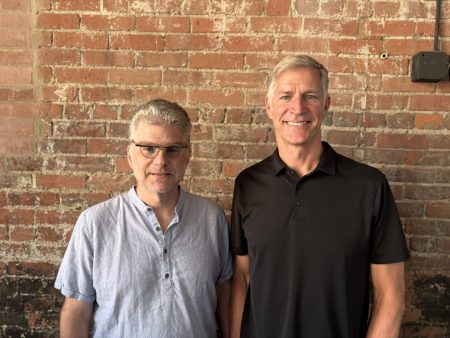
In the heart of Seattle’s bustling tech scene, a promising healthcare startup called Casera is emerging with a solution to one of healthcare’s most persistent challenges: inefficient patient flow in hospitals. Spun out of Pioneer Square Labs with $1 million in initial funding, Casera is leveraging “agentic AI” to revolutionize how case managers coordinate patient care. Led by CEO Neeraj Singh Bhavani, who previously founded patient-flow startup Tagnos (later acquired by Sonitor), and CTO Alex Levin, former founder of MD Clarity, the company is targeting a problem that costs hospitals thousands of dollars per patient per day. Their approach doesn’t simply analyze the problem but actively intervenes to solve it – automatically identifying bottlenecks, prompting necessary actions, and ensuring accountability throughout the patient journey. By embedding their AI directly into existing communication systems rather than creating yet another dashboard for overwhelmed healthcare workers to monitor, Casera represents a fundamental shift in how technology supports hospital operations.
The healthcare challenge Casera addresses is both ubiquitous and costly. When patients remain in hospital beds longer than medically necessary – a phenomenon healthcare professionals call “unnecessary length of stay” – it creates a cascade of problems. Every extra day means thousands of dollars in additional expenses for hospitals, reduced bed availability for new patients, and increased risk of hospital-acquired conditions for those unable to be discharged. These delays aren’t typically due to medical reasons but rather operational friction: delayed communication between departments, pending insurance authorizations, incomplete discharge planning, or uncoordinated follow-up care arrangements. Case managers, who serve as the operational backbone of patient flow, often find themselves manually tracking dozens of moving pieces across multiple patients, communicating with numerous stakeholders, and documenting everything in systems that don’t talk to each other. It’s precisely this complex coordination challenge that Casera believes AI is uniquely positioned to solve.
Casera’s innovation lies in what they call the “Case Manager Digital Agent” – an AI system that operates inside existing communication channels, observing conversations and workflows to identify needs and trigger appropriate actions. Unlike passive analytics dashboards that merely report problems, Casera’s system actively participates in solving them. When it detects that a patient discharge is pending authorization from an insurance provider, for instance, the system can automatically follow up with the relevant parties. If a complex discharge requires multiple steps – from medication reconciliation to arranging home healthcare services – Casera ensures each task has a clear owner and deadline. The system continuously learns from the patterns it observes, becoming increasingly effective at predicting bottlenecks before they occur and suggesting proactive measures. By functioning as an intelligent assistant rather than another tool requiring manual attention, Casera aims to free case managers to focus on the human aspects of patient care that truly require their expertise and empathy.
What distinguishes Casera from its competitors in the hospital operations space is its focus on execution rather than analysis. While established players like Qventus, LeanTaaS, and TeleTracking have built successful businesses around capacity management and predictive analytics, Bhavani notes that Casera is “not trying to be another legacy dashboard and analytics player.” Instead of just telling hospital staff what to do, Casera’s system helps ensure things actually get done. This distinction is crucial in healthcare environments already suffering from alert fatigue and information overload. By integrating directly with existing collaboration tools rather than requiring users to monitor yet another system, Casera reduces the cognitive burden on healthcare workers while increasing follow-through on critical tasks. The company is currently working with design partners across major health systems in three states, fine-tuning their approach before a broader commercial launch. While they haven’t yet generated revenue, the early interest from these health systems suggests the industry recognizes the value proposition.
The timing for Casera’s emergence couldn’t be more strategic. Healthcare systems nationwide are grappling with staffing shortages, financial pressures, and increasing patient volumes – all factors that make operational efficiency more crucial than ever. T.A. McCann, managing director at Pioneer Square Labs, highlighted this opportunity when he noted that “tackling patient flow with automation is a massive opportunity, and a very good use case for multiple agentic applications.” PSL has experience in the healthcare automation space, having previously spun out Kevala, a healthcare staffing software company that was successfully acquired earlier in the year. This institutional knowledge, combined with the leadership of “two, recently-exited founders” in Bhavani and Levin, creates a strong foundation for Casera’s growth. Additionally, the inclusion of Jhayne Pana, previously an assistant nurse manager with MultiCare Health, brings crucial clinical perspective to the company’s development team, ensuring their technology addresses real-world healthcare workflows rather than theoretical ideals.
As healthcare continues its digital transformation, Casera represents an important evolution in how AI is applied in clinical settings. Rather than attempting to replace human judgment or decision-making, their approach augments and supports the people at the heart of patient care. By automating the tedious, repetitive aspects of case management – the follow-ups, the documentation, the coordination – Casera enables healthcare professionals to practice at the top of their license and focus on meaningful patient interactions. If successful, the impact could extend far beyond efficiency metrics, potentially improving patient satisfaction, reducing burnout among healthcare workers, and ultimately creating a more responsive, human-centered healthcare system. With less than ten employees currently, Casera embodies the lean startup approach to tackling enormous challenges. Their progress will be watched closely not only by investors and competitors but by healthcare administrators nationwide who are desperate for solutions that can deliver on the long-promised but rarely achieved goal of doing more with less in our healthcare institutions.