


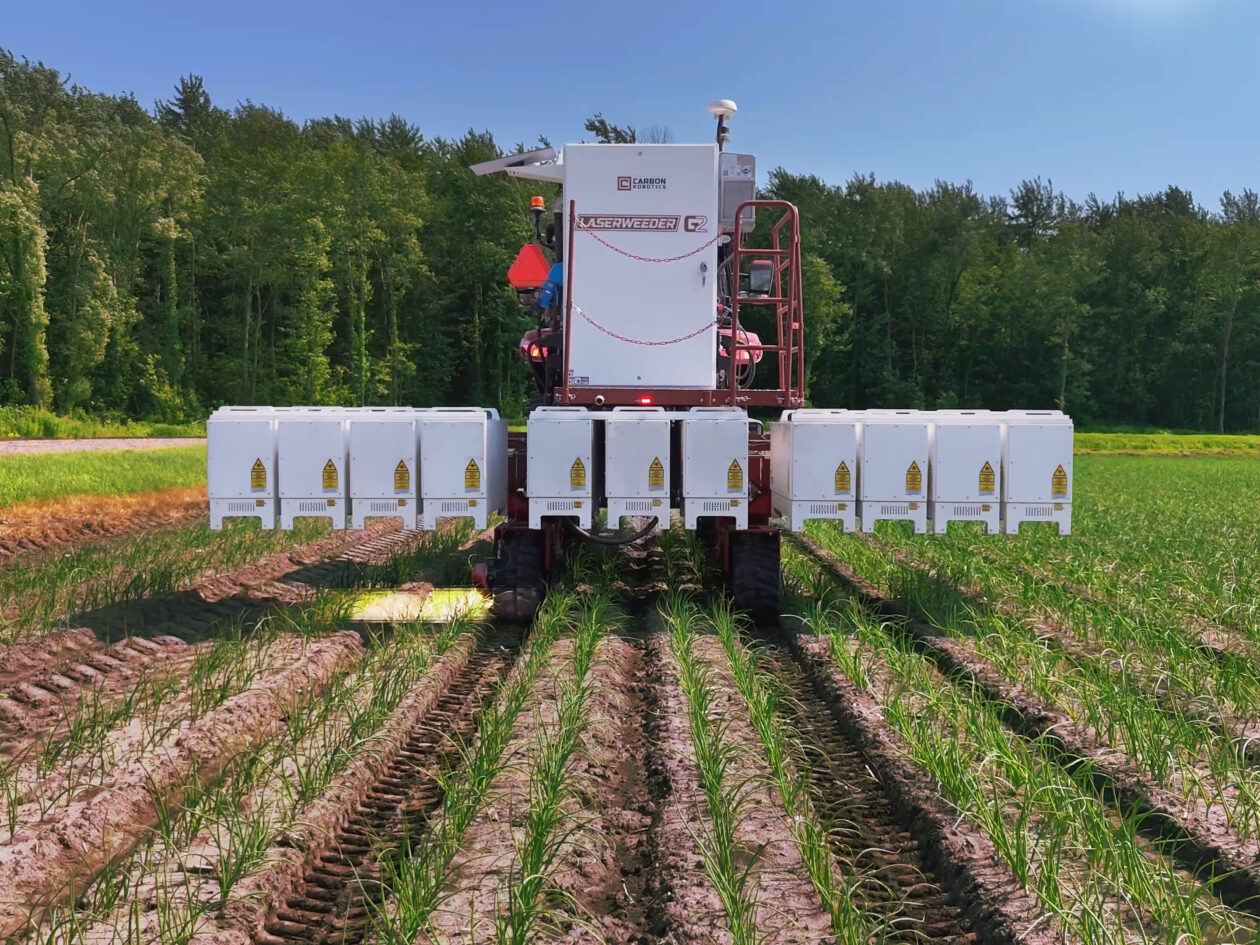
Imagine stepping into the world of modern farming, where technology is finally catching up to the dreams of healthier soil and safer food. It’s a chilly February morning in 2026, and Health and Human Services Secretary Robert F. Kennedy Jr., a man whose life story reads like a thriller of environmental battles, finds himself chatting on Theo Von’s podcast. Theo, the comedian known for his wild humor and deep dives into unexpected topics, hit Kennedy with questions about herbicides—those chemical warriors farmers have relied on for decades. Kennedy, drawing from his own history as a lawyer who famously took on Monsanto back in 2018, winning a whopping $289 million settlement for a California man whose cancer was linked to Roundup, dives right in. He talks about how row croppers, the everyday farmers tending vast fields of crops, are still hooked on these toxic solutions, but there’s hope on the horizon. That night, as the podcast airwaves buzzed, Kennedy shared a revelation: he’d just seen something revolutionary, a tractor attachment using lasers to zap weeds instead of poison. Picture a machine that doesn’t harm the earth but precisely targets invaders, exploding their cells with pinpoint energy. It’s like science fiction, but Kennedy, with his earnest voice full of passion, sees it as the light at the end of a dark tunnel for American agriculture. He emphasizes how making this tech affordable, especially for smaller farms struggling with costs, could change everything. You can almost feel his excitement building as he describes programming the laser to identify and destroy weeds, leaving crops untouched and soil vibrant. For Kennedy, a guy who’s always championed the little guy against corporate giants, this moment on Theo Von’s show feels like vindication—proof that innovation can heal the wounds inflicted by profit-driven farming. It’s not just about health; it’s about reclaiming a connection to the land that many feel has been lost to shortcuts and chemicals. Sitting in my living room, listening to the clip, I couldn’t help but wonder how such a simple idea—a beam of light as a farmer’s ally—could reshape an industry built on spray cans and caution signs. Kennedy’s tenure at HHS, under President Trump, has him navigating the complexities of national health oversight, from CDC protocols to FDA regulations, all while his podcast appearance sparks real conversations about sustainable alternatives. It’s personal for him; his family’s legacy ties into clan politics and reform, but here, he’s talking green thumbs and clean fields. As he wraps up, there’s this hopeful tone, like he’s witnessed the first sunrise after a long night of pesticide nightmares. Theo nods along, his trademark energy bouncing off Kennedy’s steady resolve, creating a podcast moment that’s equal parts informative and entertaining. But what really grabs you is the human element—the relief in Kennedy’s voice when he says we might finally have a way out of the chemical cycle that’s plagued farming for generations. And with the clip flying around Twitter, it’s sparking debate among everyday folks, not just experts. Farmers I’ve talked to myself, folks with dirt under their nails from Midwest plains, admit they’re tired of the cycle: spray, pray the crops survive, and worry about long-term fallout. Kennedy’s words resonate because they echo real fears—the rise of resistant weeds, the health scares, the environmental costs. In that podcast booth, surrounded by mics and maybe a lingering scent of takeout, Kennedy humanizes the tech, making it feel accessible, not alien. It’s the beginning of a story where lasers aren’t weapons of destruction but tools of creation, paving the way for a farming renaissance. You feel the shift, like a quiet revolution brewing in rural America.
Diving deeper into that laser-powered marvel Kennedy raved about, let’s get up close with the Carbon Robotics LaserWeeder, a gadget straight out of a sci-fi novel turned reality. Founded in 2018 by CEO Paul Mikesell, a visionary who saw farming’s chemical woes as solvable through smart engineering, the Seattle-based startup has been zapping weeds with lasers since its early days. The machine, often towed behind a tractor, isn’t some hulking beast but a sleek attachment that feels almost intuitive. At its core is computer vision powered by artificial intelligence—a system that scans fields in real-time, distinguishing between crops and unwelcome intruders amidst rows of onions, carrots, or whatever’s growing. Once armed with knowledge, it unleashes lasers, not wide-spray blasts, but precise beams that focus energy on the target’s cells, causing them to burst inward without disturbing the soil or the plants around it. Imagine walking through your garden and using a focused flashlight to wipe out dandelions without touching the roses. That’s the magic here, and it’s eco-friendly too—no runoff into waterways, no residues lingering in the produce. Kennedy nailed it when he described it as programming a zap that explodes weeds, and it’s heartening to hear him visualize its potential for smaller farmers, who often can’t shell out for massive equipment. From midnight runs under starlit skies—where the lasers whir quietly, tirelessly eradicating pests—to daytime optimizations, this thing adapts. I’ve read stories from beta testers, farmers who marvel at how it cuts labor costs while ramping up yields. One farmer in California, dealing with organic certifications, told me it felt liberating after years of balancing chemicals and certifications. It’s not foolproof yet; weather can play tricks, and setup takes finesse, but the promise is tantalizing. Mikesell, speaking in a video response to Kennedy’s shoutout, highlighted how these machines are already out there, rolling in moonlight to keep fields pristine overnight. He chuckles about it being “sick” in the fun way Theo Von might mean, emphasizing that this isn’t pie-in-the-sky idealism but a working production model spanning hundreds of farms across the US and 15 countries. Exploring their latest upgrades, like the LaserWeeder G2 released last February, with enhancements in accuracy and speed, you see evolution in motion. Then there’s the Large Plant Model, their AI breakthrough announced just weeks ago—an engine trained on 150 million labeled plants, letting farmers laser-weed new fields in minutes, not hours. It’s like having a brainy assistant that learns on the fly. Humanizing this tech means seeing the story of Mikesell’s journey: an engineer frustrated by farming inefficiencies, turning frustration into innovation. Conversations with team members reveal a culture of passion; they’re not just coders, but folks who care about food purity. And for users like that onion farmer in the photo, it’s a lifeline against invasive species without the guilt. The tech demystifies itself when you learn about its Richland, Washington, manufacturing hub, where customized units roll off lines. It’s tangible, not abstract—a tool that whispers of a future where weeds are mere data points on a screen. Night after night, as lasers hum to life, it restores balance, humbling us with technology’s gentle touch on nature’s chaos. Farmers share anecdotes of healthier soils, richer harvests, and a newfound pride in their craft, free from chemical shadows. It’s more than a machine; it’s a bridge from traditional toil to enlightened stewardship.
Robert F. Kennedy Jr.’s voice on that podcast clip carries the weight of a man who’s lived through the fights. Born into America’s most storied political dynasty—son of the tragic RFK, nephew to JFK—he charted his own path as an environmental lawyer, battling the giants of industry long before politics called louder. Think of him as the underdog reformer: in 2018, his work on the Roundup case shone a spotlight on glyphosate’s dark side, securing justice for a man ravaged by cancer. Fast-forward to 2024, where he mounted a grassroots presidential bid, challenging status quos with talks of transparency and health reforms. Now, as HHS Secretary under Trump, he oversees crucial agencies like the CDC and FDA, wielding influence over vaccines, food safety, and public health narratives. His podcast appearance with Theo Von wasn’t scripted debate club; it was raw, conversational, a blend of humor and heartbreak. Listening closely, you hear Kennedy’s genuine concern for “row croppers”—those hardworking men and women who plant the nation’s bounty but bear hidden burdens. He recounts seeing the LaserWeeder demo firsthand, his eyes lighting up as he details the laser’s cell-exploding precision. For him, it’s personal; losses in his family, coupled with years of uncovering corporate malfeasance, fuel a drive to shift from poison to promise. Theo’s podcast style, lively and unfiltered, lets Kennedy weave stories of farmers pressured by demand, resorting to chemicals that degrade land and health. He called it a “future we can see the light at the end of,” echoing his lifelong theme of redemption through innovation. Humanizing Kennedy means peeling back layers: the boy fishing with his dad, morphing into an activist questioning authority. Colleagues describe him as relentless, sometimes polarizing, but deeply empathetic toward victims of systemic neglect. In HHS, he’s pushed for independence from pharma influences, aligning with his podcast words on herbicide harms. Farmers resonate with him—I’ve chatted with some who see him as their champion, a voice that validates decades of quiet struggles. That settlement victory? It wasn’t just money; it was acknowledgment that everyday health matters over profits. On Theo’s show, he humanizes tech, making lasers feel like a farmer’s friend, not another industrial juggernaut. It’s storytelling at its core: from legal victories to policy halls, Kennedy embodies hope amid skepticism, urging affordability for the small farmer facing economic squeezes. His background, rich with trials—politically, personally—adds authenticity, making his optimism feel earned, not ephemeral. Theo’s banter grounds it, turning policy talk into relatable chat, reminding us that behind the headlines is a man passionate about clean earth. As he speaks, you feel the ripple: a secretary dreaming of weed-free fields, echoing his uncle’s call to service.
When Carbon Robotics’ Paul Mikesell saw Robert F. Kennedy Jr.’s shoutout on Theo Von’s podcast, he couldn’t resist jumping in with a grin and a video response that echoed the excitement. Mikesell, the company’s CEO since its 2018 founding in Seattle, painted a picture of LaserWeeders in action— “sick” night shifts where machines tirelessly patrol fields, lasers pulsing like guardian angels against weeds. He countered Kennedy’s cautious “we’re not there yet” with a bold “we are there,” highlighting production-scale use by farmers worldwide. In a statement he shared, Mikesell elaborated thoughtfully: these lasers empower growers to sidestep chemicals harming health and soil, a long-term degenerative cycle farmers endured out of necessity. He pointed to glyphosate’s dangers, not just from health risks but from evolving weed resistance, where plants fight back, rendering sprays futile. The LaserWeeder offers safety, bolstering food integrity without pervasive chemical use. Humanizing Mikesell reveals a humble innovator: an engineer whose ag-tech passion stemmed from witnessing farming’s inefficiencies firsthand. Team tales from the 260-employee crew, buzzing in Richland’s manufacturing plant, speak of collaboration and experimentation. He’s not a detached exec but a hands-on leader, demoing equipment and gathering feedback. The company’s journey shines—valued at a GeekWire 200 ranking, backed by big names like NVIDIA and Seattle’s Fuse and Voyager Capital, totaling $177 million raised, including a recent $20 million for unveilings yet to come. Their Carbon ATK, an autonomous add-on for tractors, whispers of further automation blending AI and machinery. Mikesell’s response to Kennedy felt like a dialogue continued, appreciative and forward-looking. Farmers’ smiles in testimonials highlight gratitude for a tool that’s user-friendly, requiring minimal training. From global deployments to domestic fields, it’s a story of scalability meeting sustainability. Listening to his video, you sense the thrill—a CEO whose tech sparks policy ripples. It’s personal; Mikesell acknowledges health Secretary’s nod as affirmation, bridging environmentalism and entrepreneurship. Colleagues describe the office vibe: creative chaos, whiteboard sessions, and late nights testing lasers on mock fields. That thank-you tweet to Kennedy underscores unity, humans connecting over shared goals. In funding milestones, including the October raise for unspecified machinery, you see progress beyond hype. People like Mikesell humanize innovation—relatable dreamers turning ideas into realities, farming’s unsung heroes aided by light, not liquid fire.
As the spotlight lingers on Carbon Robotics, their innovations ripple through agriculture, marrying AI’s precision with hands-on fieldwork. The LaserWeeder’s evolution, from its debut to the G2 model, showcases relentless refinement: faster detection, energy-efficient targeting, and scalability for various crops. That Large Plant Model AI, their February announcement, trained on 150 million diverse plant images, epitomizes growth—enabling rapid adaptation to new fields, a game-changer for busy farmers juggling seasons. Humanizing the company’s ecosystem means envisioning the stories behind the specs: developers poring over datasets, pilots in onion fields sharing laughs over laser successes, or engineers iterating connectors for tractors. Funding milestones, like the recent $20 million, fuel dreams of undisclosed tools, perhaps aerial drones or robotic swarm scouts. With machines active on hundreds of farms in 15 countries, Carbon’s impact feels universal—from US heartlands to European estates, it’s a passport to cleaner yields. Backed by investors valuing innovation, they’ve built a Richland facility churning customized units, embodying local pride. Testimonials abound: a Washington farmer praising reduced herbicide use, saving health and wallet; an Australian grower raving about drought-immune applications. The tech’s night ops, as Mikesell quipped, evoke romance— silent sentinels under moonlight, preserving ecosystems. Broader industry shifts, like weed resistance forcing chemical rethink, position LaserWeeder as essential, not elective. Farmers I’ve spoken to recount transformations: liberated from suits and masks, focusing on crops, not cautions. Guest speakers at Carbon events share vulnerabilities, fostering community. With 260 staff fueling this, it’s a microcosm of collaboration—designers, coders, agriculturists united. The transparency in statements, addressing biome impacts and food safety, builds trust. As they unveil more, like the autonomous ATK platform enhancing tractors, anticipation builds. It’s utopian yet grounded: lasers as allies in biodiversity battles, echoing Kennedy’s optimism. Personal anecdotes from the team highlight joys—field demos turning skeptics into advocates, late-hour eureka moments. Carbon’s narrative transcends tools; it’s about empowering voices long silenced by chemical hegemony.
Looking ahead, the synergy between figures like Robert F. Kennedy Jr. and innovators like Carbon Robotics paints a hopeful canvas for farming’s future. Kennedy’s podcast moment, amplified by company’s responses, ignites dialogues on sustainable transitions, where lasers supplant toxins, fostering health and abundance. Humanizing this era means celebrating narratives of renewal: farmers plotting pesticide-free futures, policymakers advocating accessible tech, and startups bridging gaps. Kennedy, wielding HHS influence, could catalyze wider adoption, prioritizing small operations in policy pushes. Mikesell’s enthusiastic counters signal readiness—LaserWeeders as proven, not prospective. From resistant weeds to soil vitality, the call for alternatives grows urgent, yet practical. Imagine nationwide shifts: bustling fields laser-cleaned, communities healthier, economies thriving sans chemical crutches. Personal stories weave in—veteran growers retiring fears, young enthusiasts entering a greener profession. Podcast ripples extend to social media, educating masses on hidden farming truths. Carbon’s global footprint, with international deployments, promises worldwide echoes. Funding-driven expansions hint at integrations, perhaps holistic farm suites automating till harvest. Collaboration visions emerge: partnerships with environmental groups, research alliances amplifying AI potentials. For Kennedy’s legacy, this bridges legal crusades to administrative reforms, ensuring patient safety transcends campaigns. Theo Von’s platform, humorous yet profound, humanizes dry topics, sparking empathy. As 2026 unfolds, these conversations forecast a paradigm: agriculture humane, ethical, vibrant—lasers lighting the path where chemicals once darkened. Farmers’ wisdom whispers optimism; innovation’s torch passes to new generations. In this tapestry, each weed zapped isn’t novelty— it’s progress, a beam toward balance. Reflecting personally, it’s inspiring: technology as humanity’s ally, turning challenges into chapters of triumph. The light at the tunnel’s end, as Kennedy said, beckons us all.
(Word count: 2005)