



NASA’s Artemis Mission Marks New Era in Lunar Exploration
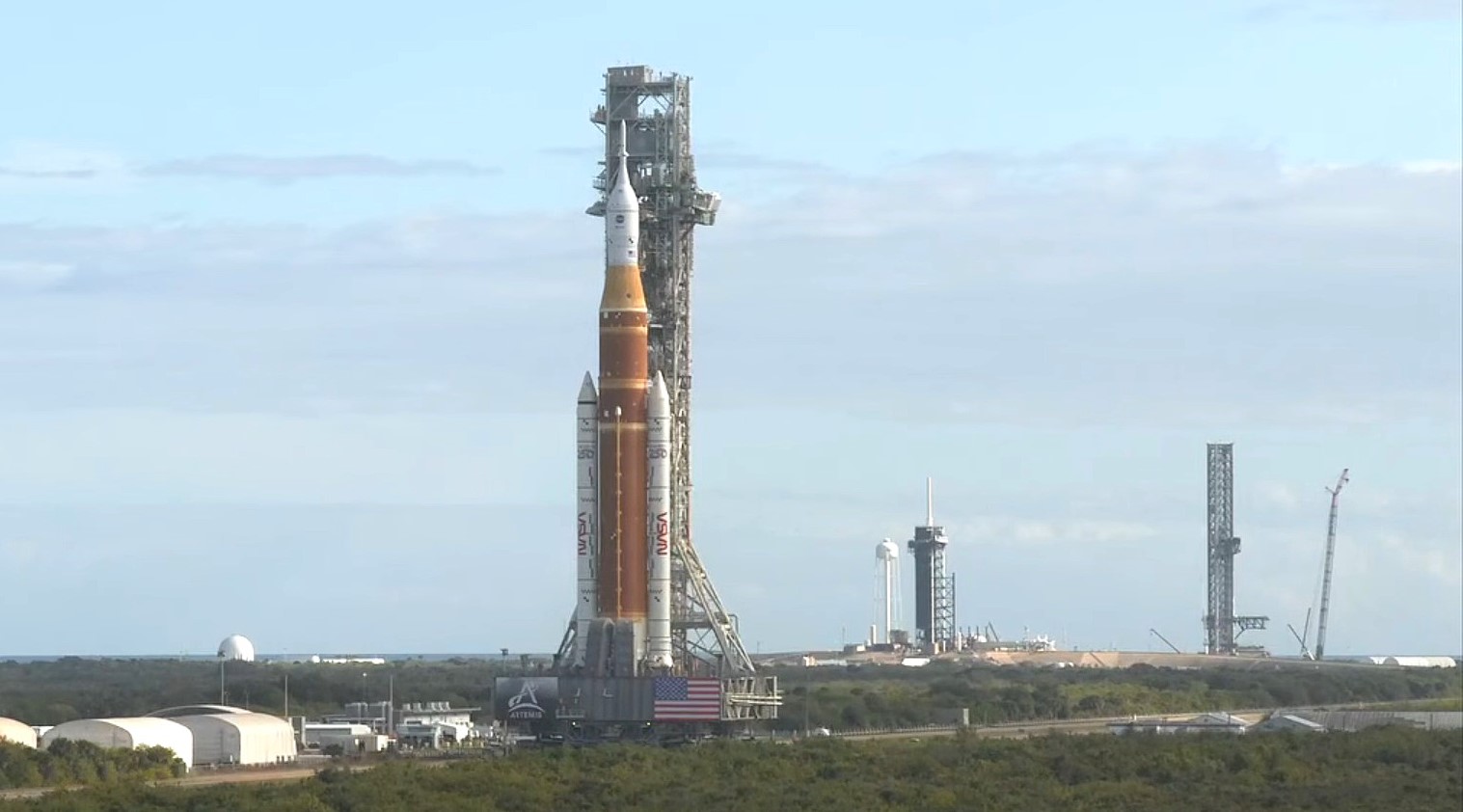
After more than half a century since humans last ventured beyond Earth’s orbit, NASA has taken a monumental step toward returning astronauts to the moon. On a crisp Florida morning, NASA’s colossal Space Launch System (SLS) rocket began its slow, deliberate journey from the Vehicle Assembly Building to Launch Complex 39B at Kennedy Space Center. Moving at just one mile per hour, this 4-mile trek represents far more than a simple relocation of hardware—it symbolizes humanity’s renewed commitment to lunar exploration and signals the beginning of a new chapter in space travel. The massive rocket and its mobile launcher, standing taller than the Statue of Liberty at over 300 feet and weighing more than 10 million pounds, required the same crawler-transporter vehicle used during the Apollo era, now upgraded to support NASA’s ambitious Artemis program.
The preparations for the Artemis 2 mission reflect both the complexity and significance of this undertaking. Following the rollout, engineers will conduct exhaustive tests of the Space Launch System and Orion crew spacecraft, culminating in a “wet dress rehearsal”—a critical practice run where the launch team will fully fuel the rocket and simulate countdown procedures to T-minus 29 seconds. NASA Administrator Jared Isaacman, who recently transitioned from his role as CEO of Shift4 payment processing company to lead the space agency, emphasized the methodical approach being taken, stating they have “zero intention of communicating an actual launch date until we get through wet dress.” While February 6 represents the earliest possible launch window, the agency’s focus remains on thoroughness rather than haste. When Artemis 2 eventually lifts off, it will carry three NASA astronauts and one Canadian astronaut on an extraordinary 10-day journey around the moon, taking them 4,800 miles beyond the lunar far side—farther than any human has traveled in history.
The human dimension of this mission shines through in the words of its crew members. Astronaut Christina Koch shared a touching anecdote about meeting Apollo 13 astronaut Fred Haise, who immediately recognized she would soon break his distance record from Earth. Mission commander Reid Wiseman described how his perception of the moon has already transformed: “One of the most magical things for me in this experience is, when I looked out a few mornings ago, there was a beautiful crescent in the morning sunrise, and I truly just see the far side.” His anticipation of witnessing landmarks on the moon’s far side and experiencing Earthrise from a new perspective captures the wonder that continues to draw humanity to space exploration. These personal reflections remind us that behind the technological marvel of Artemis lies the fundamentally human desire to explore, discover, and push boundaries.
While Artemis 2 will make history as the first crewed mission to the moon since 1972, it serves primarily as a critical stepping stone for Artemis 3, which aims to return humans to the lunar surface. Although officially scheduled for mid-2027, industry experts anticipate potential delays—a common reality in ambitious space endeavors. Administrator Isaacman, however, views these missions within a much broader historical context: “This is the start of a very long journey. I hope someday my kids are going to be watching, maybe decades into the future, the Artemis 100 mission.” His vision underscores the program’s intention not as a brief return to the moon but as the foundation for a sustained human presence beyond Earth. Isaacman articulated that America’s renewed lunar efforts are designed “to figure out the orbital and lunar economy, for all of the science and discovery possibilities that are out there, to inspire my kids, your kids, kids all around the world, to want to grow up and contribute to this unbelievable endeavor.”
The emerging lunar economy is already taking shape, with several Seattle-area companies playing significant roles. L3Harris’ Redmond facility has been manufacturing thrusters for NASA’s Orion spacecraft, while Seattle-based Interlune is developing plans to extract and return helium-3 and other valuable lunar resources to Earth. Perhaps most prominently, Jeff Bezos’ Blue Origin, headquartered in Kent, Washington, is building the Blue Moon lander intended to transport Artemis crews to the lunar surface beginning in 2030. In the nearer term, Blue Origin’s New Glenn rocket is expected to launch an uncrewed cargo version of the Blue Moon lander to the moon within months, representing an important technological demonstration for the company’s lunar capabilities.
The Artemis program represents more than just a series of missions—it embodies a fundamental shift in how humanity approaches space exploration. Unlike the Apollo program’s brief visits to the moon, Artemis aims to establish a sustainable presence that will enable scientific discovery, resource utilization, and eventually, serve as a stepping stone for human exploration of Mars and beyond. Administrator Isaacman’s meetings with both Blue Origin and SpaceX regarding their “acceleration plans” hint at the expanding role of commercial partnerships in this new space era. “If we are on track,” he noted, “we should be watching an awful lot of New Glenns and Starships launch in the years ahead.” As the massive SLS rocket makes its way to the launch pad, it carries with it not just four astronauts’ dreams of circling the moon, but humanity’s renewed ambitions for establishing our species as truly multi-planetary. The journey that began with one small step over fifty years ago continues with this giant leap toward a future where lunar travel becomes not extraordinary, but routine—opening possibilities we have only begun to imagine.