



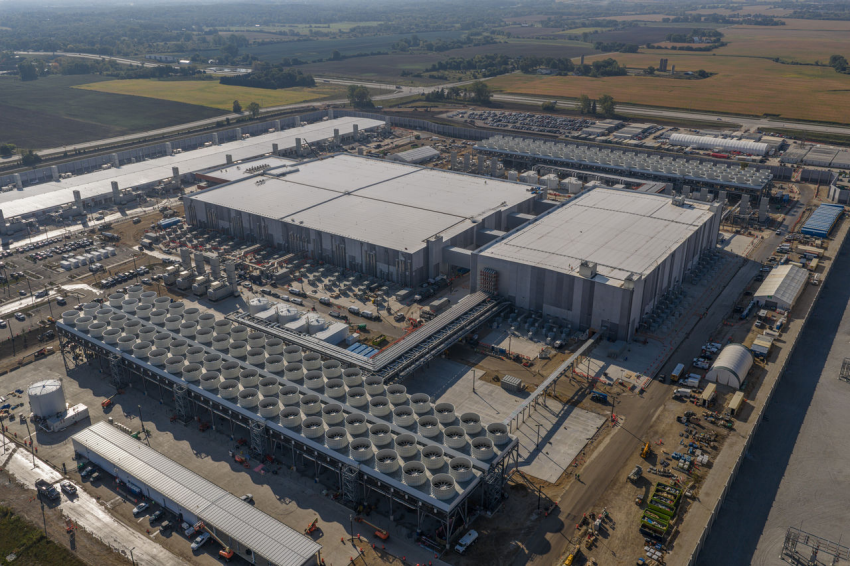
Every time we tap a button on our smartphones, prompt an artificial intelligence to write a piece of code, stream a high-definition video, or store our life’s most precious memories in the cloud, an invisible but deeply physical reaction occurs thousands of miles away. These digital interactions, which feel entirely weightless, effortless, and ethereal to us, rely on a vast global network of physical server campuses that generate immense, concentrated amounts of heat. Historically, keeping this sprawling digital universe from overheating has required tech companies to drink heavily from the world’s precious freshwater supplies. However, Microsoft recently announced a monumental milestone in its decades-long quest to decouple technological progress from environmental degradation. Over the past twenty years, the Redmond-based tech giant has fundamentally re-engineered its relationship with water conservation, slashing its data center water consumption rate by an impressive 90% compared to the levels seen when it first opened its dedicated computing facilities in the early 2000s. In its latest environmental disclosure, Microsoft revealed that it consumed just 0.27 liters of water per kilowatt-hour of energy globally last year. To put this into perspective, this rate is roughly three times more efficient than the current industry average, demonstrating how decades of incremental engineering designs have quietly transformed the physical backbone of our digital lives. It represents a massive pivot from the early days of the internet when data storage hummed along with little regard for the environmental toll. Today, as public awareness grows and climate change accelerates, the efficiency of these silent giants is no longer just a technical metric; it is a vital indicator of how sustainably humanity can transition into an era absolutely dominated by artificial intelligence and cloud computing. Under the guidance of leaders navigating this rapid expansion, Microsoft has shown that computing does not have to mean resource depletion, offering a template for how tech can scale responsibly.
Despite these internal engineering triumphs, the rapid expansion of physical digital infrastructure has triggered a wave of friction in the real, physical communities where these mega-facilities, such as Microsoft’s massive data center campus in Wisconsin, are constructed. Across the United States and globally, local residents and civic leaders are increasingly vocal about the encroachment of data centers on their neighborhoods. People are actively protesting, showing up at town halls, and enacting moratoriums on new construction out of deep-seated concerns over localized water depletion, massive electrical grid strain that could inflate residential utility bills, and the constant, low-frequency hum of cooling fans. Understanding that technological progress cannot succeed if it alienates the public, Microsoft has attempted to get ahead of these community anxieties through proactive, structural commitments. At the start of this year, the company launched its “Community-First AI Infrastructure” initiative, a goodwill framework designed to prove that the company can be a collaborative neighbor rather than an invasive corporate sovereign. Through this pledge, Microsoft has vowed to fully cover its own heavy electricity costs, forgo traditional local tax breaks to ensure municipalities still receive crucial public funding, and lend its corporate weight to consumer protection policies. For instance, the tech giant recently threw its support behind the federal Ratepayer Protection Act, a congressional measure designed to shield everyday consumers from the skyrocketing utility rates often associated with massive new data center installations. Although this stance stands in contrast to the company’s previous opposition to localized tech-related legislation in its home state of Washington, it signals a growing realization that long-term corporate survival in the AI age requires deep, empathetic collaboration with the human beings living right outside the server farm gates.
To fully appreciate how Microsoft achieved this 90% drop in water intensity, one must look at the fascinating, high-stakes science of keeping high-performance silicon chips cool under constant pressure. Data center thermal management is a constant, delicate balancing act between two primary environmental resources: water and electricity. Traditional air conditioning units use vast quantities of electricity but preserve water, whereas evaporative cooling systems—which cool the air by letting water evaporate into it—are incredibly energy-efficient but highly thirsty. Microsoft’s engineering teams, led by prominent voices like Cloud Operations & Innovation CTO Judy Priest and Datacenter Engineering Vice President Steve Solomon, have developed a multi-tiered approach that minimizes the trade-offs of both systems. In a recent blog post, Priest and Solomon emphasized their deep commitment to advancing innovations that reduce water intensity while supporting the growing performance demands of cloud and artificial intelligence services. At the core of their strategy is a system that relies primarily on exterior fans for cooling, only activating water-intensive evaporative cooling when outdoor temperatures climb past a scorching 85 degrees Fahrenheit. Furthermore, for their most powerful computing units running heat-intensive AI workloads, they have implemented advanced, closed-loop chip-level cooling systems where water acts as a continuous coolant, recirculating through the same hardware indefinitely without evaporating away. By conducting rigorous, localized audits of their facilities, Microsoft ensures that every single site operates exactly as designed, leaving no room for wasteful leaks, while actively transitioning to recycled, reused, or non-potable water sources to preserve drinking water for local communities.
This engineering ingenuity has allowed Microsoft to announce that it has officially achieved its ambitious 2030 environmental goal of being “water positive” across its global operations, meaning the company now replenishes more fresh water into local basins than it actively consumes worldwide. While this sounds like an unmitigated triumph, environmental advocates and industry analysts often point out that global environmental accounting can mask localized crises. Under a purely global framework, a tech company could theoretically consume millions of gallons of water in a drought-prone desert region, such as Arizona, and “offset” that consumption by funding a massive wetland restoration project in a water-abundant region, such as the Pacific Northwest. Recognizing the limitations of this global math, Microsoft’s new “Community-First AI Infrastructure” initiative promises to change the game by vowing to replenish more water than it uses within the specific local districts where it operates. This localized approach represents a vital step forward in real-world ecological responsibility, ensuring that communities are not left with dry wells and depleted aquifers in exchange for vague global sustainability statistics. True ecological harmony cannot be achieved through creative corporate accounting; it must be felt directly by the ecosystems and people sharing their local watersheds with these computational powerhouses. By committing to local basin replenishment, Microsoft is attempting to ground its corporate sustainability metrics in tangible, geographic realities that protect the actual environments supporting their industrial footprint, showing that true progress must be measured on a community-by-community basis rather than a global spreadsheet.
This pursuit of ecological balance is not occurring in a vacuum, as Microsoft finds itself locked in a fierce “green race” with its primary cloud competitors, Amazon and Google, who are similarly working to quench public concerns. Just weeks before Microsoft’s announcement, Amazon shared its own water efficiency statistics, demonstrating an even lower water usage rate, while Google released updated pledges aimed at bolstering its own water-positive initiatives. However, comparing these corporate giants on environmental metrics is notoriously complex, as the boundary lines of what counts as “consumption” differ across the tech landscape. For example, Microsoft’s celebrated efficiency figures only apply to data centers that the company fully owns and operates directly, whereas Amazon’s reporting encompasses both its proprietary facilities and the massive computing footprints it leases from third-party physical developers. Furthermore, while Amazon has also committed to becoming water positive, its replenishment pledge currently covers only its data centers, leaving out its extensive logistics network, global shipping operations, and physical retail spaces. Google, on the other hand, continues to redefine its environmental definitions in an effort to maintain its reputation as a green pioneer. This competitive tension, though driven by corporate public relations and market positioning, ultimately benefits the global environment by pushing each tech behemoth to constantly innovate, share best practices, and hold one another accountable in a public arena where greenwashing is quickly called out by vigilant consumers, regulators, and local community advocates who refuse to accept corporate promises at face value.
When we step back and look at the sheer scale of global tech infrastructure, the numbers can feel both staggering and surprisingly modest depending on the lens through which they are viewed. In its 2024 fiscal year, Microsoft’s operations across the planet withdrew a combined total of 2.7 billion gallons of water to keep its enterprise running. To place that massive figure in a human context, Seattle Public Utilities delivers roughly 43 billion gallons of water every single year to the 1.6 million residents living within its metropolitan service area, meaning Microsoft’s entire global water footprint is just a fraction of what one mid-sized American city consumes. Historically, data centers account for a mere 0.5% of all industrial water use worldwide—a minor drop in the bucket compared to the massive agricultural operations and heavy manufacturing sectors that dominate global water depletion. Yet, the rapid, explosive rise of generative AI means that our collective demand for pure computing power is slated to grow exponentially in the coming decades, turning every fraction of a percent into a critical battlefield for resource conservation. Ultimately, the story of Microsoft’s water-saving journey is about more than just sleek engineering diagrams, corporate pledges, or competitive metrics. It is a deeply human story about how we, as a global society, choose to balance our insatiable appetite for digital progress and artificial intelligence with the physical reality of a warming, thirsty planet, ensuring that our leap into the digital future does not leave our physical home parched and depleted for the generations yet to come.