


In the high-stakes world of enterprise software, a paradox has long plagued the industry: a sales team can close a multi-million-dollar deal in a afternoon, yet it can take months, or even years, for the engineering team to actually integrate that software into the buyer’s bespoke digital environment. This painful, sluggish transition phase—often characterized by endless debugging, misaligned APIs, and exhausted project managers—is what Vivek Sharma, the co-founder and CEO of Seattle-based startup ArchAstro, vividly describes as “hand-to-hand combat.” Having recently emerged from stealth after operating quietly since the beginning of the year, ArchAstro is taking aim at this highly complex, cross-company friction. The startup, which recently revealed a robust $6.2 million pre-seed funding round, was born out of a desire to unlock artificial intelligence’s true potential to fundamentally redefine how companies work together. For Sharma, a former Microsoft distinguished engineer and veteran technical leader at Meta and Stripe, the startup’s mission is deeply personal. Having spent decades watching brilliant engineers burn out while trying to force incompatible enterprise systems to talk to one another, he recognized that the traditional manual methods of software integration were no longer sustainable in a fast-paced, digital-first economy. ArchAstro’s goal is to turn this historical bottleneck into an automated, elegant, and secure process, paving the way for a new era of seamless corporate collaboration.
At the technical core of ArchAstro’s solution is a highly specialized, privacy-aware artificial intelligence network that sets itself apart from the rest of the crowded AI landscape. While the vast majority of modern AI agents are designed to function safely within the singular, protective confines of a single company’s firewall, ArchAstro’s agents—which the company calls “Forward Deployed Agents”—are built specifically to operate securely across distinct, rigid corporate boundaries. Successfully linking these separate, proprietary networks without compromising data integrity is an extraordinarily challenging engineering feat. To address the persistent, valid anxieties of corporate Chief Information Security Officers (CISOs) who fear catastrophic data leaks, ArchAstro has constructed a system where clients retain absolute control over how their respective agents behave and communicate. Instead of moving sensitive, proprietary data back and forth between two companies—which inevitably creates massive security vulnerabilities—the ArchAstro platform relies on shared “acceptance tests” that the hosted agents create, deploy, and verify across both ecosystems. This approach essentially creates a secure, automated, and real-time translation and verification layer. By enforcing continuous connection through code that is easily audited for correctness, ArchAstro extends the rigorous discipline of internal software engineering outward, allowing two entirely different corporate entities to confidently collaborate and verify each other’s technical contributions in real time.
The economic and psychological toll of delayed software deployments cannot be overstated, and it is a pain point that reverberates from the developer bullpens all the way up to the C-suite. When a company purchases a state-of-the-art software platform but cannot deploy it due to integration hurdles, the consequences are immediate: the buyer fails to realize the value of their investment, the software vendor loses projected revenue and risks customer churn, and the engineers on both sides find themselves trapped in a demoralizing cycle of troubleshooting legacy setups rather than building innovative new products. ArchAstro’s platform is designed to plug directly into the workflows that developers already use and trust daily, including advanced coding tools like Cursor, Claude, and Codex, rather than forcing teams to adopt an entirely new, disruptive interface. By automating the tedious, repetitive tasks associated with cross-company migrations, integrations, and bug fixes, the platform effectively frees up human engineers to focus on high-value creative problem-solving. This seamless integration layer translates directly to massive corporate savings, accelerated time-to-value for new software purchases, and a dramatic reduction in developer burnout. In essence, ArchAstro is building an ecosystem where software doesn’t just promise transformation on paper but actually delivers it to the end-user without the agonizing delay.
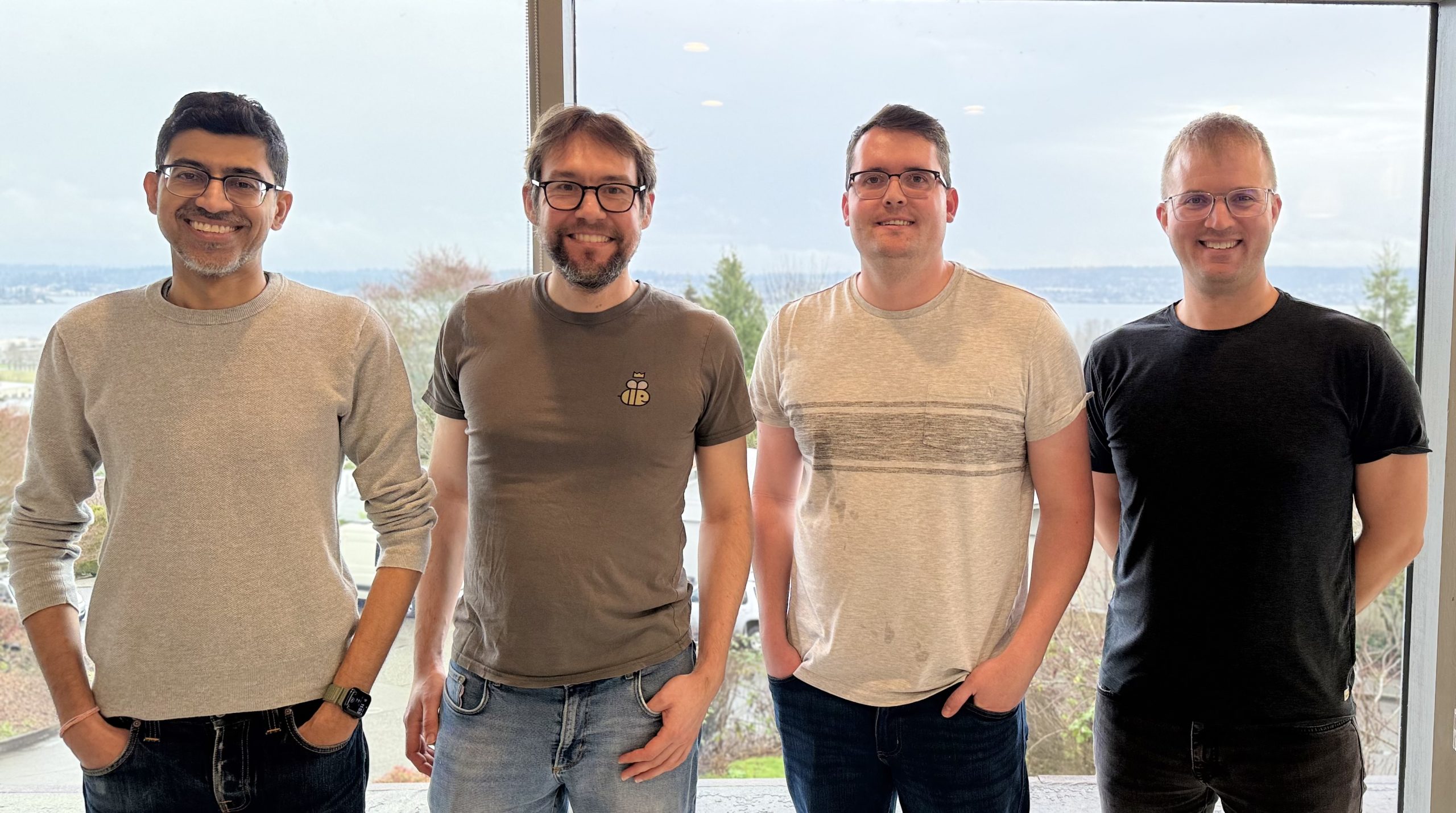
Solving a problem of this magnitude requires a founding team with an extraordinary depth of real-world technical expertise, and ArchAstro has assembled exactly that. Alongside Vivek Sharma, the startup’s engineering roster reads like a masterclass in modern infrastructure development, featuring veteran engineers who have previously tackled some of the most complex scaling challenges at tech giants like Microsoft, Meta, Stripe, and Atlassian. The team includes Tore Hanssen, a founding engineer at Statsig (which was recently acquired by OpenAI) who also spent significant time at Meta; Robert Masson, a veteran senior staff data scientist who spent over a decade analyzing data systems at Meta and Atlassian; and Calvin Grunewald, a former director of engineering at Facebook who most recently lent his leadership to Stripe. Rounding out this elite unit are Rafael Brandao Lobo, a founding engineer with more than ten years of experience building massive advertising and gaming products at Meta, and Bruno Garcia, an accomplished open-source startup founder with a background at PlayCo and Sega. These are individuals who have intimately understood the structural pain points of enterprise software, having spent their careers building global systems like Microsoft Exchange Server, Office 365, and Stripe Billing. This deep, collective engineering pedigree gives ArchAstro a unique advantage, allowing them to approach AI agent development with the practical execution, security mindset, and rigorous judgment that serious, long-term enterprise partnerships require.
This remarkable blend of vision and expertise has already captured the attention of some of the world’s most prestigious technology investors and forward-thinking corporate partners. ArchAstro’s $6.2 million pre-seed round was backed by prominent venture firms 20VC, led by Harry Stebbings, and Kyber Knight, whose diverse portfolio includes disruptive giants like Cruise, SpaceX, and Anduril. Additionally, a highly respected roster of angel investors and prominent industry figures, including Rakesh Parida, the Head of Forward Deployed Engineering at Stripe, have thrown their support behind the company. Parida points out that the true strategic value of ArchAstro lies in its ability to make robust, cross-company technical connections highly repeatable and scalable, shifting the paradigm from merely launching software together to continuously maintaining and scaling those products collaboratively over time. Already, two unnamed Fortune 500 companies have signed on as early design partners, actively using ArchAstro’s platform to streamline their own complex software relationships. While the potential threat of tech titans like Microsoft, Amazon, or Google entering the agentic AI integration space is always a looming reality, Sharma remains unconcerned, noting that the demand for AI integration is so overwhelmingly high that these tech giants simply do not have the time or focused energy to build specialized, cross-boundary solutions. Instead of viewing them as competitors, ArchAstro sees itself as a massive revenue accelerator that can help these larger tech ecosystems scale far more efficiently.
Currently operating with a lean but powerful team of just seven employees in the Seattle area, ArchAstro is embracing a deliberate philosophy of physical constraint to drive rapid, highly focused innovation. Sharma believes that a small, exceptionally high-caliber team forces a startup to remain nimble, avoid corporate bureaucracy, and invent a direct, unembellished path to customer value. He is also incredibly proud to build the foundations of ArchAstro in Seattle, a city he regards as home to the finest enterprise and infrastructure engineers in the world. He notes that while consumer-facing tech hubs may flourish elsewhere, any tech company serious about solving heavy, complex B2B challenges must eventually plant its roots in the Pacific Northwest. By matching the region’s rich engineering heritage with cutting-edge AI architecture, ArchAstro is poised to fundamentally rewrite the rules of corporate software deployment. As the startup moves out of the shadows, its message to the enterprise world is clear: the future of B2B software is no longer about fighting through the friction of integration, but rather about joining a secure, automated network where corporate systems can effortlessly connect, verify, and grow alongside one another.