



Every office has one of those people—the person who just seems to know how to get things done. They might not have a fancy title or a documented process, but when a complex question comes up, they know exactly which spreadsheets to open, which emails to dig through, which customer records to cross-reference, and what judgment calls to make along the way. That person is a living repository of the company’s real operating knowledge. But when they take a vacation, get promoted, or move on, that knowledge often evaporates. Kanu AI, a young Seattle startup founded just over a year ago, is built on a simple but powerful hunch: instead of letting that knowledge disappear, why not capture it and turn it into software the company actually owns? On Wednesday, Kanu announced $11.7 million in new funding to expand exactly that vision. The round was led by Trilogy Equity Partners, with participation from Andreessen Horowitz’s a16z Speedrun, BMW i Ventures, and Accel. The startup’s platform automatically turns everyday employee tasks into custom, enterprise-grade software—not by replacing the people who do the work, but by learning from them.
The funding announcement lands at a moment when a lot of companies are wrestling with a familiar operational headache. Over the decades, businesses have spent fortunes buying off-the-shelf software that promises to solve their problems, only to discover that the software was really built around someone else’s idea of how work should happen. Generic tools force people to change their workflows to fit the system, rather than the system adapting to them. Alternatively, companies can commission custom software, but that often means months of engineering time, huge budgets, and maintenance headaches down the road. In the meantime, the most valuable knowledge in the organization sits scattered across spreadsheets, inboxes, and the minds of individual employees. “Companies have spent decades buying software built around someone else’s idea of how they should work,” said Karan Grover, founder and CEO of Kanu AI. His point is that the next wave of software shouldn’t be rented from an outside vendor and imposed from the top down. Instead, it should emerge from the ground up—from the data, judgment, and operating expertise that already live inside the company. “Instead of renting generic intelligence from another vendor, companies can use Kanu to turn their own data, judgment, and operating expertise into an asset they own.”
So how does Kanu actually work? The key is observation and demonstration. Instead of writing code or describing a process in abstract terms, employees simply show the platform how they complete a task. The system watches the sequence of actions, understands the inputs and outputs, and then builds a workflow that can be deployed directly in the customer’s cloud environment. It’s less like traditional software implementation and more like teaching by example. The platform can handle tasks that involve PDFs, emails, customer relationship management systems, geographic information systems, and a variety of other tools that knowledge workers rely on every day. Once the workflow is deployed, Kanu continues to update it as the underlying processes evolve, which means the software doesn’t become stale the way traditional tools often do. This is a fundamentally different approach to enterprise automation: rather than asking companies to adapt to rigid software, Kanu adapts to them. The early traction suggests the approach is resonating. Kanu reports that it has more than doubled its revenue in every single quarter since launch. Its platform is already being used by enterprises across commercial real estate, insurance, financial services, and technology—industries that are famous for complex, paper-heavy processes and massive amounts of unstructured data.
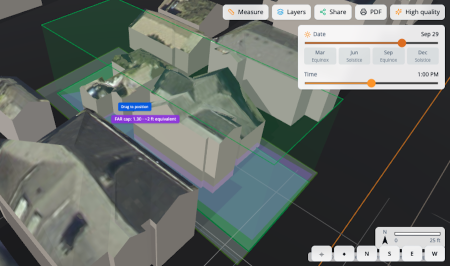
One customer story illustrates the potential impact better than any pitch deck. For a national customer, Kanu took a data-analysis process that previously required combing through PDFs, emails, CRM records, and GIS systems. That process had been taking about eight weeks to complete—two full months of analysts’ time, effort, and patience. With Kanu, the same process was compressed to under ten minutes. It’s hard to overstate what that kind of acceleration means for a business. An analysis that used to be so expensive and time-consuming that it could only be done on rare, high-stakes occasions can now be run whenever needed. Decisions that used to be based on gut instinct and incomplete information can be grounded in current, comprehensive data. According to Kanu, this particular customer expects the tool to cut annual software costs by more than $1 million, while also driving millions of dollars in new revenue. The cost savings make sense: when companies can build their own workflows without licensing expensive generic platforms and without paying for long custom-development projects, the economics shift dramatically. The revenue side is just as important, because faster, better analysis often uncovers opportunities that were previously invisible. This isn’t just automation for the sake of efficiency; it’s a way to transform the fundamental speed of business.
Of course, any conversation about enterprise software eventually comes back to trust and security. A platform that learns from employee workflows and automates tasks is powerful, but it’s also the kind of thing that makes IT leaders nervous if it’s not carefully designed. Kanu has addressed those concerns head-on by running entirely inside the client’s own cloud infrastructure. That means data never needs to leave the customer’s environment, and it stays safely behind the firewalls and security controls that companies already have in place. There’s no shared multitenant back end to worry about, no third-party server where sensitive information is stored. In addition to the technical security measures, Kanu also gives human teams a meaningful role in the automated process. The platform includes human approval steps, so employees can review and sign off on important actions before they’re finalized. It also maintains a full audit trail for every automated output, which is essential for compliance, accountability, and peace of mind. This combination of security and transparency makes Kanu suitable for highly regulated industries, where every step of a business process may need to be documented and verified. With the new capital, Kanu plans to hire across engineering and business roles, growing a team that currently stands at ten people. The company expects to reach about fifteen employees by the end of the year, and its software is already available through the AWS and Google Cloud marketplaces.
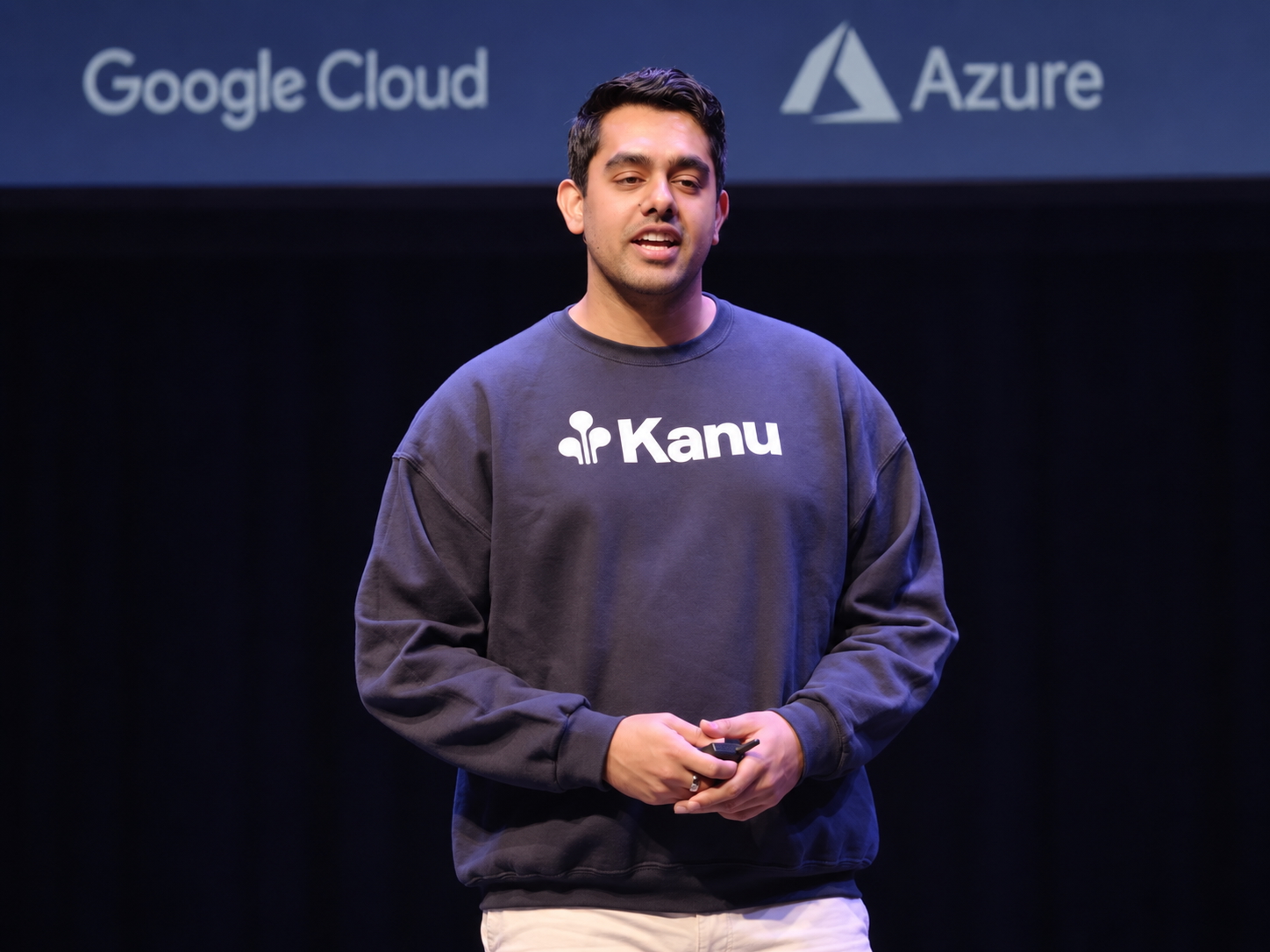
Behind all of this is a founder with an unusual and deeply human perspective on technology. Karan Grover is not a career enterprise salesman; he’s a machine learning engineer and a three-time founder, with a background that includes time at Amazon and DoorDash as well as a stint as a Y Combinator alumnus. But one of the most telling chapters of his career came early on, when he created a startup that built 3D audio tools to help blind individuals audibly “hear” and navigate their physical surroundings. That project reveals something important about how Grover thinks: technology should work with people, understand their real needs, and make the world more accessible, not less. That philosophy carries directly into Kanu. Rather than treating employees as obstacles to be replaced or standardized, Kanu treats them as experts whose knowledge is worth preserving and amplifying. The goal isn’t to strip out human judgment; it’s to liberate people from the repetitive, manual parts of their jobs so they can spend more time on the creative, strategic, and relational work that machines can’t do. In that sense, Kanu is part of a larger conversation about the future of work—one in which software becomes personalized, adaptive, and truly owned by the people who use it. The new funding is a vote of confidence in that vision, and for a tiny ten-person team in Seattle, it’s also the beginning of something much bigger.