


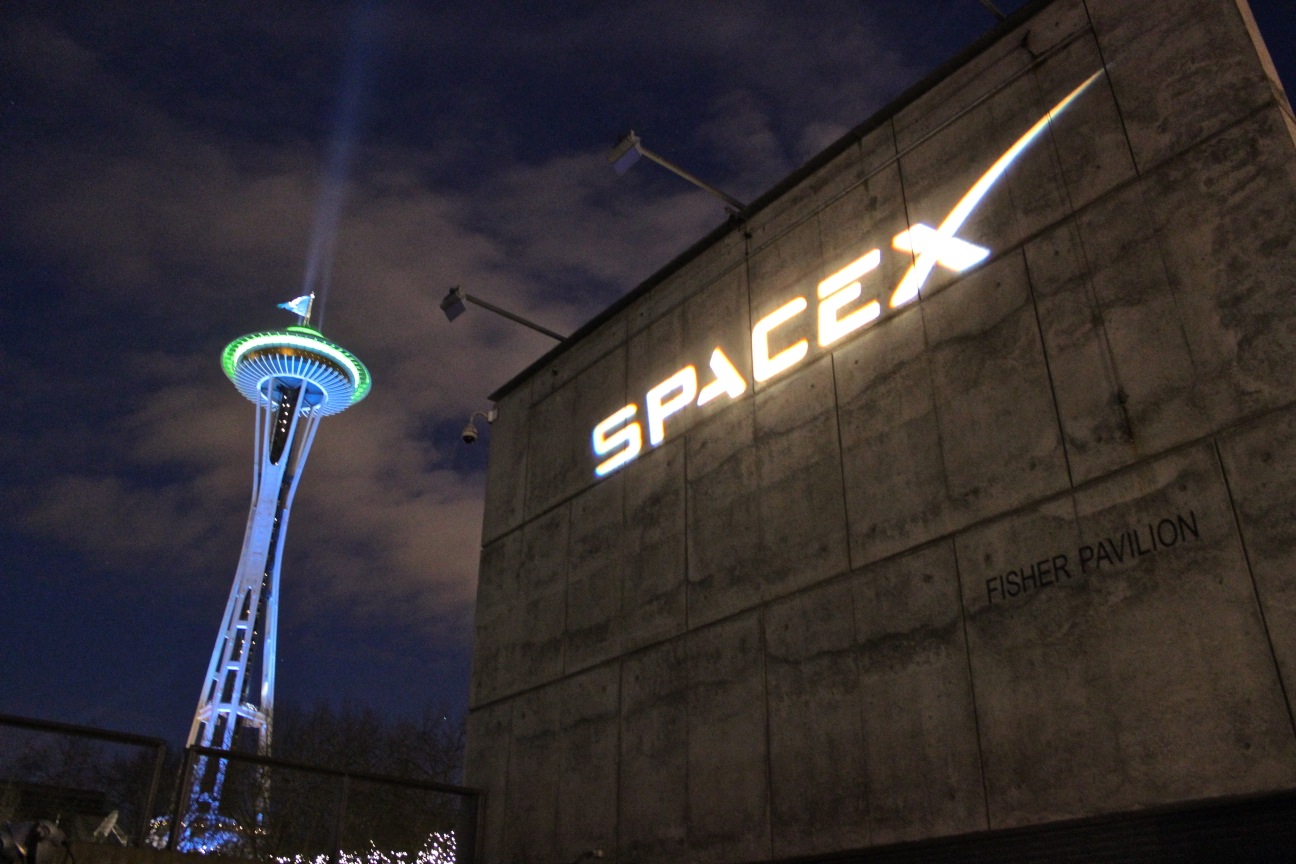
When Elon Musk stood before an eager crowd at Seattle Center in 2015 and announced that SpaceX was choosing Redmond, Washington for its satellite development hub, he did so with a classic developer’s wink: he knew the region’s brilliant tech minds simply didn’t want to pack up and move to Los Angeles. Nearly a decade later, that geographic compromise has matured into a monumental anchor for the global space economy. Now, as SpaceX prepares for a historic $75 billion initial public offering (IPO) expected to propel its valuation to a staggering $1.77 trillion and secure Musk’s status as the world’s first trillionaire, the ripple effects are washing over the Pacific Northwest. This landmark financial milestone is more than just a victory lap for Wall Street; it represents a deeply personal validation of the quiet, relentless grinding of hundreds of engineers and makers in the Seattle suburbs who have turned Redmond into the satellite manufacturing capital of the world.
For the local workforce, this IPO represents a life-altering inflection point. SpaceX’s Redmond campus, which employs an estimated 800 to 2,000 workers, has been the engine room of the satellite revolution, quietly building nearly two-thirds of all active satellites currently orbiting Earth. According to the company’s IPO filings, this single facility continues to roll out an astonishing 70 Starlink satellites every single week to support a global broadband network that now boasts over 12 million subscribers. While online forums like Reddit buzz with debates over whether the imminent stock options payouts will cause a local real estate frenzy or end up as a housing market “nothingburger,” industry veterans look at a far more human legacy. The influx of liquidity is poised to create a wealthy, highly experienced class of aerospace alumni who will inevitably spin off to cultivate their own entrepreneurial ventures, planting seeds for a self-sustaining ecosystem of space startups in the greater Seattle area.
This cycle of startup creation is already well underway in a region that has rapidly evolved past its legacy Boeing roots. Today, the industry association Space Northwest maps out over 75 space-centric companies calling Washington state home, all operating in the orbit of the “elephant in the room” that is SpaceX. Venture capital firms like Seattle-based Fuse are betting big on this symbiotic relationship, pouring capital into local startups that rely on SpaceX to get their hardware into the cosmos. Redmond-based Starcloud, for example, is developing a constellation of orbital data centers, while Bothell-based Portal Space Systems is constructing highly maneuverable satellites designed to service, inspect, or safely deorbit space debris. For these local innovators, the financial success and stability of SpaceX translates directly to more accessible, reliable, and affordable pathways to orbit.
The physical design of the next generation of space infrastructure is being built to fit the precise dimensions of SpaceX’s hardware, specifically the massive Starship rocket. In Marysville, Gravitics is engineering modular, large-scale orbital structures—visualized essentially as the cargo hubs and workspaces of future space stations—specifically tailored to ride inside Starship’s cavernous payload bay. Gravitics CEO Colin Doughan describes this relationship as a natural division of labor: while SpaceX handles the grueling physics of getting to space, local companies are building the actual infrastructure to help humans operate once they arrive. Similarly, the founders of Seattle’s Orbite Space created their astronaut-training venture with the explicit expectation that Starship’s massive capacity would democratize human spaceflight, opening up the cosmos to a diverse mix of researchers, private citizens, and companies.
Yet, this massive reliance on a single corporate giant introduces a delicate tension into the local space community. Because SpaceX’s IPO funds are destined to bankroll its own astronomical ambitions—including its Artemis moon lander commitments, its own orbital AI data center arrays, and test flights to Mars—local space startups may find themselves waiting patiently in line for cargo space. Analysts like Stan Shull warn that if SpaceX continues to hold a near-monopoly on global heavy-lift launches, it may feel little immediate pressure to lower its launch prices as quickly as independent operators hoped. This reality highlights the vital importance of regional rivals like Jeff Bezos’s Kent-based Blue Origin, with its heavy-lift New Glenn rocket, and the agile innovators at Stoke Space, who are working hard to ensure that healthy commercial competition keeps the highway to space open and affordable for everyone.
Ultimately, the excitement radiating from the SpaceX IPO is about the license it gives humanity to dream on a grander scale. This wave of capital is funding concepts that resembled far-fetched science fiction just a generation ago, including ambitious startups aiming to construct the very first commercial lunar hotels. While some of these celestial business plans will inevitably burn out or run out of fuel, local venture capitalists embrace this creative chaos. It is during these high-energy, “bubbly” moments of intense funding and breakthrough technology that the most transformative ideas find their footing. By solidifying the financial and logistical foundation of modern rocket launch, this IPO isn’t just crowning a new class of tech millionaires—it is securing the launching pad for humanity’s next great frontier, engineered right in the backyard of the Pacific Northwest.