


There is something almost unbearably strange about the image: a warehouse in Las Vegas where old books are taken, their spines sliced off, and their pages fed through scanners. Not because digitizing books is unusual, exactly, but because of the particular way it is happening, and the particular books involved. According to reporting from 404 Media, Amazon is buying up rare and antiquarian books from sellers around the world, not to resell them, not to preserve them, but apparently to turn them into data for its AI models. Amazon won’t say that explicitly. Pressed for comment, the company offered a bland corporate statement about purchasing books “through commercial channels to help develop and improve the products and services our customers use.” That sentence could apply to almost anything, from a new Kindle feature to a warehouse automation system, but the details surrounding it suggest something much more specific. The books being purchased are old enough that their text hasn’t been digitized anywhere else. They are the kinds of volumes that exist in a handful of copies, hidden in private collections and dusty backrooms. Their words are effectively irreplaceable. And yet they are being destroyed, physically dismantled, to create digital copies that can be fed into large language models. If the goal is to train AI on human expression that predates the internet, then there is a brutal logic to it: the rare text has to be converted somehow, and the fastest way to scan thousands of pages is to cut the binding off. But there is also a profound melancholy in it, the thought of centuries of careful authorship ending as a pile of single sheets sliding through a machine in Nevada. It is difficult to imagine a more vivid illustration of the distance between the way we used to preserve knowledge and the way machines now consume it.
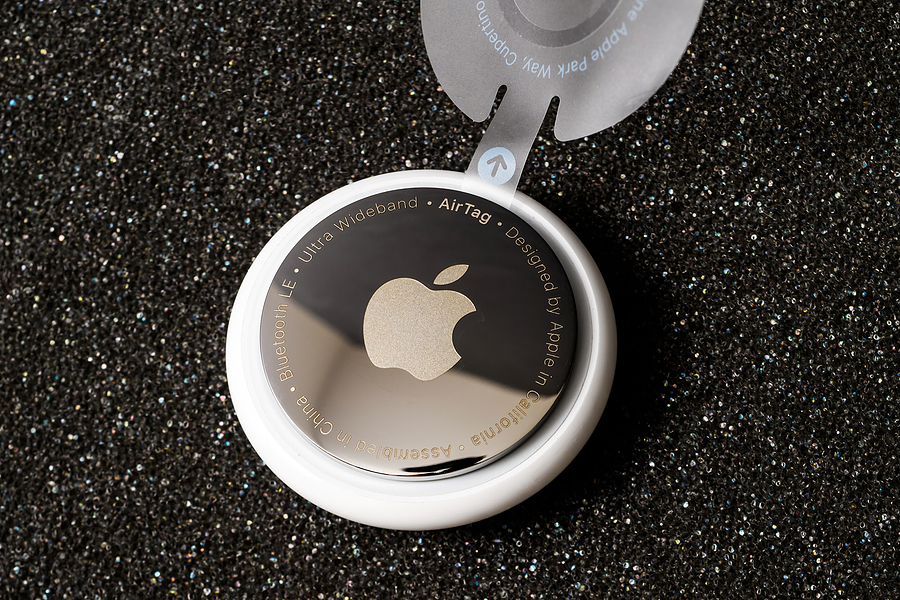
What makes this story remarkable, beyond the sheer oddity of the operation itself, is how it was discovered. 404 Media reporter Emanuel Maiberg did something that sounds like a prop from a spy novel: he placed an Apple AirTag inside a rare book and then, like a biologist tracking an endangered salmon upriver, simply followed its journey across the country. The logistics were straightforward, in the way that all good investigative tricks are. A bookseller, who asked to remain anonymous because they feared retribution from a major buyer, received a bulk order of roughly a thousand books through the online marketplace Biblio. Among those books was one containing the AirTag, slipped into the parcel with the seller’s quiet cooperation. From a California airport, the book flew to Milwaukee. It then spent two weeks sitting in a distribution warehouse outside Kenosha, Wisconsin, before being loaded onto a truck and driven west, with an overnight stop in Grand Junction, Colorado. Finally, the signal came back from Las Vegas, from an Amazon warehouse known as LAS8. Maiberg was initially confused by the destination. LAS8 is primarily a print-on-demand operation, a place that prints and ships books as they are ordered. It is, by definition, a facility that creates books, not destroys them. But the AirTag’s pin placed the book at the north end of the building, where, according to Amazon employees who posted on a worker forum, a separate operation runs under its own code: VGT3. The entrance is painted with a T. rex holding an open book, which feels either whimsical or ominous depending on your mood. Employees described a split workflow: some workers cut books apart, while others received the pages and scanned barcodes. The whole thing sounds like something out of a dystopian factory, but the tracking itself is a reminder that the tools we carry in our pockets can be turned into instruments of transparency. An AirTag is normally used to find lost keys or stolen luggage. In the hands of a curious reporter, it became a tiny archaeological probe.
For booksellers, the strange purchases were not entirely new. Maiberg had been picking at this thread for months. In July, he reported that booksellers had started noticing a sharp increase in bulk orders from buyers who never haggled. That alone was unusual. Booksellers are used to people who care about prices, editions, and condition. These buyers did not ask about any of that. They simply ordered hundreds of books at a time, often through marketplaces like Biblio, and paid whatever was listed. The orders were also curious in what they included. They did not sweep up the very rarest books, the ones old enough to predate the ISBN system, because those are too difficult to identify and purchase at scale. Instead, the buyers seemed to be working methodically through serial numbers and catalogs, acquiring titles that were rare enough to be valuable for scanning but common enough to be tracked and ordered in bulk. The pattern suggests not a collector, but a systematic harvesting operation. And the specificity of the method matters. The text inside these books was almost certainly never digitized, which makes it uniquely valuable as training data for artificial intelligence. Modern AI models are increasingly trained on vast quantities of internet text, but that text is polluted with machine-generated writing, spam, and the same phrases repeated endlessly across SEO blogs. A book printed before all of that, with careful prose, original arguments, and human quirks, is a kind of clean sample, a window into language before the internet flattened it. That is why the destruction is so uncomfortable. The books have value not as physical objects to be cherished, but as raw material for a technology that is, in large part, trying to imitate human thought. One bookseller put it plainly: the books have historical and sentimental value, and the AI companies destroying them don’t care about that. The contradiction is dizzying. We are tearing apart the physical remnants of human creativity in order to train machines to sound more human.
There is legal context here, and it makes the situation even more entangled. In June 2025, a federal judge ruled that Anthropic, the company behind the Claude AI models, was allowed to buy print books, strip their bindings, and scan them as a form of fair use. The reasoning was based on the fact that the digital copies were replacements for physical originals that no longer existed, and the transformative purpose of training an AI system was enough to outweigh the harm to the copyright holder. The same ruling, however, went against Anthropic for books it had downloaded from pirate websites. That part of the case was later settled for $1.5 billion. The legal distinction is both clean and deeply weird. If you buy a physical book and destroy it to create a digital copy, that is fair use. If you download an electronic copy of the same book, that is infringement. The physical object, it seems, gives you a strange kind of permission: because the book is now gone, there is no longer a market for the original, so the scanned copy does not compete with it. Amazon has digitized books for two decades, most notably with its “Search Inside the Book” feature, but that program relies on digital files submitted by publishers. It has never required buying used books through third-party marketplaces and slicing off their bindings. The sheer scale and secrecy of the Las Vegas operation suggests something different, something more ambitious. And yet, as Maiberg notes, Amazon is the kind of company that has a long history of being “willing to be misunderstood for long periods of time.” It may be that VGT3 is not about AI at all. It could be some archival project, a quirk of logistics, or something that will only make sense years from now. But in the absence of a clear explanation, the most plausible reading is that Amazon is feeding rare books into the maw of its machine-learning infrastructure, and paying almost nothing for the privilege. The most troubling part is that the company doesn’t have to justify itself. The law, as currently structured, may actually allow it to do exactly this.
Maiberg’s AirTag trick did not come out of nowhere. It belongs to an established tradition of using tracking devices to follow objects that vanish from public view. In 2014, the Basel Action Network, a Seattle nonprofit, began planting GPS trackers inside old printers and monitors. They dropped the devices off at Goodwill locations and recycling centers around the country, then watched where the e-waste went. Nearly a third of the tracked devices were exported. Two old televisions dropped off at Oregon recyclers traveled to a warehouse in South Seattle, then to the Port of Seattle, and eventually to junkyards in Hong Kong. That investigation led to federal conspiracy charges against Total Reclaim, a Seattle recycler that was supposed to be handling the electronics responsibly. In the years since, the same tactic has been used again and again. ABC News hid trackers in plastic bags dropped into Walmart and Target recycling bins across ten states. Finland’s public broadcaster placed trackers in used clothing to see where donated fast fashion really ends up. The hardware has become more accessible over time. The Basel Action Network worked with MIT and used cellular trackers that required data plans and custom electronics. Maiberg used a $29 AirTag, a device sold in an Apple store, designed to help people track lost luggage. The AirTag works by pinging nearby iPhones, silently borrowing their internet connections to send a location update to its owner. That ubiquity is what makes it so powerful: there are millions of iPhones everywhere, so a small device tucked inside a book can travel across the country and never lose its signal. There is something quietly heroic about using consumer technology to pierce the opacity of corporate logistics. The same infrastructure that makes modern e-commerce possible can also be turned against it, revealing where the packages we never think about actually go. The AirTag is not a piece of surveillance equipment; it is a personal convenience. But in the right hands, a personal convenience becomes a public good.
At the heart of this story is a simple question: what does it mean to value a book? For a bookseller, a rare edition is a piece of history, a physical connection to a particular moment in time. For a machine learning engineer, the same book is a set of tokens, a line in a training dataset, an example of how humans once put words together. The two views are not compatible. When Amazon cuts the spine off a book, it decides that the text is more important than the object, but also that the object is expendable. That trade-off might make sense as a technical matter. If you want to teach an AI to write like the great essayists of the twentieth century, you need clean, original text, and you cannot always get it from a publisher’s database. But the cost is not zero. It is measured in the destruction of things that were never meant to be destroyed. And the only reason we know it is happening is because one reporter thought to put a tiny tracking device inside a book and follow its journey across the country. That is a deeply human act of curiosity, a refusal to accept the official story, a stubborn belief that something important is happening just out of sight. Amazon, of course, may eventually provide a fuller explanation. The company talks about being willing to be misunderstood for long periods of time, and it is possible that VGT3 is a peculiar project that looks nothing like what people are speculating about. But that is exactly why investigative reporting matters. In the absence of transparency, a cheap commercial tracker becomes a lantern in a dark warehouse. Whatever Amazon is actually doing at VGT3, the AirTag in the book has already accomplished something valuable: it has shown that the shadowy infrastructure of modern technology can be illuminated, if only a little, by the things we carry in our pockets. It may not be enough to stop the machines from consuming the past, but it is enough to remind us that the past is still worth paying attention to. And perhaps that is the real point. Before a book is reduced to data, someone should have to explain why it was worth destroying.