


The corporate landscape of the Pacific Northwest has long been shaped by evergreen vistas and the quiet, rhythmic humming of massive server farms. For several decades, Seattle and its sprawling Eastside suburbs of Bellevue and Redmond operated as the undisputed playground of the commercial software universe. This was the legendary cradle of the personal computer, the birthplace of global ecommerce powerhouse Amazon, and the birthplace of the cloud computing revolution. This deeply embedded history of digital creation defined not just the regional economy, but the very way contemporary society communicates, stores files, and conducts daily transactions online. However, the newly released Q2 2026 GeekWire 200 index, a quarterly ranking tracking the top startups across Washington, Oregon, and British Columbia, indicates a profound, structural pivot in the region’s soul. Today, the Pacific Northwest is undergoing a massive, highly physical industrial renaissance, transforming from a software-driven sanctuary into a vibrant hotbed of deep tech, heavy manufacturing, and complex physical engineering. The emerging startups vaulting to the absolute pinnacle of this public list are no longer merely writing elegant code to optimize enterprise workflows or speed up database transactions; instead, they are literally bending sheet metal, splitting atomic nuclei, launching reusable rocket boosters, and bioprinting viable human living tissues. There is an incredibly human story behind this tectonic transition: founders and engineers are realizing that the most urgent, existential crises of our current generation, such as climate change, energy scarcity, health crises, and homeland defense, cannot be solved behind a computer monitor alone. They demand a bold return to the tangible, physical world, merging advanced cloud computing with heavy materials to reshape the physical reality we navigate daily. As we examine this highly anticipated quarterly update, we are tracking the birth of an era of Pacific Northwest innovation where the digital and physical worlds collide, paving the path for humanity. This brave new physical transition is not just changing local technology business; it is fundamentally rewriting the global story of how humans construct and power the future.
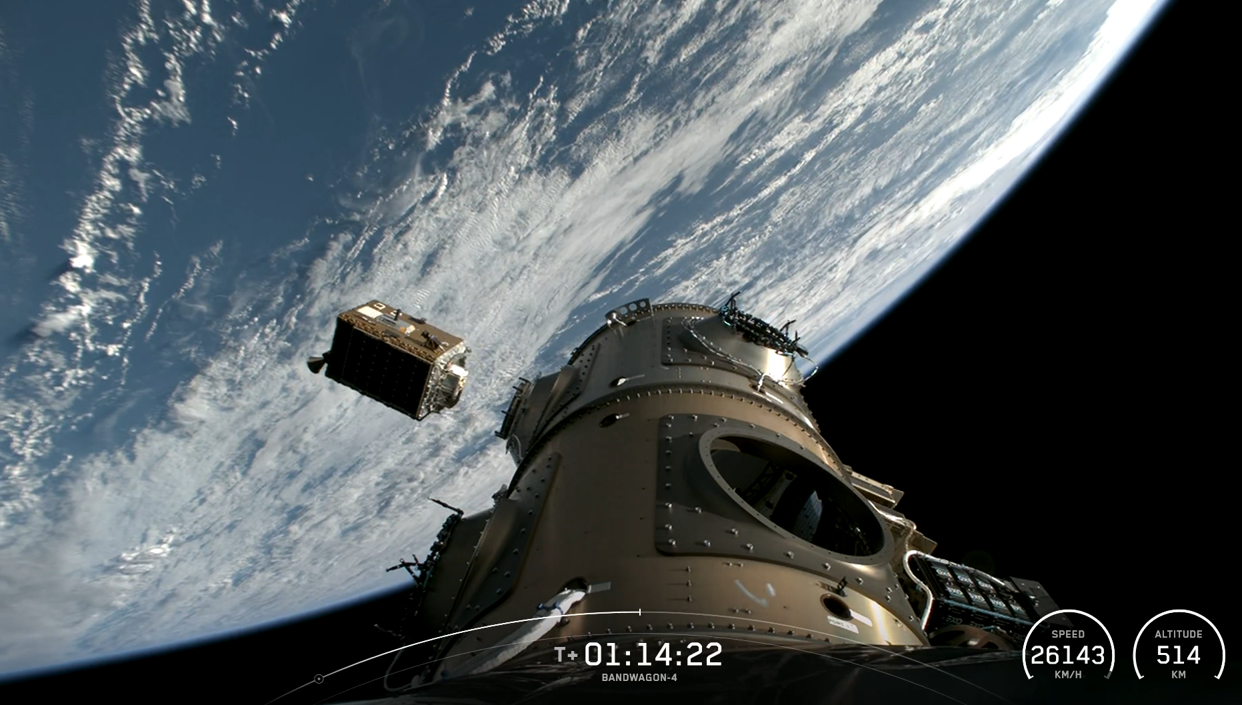
Perhaps nowhere is this vibrant collision between digital capability and physical execution more beautifully illustrated than in the race to solve the energy crisis fueled by artificial intelligence, a crusade that has literally transcended Earth’s boundaries. At the absolute center of this celestial movement is Redmond, Washington-based Starcloud, a daring startup whose rocket-fueled ascent perfectly embodies this new generation of physical-first engineering organizations. Starcloud, which is architecting a system of solar-powered data centers operating directly in orbit, vaulted a spectacular ninety-six spots to claim the No. 75 position on the GeekWire 200, making history as the fastest Y Combinator graduate to reach unicorn status with its $1.1 billion private valuation. The human motivation driving Starcloud is both simple and breathtakingly radical: as the resource-intensive computational demands of planetary AI threaten to push terrestrial electrical grids to the edge, these visionary engineers decided that the sky was no longer their limit. By transporting data server infrastructure into orbital space, Starcloud hopes to capture pure, unfiltered solar energy, liberating Earth from the deep environmental footprints tied to building massive server parks. This vision of orbital infrastructure is supported by other space tech ventures, notably Bothell-based Portal Space Systems, which debuted at No. 114 after securing a cool $50 million to prepare for the maiden voyage of its orbital maneuvering vehicles. Similarly, companies like Panthalassa look to the vastness of the sea, debuting at No. 79 with a $140 million round led by Peter Thiel to build wave-powered, floating AI database servers. Meanwhile, Kent’s Stoke Space has risen to No. 6, establishing a firm grasp on the top ten as it completes intensive first-stage engine testing for its reusable rocket craft, backed by an expanded Series D round of $860 million. These space-bound milestones reflect a human realization that preserving our digital futures requires us to build robust, physical networks connecting ocean floors to distant orbits. This cosmic shift highlights our endless drive to seek answers beyond our native terrestrial home, expanding our technological reach forever.
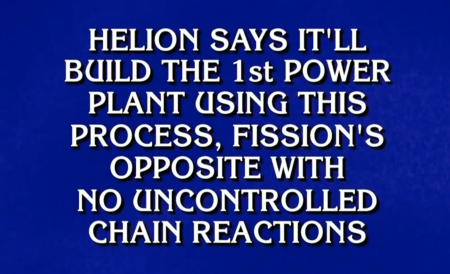
This global, pressing demand for clean power has also supercharged the high-stakes race for commercial nuclear fusion, an incredible energy source once confined to science fiction but now sitting at the absolute pinnacle of the regional startup index. Securely holding the No. 1 spot on the GeekWire 200 is Everett, Washington-based Helion, an industry giant currently valued at a massive $15.5 billion after pulling in another $465 million in capital. Backed by high-profile visionaries such as OpenAI’s Sam Altman and Japanese giant SoftBank, Helion is not doing abstract laboratory trials; its engineers are actively building a commercial plant pledged to supply clean, carbon-free fusion electricity to Microsoft’s vast data grid by 2028. This momentous milestone represents a solid bridge connecting classic software domains with the limitless promise of physical power, driven by the quest to fuel our modern tech world without destroying our biosphere. Following closely in this clean-energy vanguard is Zap Energy, landing at No. 11, which made industrial waves by adding a fission project line to its commercial roadmap—a practical first aimed at delivering grid-ready electrical power much sooner. Even on a smaller, tactical scale, hot upstarts like Seattle’s Avalanche Energy (climbing to No. 147) are raising capital and gaining attention, pocketing a share of a $5.2 million government grant to construct specialized “nuclear batteries” for remote military and civilian sites. The passionate scientists guiding these energy firms are motivated by deep care for our climate, sacrificing years to master complex thermodynamic systems so that our descendants can enjoy digital abundance alongside clean, breathable air. This noble effort remains the cornerstone of our generation’s clean industrial revolution, redefining our fragile relationship with natural resources. By transforming how we generate basic electricity, these companies are laying down the foundation for an era where power scarcity is completely banished. Their daily breakthroughs offer a bright ray of hope to an anxious world currently grappling with the frightening, accelerating consequences of carbon emissions and traditional fuel dependence, shifting our trajectory toward true ecological sustainability.
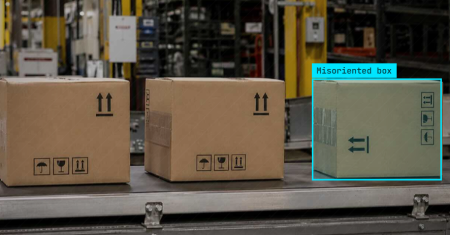
As clean energy solutions progress, we are witnessing a radical change in how machines navigate our physical environments, powered by robotics and artificial intelligence systems built to protect and assist human lives. Oregon-based Agility Robotics, occupying the No. 5 rank, is preparing to graduate from the index via a massive $2.5 billion acquisition and public offering expected to close soon. Their famous bipedal robot, Digit, works in busy warehouse aisles beside people, handling dirty, dull, or heavy physical tasks. This shift to automated labor represents a deep desire to enhance human work, shielding employees from physical strain. This ethos of safety is also clear at Seattle’s Brinc (No. 7), which opened a direct factory to scale its “Guardian” drone, keeping human rescue teams safer during dangerous crisis calls. In defense, Overland AI rose to No. 9 after raising $100 million to build off-road autonomous software for heavy military ground machinery, navigating wild terrain with human-like skill. Meanwhile, Carbon Robotics (No. 8) crossed $100 million in organic revenues by deploying laser-based weeders that destroy weeds without using toxic farm chemicals, saving soil health. These industrial developments raise profound questions about how our societies will adapt to machine partnerships, reminding us that automation should strive to liberate humans from backbreaking toil. When we see a robot lifting boxes or a drone navigating a smoke-filled room, we are witnessing automation at its most compassionate level. The goal isn’t to push humans out of the workforce, but rather to invite them into higher roles of creative problem solving, system supervision, and strategic thinking. This collaborative future is already unfolding in the factories, warehouses, and open fields of the Pacific Northwest, proving that high technology can serve to protect, assist, and value human lives on a grand scale. As these robust autonomous systems continue to expand, they solidify our local region’s reputation as a vital global laboratory for physical artificial intelligence and human-centered design. By doing so, we ensure technological progress remains deeply rooted in our human values.
Although hardware and heavy manufacturing capture the public headlines, modern software, cyber security, and health-tech platforms continue to serve as the critical central nervous system keeping our modern industrial machinery running safely. Bellevue, Washington-based Temporal has secured the key No. 2 spot, carrying a brilliant $5 billion valuation and a massive 380% revenue increase because it provides the durable platform needed to run artificial intelligence agents in daily commercial production. Because digital workflows are closely linked to physical networks, securing our software supply chain has become vital, which is why Kirkland’s Chainguard sits at No. 4 with a solid $3.5 billion market value. Meanwhile, Bellevue’s Truveta (No. 3) pursues its human-centered health mission under former Microsoft executive Terry Myerson, backed by major hospital networks. Truveta recently deployed an AI platform allowing clinical teams to safely analyze millions of anonymous medical records in seconds, proving how software direct improves patient care. Furthermore, Customer.io of Portland (No. 10) passed $100 million in recurring revenue, launching its biggest AI messaging update ever. These outstanding software achievements highlight an important reality: the physical components of our new tech world cannot stand alone. Without the invisible architecture of durable code and military-grade security systems, a fusion reactor is useless, a delivery drone is a safety hazard, and an orbital server farm is utterly unreachable. Software is the translator that allows biological humans to communicate with synthetic brains and heavy mechanical limbs. By converting complex clinical data into actionable medical insights, platforms like Truveta directly empower doctors to save more lives and discover treatments for severe illnesses. This deep harmony between hardware and software creates a reliable foundation for all other industrial activities to flourish. The software engineers behind these platforms are the unsung cartographers of our digital landscape, mapping out the secure channels through which our future economy will safely travel, and proving that code remains an essential driver of human happiness. Thus, they keep our daily digital lives securely anchored while we build toward the shining stars.
At its core, the GeekWire 200 is much more than a clinical, quantitative tracker of corporate metrics, headcount graphs, and venture capital valuations; it acts as a living chronicle of human resilience, risk-taking, and professional adaptation. Behind every rank and decimal point on this list are the personal, human dramas of economic recovery, corporate reinvention, and community responsibility that characterize the startup journey. We see this human element in the moving story of customer-data platform Amperity (No. 32), where original co-founders Kabir Shahani and Derek Slager returned as co-CEOs after a multi-year hiatus, vowing to preserve and elevate the company’s original creative “soul.” We also see it in the collaborative spirit of Seattle’s Inflection (No. 172), which acquired local startup Keyplay to reunite veteran founders, and in the educational focus of Tin Can (No. 153), a kid-focused physical landline venture that has launched a program helping public schools transition into entirely smartphone-free spaces. For more than a decade, this index has functioned as an indispensable compass for the regional tech community, relied on by job seekers looking for their next professional home, sales teams seeking clients, and venture capitalists scouting the next horizon of human capability. Though the editorial team behind the GeekWire 200 willingly admits their research is not a perfect laboratory science and should be approached with a healthy degree of perspective, its community impact remains undeniable. By tracking who is climbing, who is arriving, and who is graduating, we do not merely see numbers on a paper chart; we observe a true reflection of our local values, guiding us into a bright, bold future. This shared map of regional enterprise serves as a reminder that behind every financial transaction and breakthrough is a group of hard-working people daring to build something greater than themselves. In a world often dominated by cold algorithms, it is these passionate, collaborative efforts that remind us of the human heart beating at the very center of technological progress. They turn code and metal into instruments of progress.