




From Self-Funded Vision to Biotech Innovation: The Rise of Rhizome Research
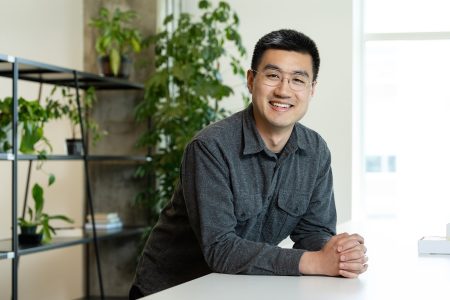
Bucking the traditional venture capital route, former Amazon AI specialist Xhuliano Brace is charting his own path in the competitive world of drug discovery. As CEO and co-founder of Seattle-based Rhizome Research, Brace has invested a six-figure sum from his personal savings and trading proceeds to fuel what he describes as a “contrarian” approach to using artificial intelligence for designing new drugs. After four years at Amazon working on AI projects, Brace’s conviction in his vision was strong enough that he decided to self-fund the startup rather than chase skeptical venture capitalists who were hesitant to write big checks for young founders in such a specialized field. This bold move represents not just financial investment, but a deep belief in the potential of AI to revolutionize pharmaceutical development through innovative molecular design techniques.
The five-employee startup, which recently emerged from stealth mode after launching last year, has assembled an impressive team of scientific talent to complement Brace’s background in mathematics, computer science, and economics. Co-founder and chief scientist Yiwen Wang brings her PhD in chemistry from Carnegie Mellon University, while chief technologist Gregory Sinenka contributes his physics doctorate and experience from both European research centers and Johnson & Johnson. Adding pharmaceutical industry gravitas, John Proudfoot, a former director in Medicinal Chemistry at Boehringer Ingelheim, serves as a scientific advisor. This blend of academic expertise and industry experience creates a foundation for Rhizome’s ambitious technical approach, which diverges significantly from conventional drug discovery methodologies.
At the heart of Rhizome’s technology is a proprietary fine-tuned foundational model called r1, which represents a departure from popular protein-focused approaches like the University of Washington’s RoseTTAFold model. Instead of focusing on amino acids that build proteins, Rhizome’s graph neural network concentrates on the atoms and bonds that constitute molecules and their topographical relationships. The model, trained on more than 800 million small drug-like molecules, views atoms as points in a graph and their bonds as connecting lines, offering a fresh perspective on molecular structure and function. This approach enables Rhizome to provide fragment-based drug discovery, creating small molecules specifically optimized to bind to customer-specified targets, while ensuring each potential drug candidate can be efficiently synthesized in laboratory settings and qualify for patent protection.
Demonstrating their commitment to advancing the broader field, Rhizome recently released ADAMS, an open-source automated AI tool that utilizes natural language instructions for simulating binding between biological molecules. The company also plans to share MolSim, a sophisticated physics-based simulation that employs advanced free-energy calculations to predict binding strength between small molecules and their targets, though this tool will remain proprietary. These technological developments represent Rhizome’s dual commitment to scientific innovation and practical application in the pharmaceutical development process. To bridge the gap between computational design and real-world validation, the company has established partnerships with wet labs capable of testing the performance of their AI-designed drug candidates, while simultaneously exploring potential customer relationships that could bring these innovations to market.
Beyond building a successful company, Brace harbors a broader vision of establishing Seattle as a hub for small molecule drug discovery. Working out of Foundations, a Seattle-based startup community launched by entrepreneur Aviel Ginzburg, Brace sees Rhizome as part of a growing regional ecosystem that includes prestigious institutions like the Allen Institute and the Institute for Protein Design. The area is already home to several related drug design startups including Pauling.AI, Synthesize Bio, and Xaira Therapeutics, creating a fertile environment for collaboration and innovation. While Rhizome’s team currently operates primarily remotely, Brace’s long-term plan involves bringing the team physically together in Washington state, further strengthening Seattle’s position as a biotech innovation center focused on computational approaches to drug development.
Reflecting on his decision to self-fund such an ambitious scientific venture, Brace expresses no regrets about investing his personal resources in Rhizome Research. His enthusiasm stems from the potential for meaningful human impact through their work in healthcare applications, as well as the possibility of extending their molecular design capabilities to other fields such as materials science and advanced manufacturing. “This is the most interesting problem space to be in,” Brace remarks, highlighting the profound intersection of artificial intelligence, chemistry, and human health that Rhizome occupies. As the company continues to develop its technology and build partnerships, Brace’s initial financial gamble represents not just a business investment, but a deep conviction that AI-driven approaches to molecular design will fundamentally transform how we discover and develop therapeutic compounds for human benefit, potentially addressing some of medicine’s most challenging problems through computational innovation rather than traditional trial-and-error methods.