


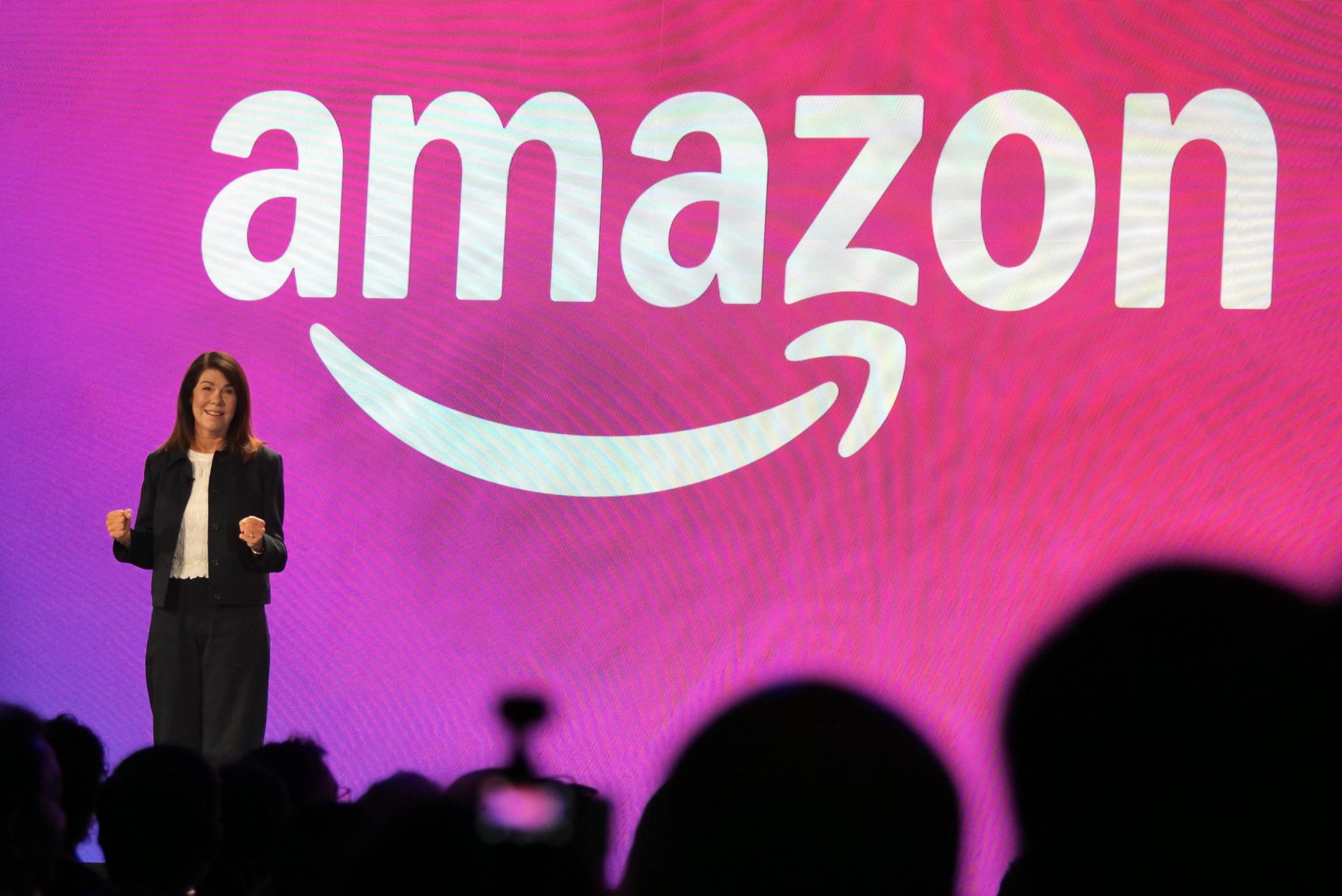
Being an online seller today is a lot like being a professional juggler who is constantly one bad day away from dropping everything. You might have an Amazon storefront that keeps the lights on, but you also have a Shopify site for your loyal repeat customers, an eBay account for the vintage and clearance stuff, a TikTok Shop that suddenly took off after one video, and maybe even a Walmart marketplace listing you set up because someone told you the competition is fierce. Until now, that meant living in ten browser tabs at once, constantly copying product descriptions from one platform to another, checking orders in one place and then checking them again somewhere else, and trying to remember which box went where. Amazon, of all companies, has decided this is a problem worth fixing. At its Accelerate seller conference in Seattle, the company announced a suite of multichannel selling tools that will let independent sellers manage sales on four of its biggest rivals—eBay, Shopify, TikTok, and yes, even Walmart—directly from Seller Central, the same dashboard they already use to run their Amazon businesses. The tools are rolling out gradually to U.S. sellers over the coming months at no extra cost. The initial version is deliberately practical: sellers can connect their accounts on those other platforms, import and link their listings, see all their orders in one place, and fulfill orders across channels without constantly logging in and out. On its face, this is one of those “wait, what?” announcements that makes you check the date for April Fools’ Day. But it’s also a reminder that Amazon has long understood that independent sellers don’t belong to Amazon alone. More than 95 percent of its independent sellers already sell through multiple channels, according to the company. So instead of pretending those other marketplaces don’t exist, Amazon is essentially saying: bring all of it here, and let us make your life easier.
Of course, whenever Amazon offers to handle your data, especially data about your business on competing platforms, the first question that comes to mind is: what are they really doing with this? It’s one thing to say “we want to help you manage all your sales in one place.” It’s another thing entirely to know that Amazon can now see every order you get on Walmart, every sale you make on TikTok, every Shopify customer who buys from you—and that it could, in theory, use all of that information to its own advantage. Mary Beth Westmoreland, Amazon’s VP of Worldwide Selling Partner Experience, brought this issue up before reporters even asked. “A seller’s multichannel data that might surface in Seller Central, it’s never used for anything other than surfacing it to that specific seller. Period,” she said. “We never use that data for any other purpose.” When pressed on whether the data could affect a seller’s standing on Amazon—for example, by pushing their products lower in search results because they charge less on another marketplace—she was even more emphatic. “We never, ever, will touch this data or use it for any other reason other than to show it to you,” she said. It’s a strong promise, and Westmoreland seemed genuinely sincere. But Amazon has a history here that makes “never, ever” sound less like a reassurance and more like a hope. In 2020, The Wall Street Journal reported that Amazon employees had used data about independent sellers to develop competing house-brand products. Amazon responded by saying it prohibits employees from using non-public, seller-specific data to decide which house-brand products to launch. In 2022, Amazon settled with European regulators, agreeing not to use sellers’ non-public data in its own retail business—even as the company insisted it disagreed with several of the preliminary conclusions in the case. Then there’s the Federal Trade Commission’s pending antitrust case, which accuses Amazon of punishing sellers who offer lower prices on other sites, an allegation Amazon strongly denies. That case isn’t set for trial until March 2027. So even if the people making promises today mean every word, the institutional baggage is heavy, and trust isn’t something you restore with a single press release.
So why is Amazon doing this? Westmoreland’s answer was almost disarmingly simple: because sellers asked for it. They told Amazon that managing sales across so many platforms takes up too much of their time, and they said they wished they could use some of the clever tools inside Seller Central everywhere they sell. “They said we would love it if we could use some of the cool tools in Seller Central everywhere we sell, and so that’s what we did,” she said. That explains the seller-centric logic, but it doesn’t fully explain the corporate logic. What does Amazon get out of making life easier for sellers who are also selling on Walmart and eBay? According to Westmoreland, the answer is a stronger Amazon ecosystem. When sellers succeed on other platforms, they bring a wider range of products to Amazon; the broader the selection, the more attractive the store becomes to shoppers. So helping sellers succeed elsewhere, in theory, ultimately helps Amazon. It’s a little bit like a landlord helping a tenant set up a food truck across town, because the tenant is so grateful and successful that they eventually buy more shelving for their apartment. Or, more accurately, it’s a recognition that e-commerce has changed. Nobody is locked into one marketplace anymore, and a seller’s success on one platform often pays for inventory and growth on another. Amazon is choosing to be at the center of that network rather than trying to force sellers into a walled garden. But let’s not pretend this is pure altruism. Selling services to merchants is a huge business for Amazon. Independent sellers account for more than 60 percent of units sold on Amazon worldwide, and the fees Amazon charges them brought in $46.8 billion in the second quarter, which is actually more revenue than Amazon Web Services generated. So making sellers happy is not just good karma; it’s good economics.
Amazon is also expanding the tools it already offers to merchants who sell elsewhere, and some of those announcements are just as interesting as the big multichannel dashboard. For starters, merchants using Multi-Channel Fulfillment in the U.S. can now offer Prime delivery on their own websites at no additional cost. That’s a surprisingly generous move, because shoppers know that Prime badge means fast, reliable shipping, and historically, that advantage was reserved for Amazon itself. Now, a seller can put the Prime logo on their own Shopify or standalone website, giving their off-Amazon customers the same confidence they’d feel on Amazon. Amazon also launched a separate pricing program that it says can cut sellers’ fulfillment fees by 15 to 25 percent for the first six months. That’s a meaningful discount for smaller sellers who are trying to figure out whether it’s worth using Amazon’s logistics network for orders that come from other channels. All of this fits into a larger strategy. Amazon has spent years building one of the most sophisticated logistics networks in human history, and it has realized that not every order needs to come from Amazon.com. If a seller gets an order on TikTok and wants Amazon to pack it and ship it, that’s a win for Amazon: it keeps idle fulfillment capacity working, it generates fees, and it deepens the seller’s dependence on Amazon’s infrastructure. The company is essentially saying, “You don’t have to love our storefront. Just use our warehouse, our shipping, our tracking, and our customer service.” For many sellers, that’s an appealing offer, because the hardest part of running an online business is often not finding customers, but getting the product out the door without losing your mind. Fulfillment remains a nightmare at scale, and Amazon is leaning into that pain point.
If you want to understand how the whole thing works, the mechanics are surprisingly straightforward. Sellers connect their other accounts through a new multichannel settings page inside Seller Central. Once they do, the Manage Orders page starts displaying unshipped orders from every connected channel on a single screen. You can click a Shopify order, for example, and route it directly to Amazon for fulfillment. When Amazon ships it, tracking updates flow back to Shopify automatically, which means the seller doesn’t have to manually enter anything. Westmoreland said the connections to other platforms mostly use standard APIs, along with existing agreements through Veeqo, the multichannel shipping software company Amazon acquired in 2021 and now offers free to sellers. That’s a nice detail, because it means the infrastructure already existed; Amazon is just putting it to brighter use by making it available inside Seller Central. Sellers don’t have to use Amazon’s fulfillment services to take advantage of the new tools, Westmoreland said. You can just use the dashboard to keep track of orders and then handle shipping yourself. And there is more coming down the pike. Amazon says future versions will let you edit a product description once and have it update on every connected channel, which would save sellers an enormous amount of copy-paste drudgery. There will also be AI-generated listings for other platforms, meaning you can take your Amazon listing and have it rewritten in a tone and format that suits, say, TikTok Shop. Most intriguingly, Amazon is working on a dashboard that shows how much sellers earn on each product across channels, including ad spend and traffic data from the other platforms. That kind of unified profitability view is rare and genuinely valuable. The image of a single pane of glass for your entire empire—every channel, every order, every margin, every ad dollar—is the kind of thing that sellers have been begging for for years.
Amazon is not entering an empty field. There are already companies that do something like this, including Rithum, which was formed from the combination of ChannelAdvisor, CommerceHub and Dsco, and Linnworks. Shopify, naturally, has its own version called Marketplace Connect, which lets merchants manage their Amazon, Walmart, eBay and Target Plus sales from inside Shopify—essentially the reverse of what Amazon is now offering. So Amazon is stepping into a competitive market where established players have been charging money for software that promises exactly this kind of multichannel convenience. That makes Amazon’s decision to offer its own tools at no extra cost a pretty aggressive move, and it could pressure those other companies to rethink their pricing. Westmoreland, though, prefers to frame it as giving sellers “one more option.” She also shared what sellers had told Amazon about the existing software: “Hey, I’m paying for it, and it’s hard to do. Can you do this for me?” That’s the crux of the whole story. Sellers don’t necessarily want to be loyal to any one platform; they want the least painful way to manage the chaos of modern e-commerce. Amazon is betting that by being both a marketplace and a back office, it can become the default command center for people who sell everywhere. But this is also where the cautionary tale gets interesting. The more sellers rely on Amazon to manage their non-Amazon business, the more it resembles a lane that all of their traffic passes through. Westmoreland’s promise that Amazon will never, ever touch the data beyond showing it to the seller is impossible to verify from the outside. The FTC, the European regulators, and every skeptical seller who remembers the house-brand scandal will be watching. So yes, the offer is tempting: manage all of your online life from one screen, with no extra cost, and let the world’s largest retailer handle your multichannel headaches. But as many sellers have learned over the years, if something looks convenient and free from Amazon, the price often comes in the form of a data question. For now, Amazon says the data belongs to you and only you. The rest of us will be watching to see whether that “never, ever” holds up.