




AI Teammates: The Next Frontier in Business Transformation
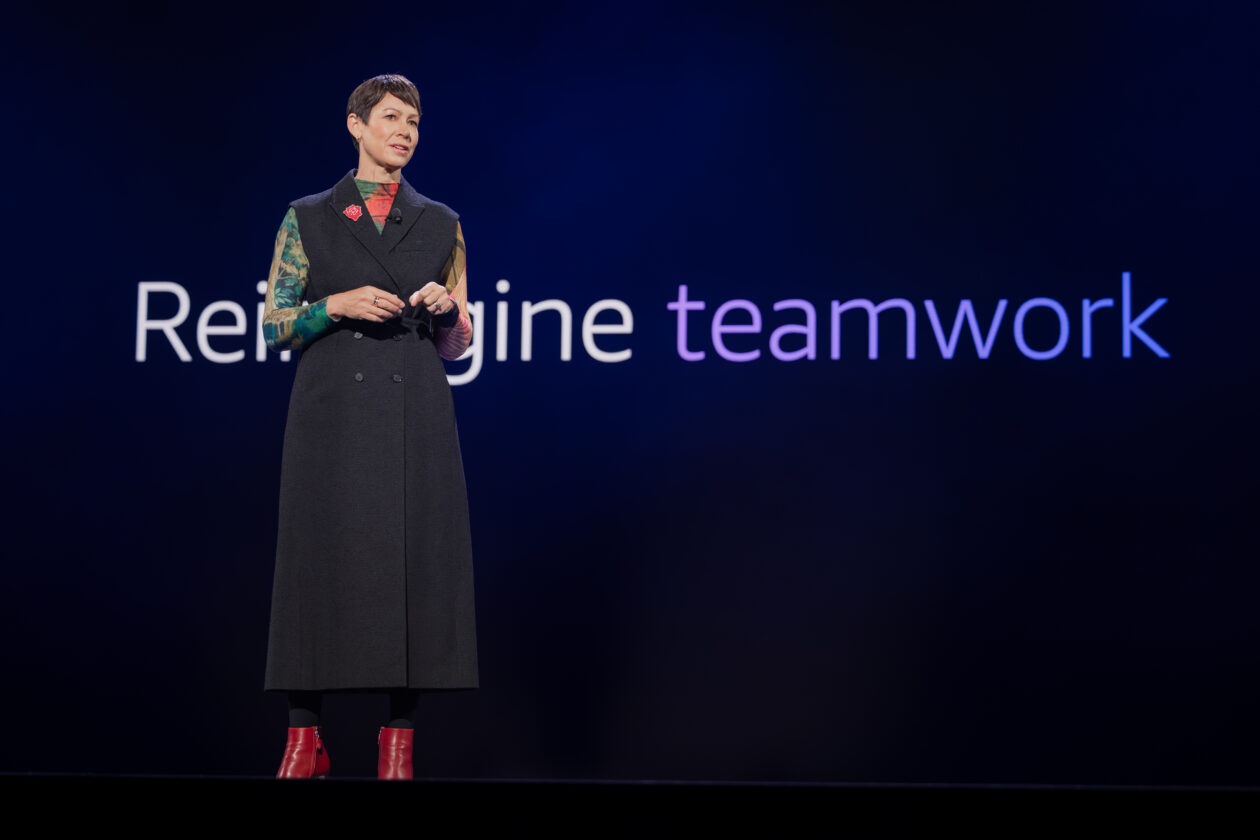
In a compelling keynote at AWS re:Invent in Las Vegas, Colleen Aubrey, AWS Senior Vice President of Applied AI Solutions, delivered a powerful message about the future of artificial intelligence in the workplace. “I believe that over the next few years, agentic teammates can be essential to every team — as essential as the people sitting right next to you,” Aubrey declared. “They will fundamentally transform how companies build and deliver for their customers.” This isn’t just another tech prediction; it’s a paradigm shift that challenges how businesses should think about AI integration. Aubrey’s vision goes beyond seeing AI as merely another productivity tool — she envisions AI as collaborative teammates that take ownership of entire objectives, requiring a new management approach altogether. In her own teams, this philosophy has already produced dramatic results, enabling groups of just 10 people to accomplish in three months what previously required 50 people working for nine months. Perhaps most striking is how this AI integration is democratizing technical capabilities, with non-engineers like finance analysts now building functional prototypes alongside engineers using Amazon’s Kiro agentic development tool.
The distinction between traditional AI tools and what Aubrey calls “agentic teammates” represents a fundamental shift in how we conceptualize artificial intelligence in the workplace. Unlike single-purpose AI tools designed for specific tasks, these new AI teammates assume responsibility for broader objectives and require management similar to human colleagues. “I think people will increasingly be managers of AI,” Aubrey explained in a follow-up conversation at the GeekWire Studios booth. “The days of having to do the individual keystrokes ourselves, I think, are fast fading. And in fact, everyone is going to be a manager now.” This new relationship with AI demands skills traditionally reserved for people management: prioritization, delegation, quality assessment, providing feedback, and establishing appropriate guardrails. It’s a profound transition from treating AI as a tool to managing it as a teammate with autonomy and responsibilities. This mental model transformation may prove challenging for organizations still viewing AI through the lens of traditional automation, but it appears essential for unlocking AI’s full potential in the workplace.
One concrete example of this philosophy in action is Amazon Connect, AWS’s call center platform, which recently reached $1 billion in annual revenue and has accelerated year-over-year growth for two consecutive years. At re:Invent, Aubrey’s team announced 29 new capabilities across four key areas. These include Nova Sonic voice interaction, which Aubrey describes as “very close to being indistinguishable” from human conversation; AI agents that complete tasks on customers’ behalf; clickstream intelligence for product recommendations; and observability tools for inspecting AI reasoning. While Aubrey expressed amazement at Nova Sonic’s sophistication and empathy in complex conversations, she also acknowledged its occasional struggles with basic tasks like spelling addresses correctly. “There’s still work to do to really polish that,” she admitted, highlighting that even advanced AI systems require ongoing refinement and human oversight to deliver consistent value.
The question of return on investment for AI implementation received a nuanced response from Aubrey. “I observe companies to struggle to realize the business impact,” she acknowledged, but explained that the value often manifests in less immediately quantifiable ways. Rather than direct revenue gains, companies frequently see AI eliminating operational bottlenecks — clearing backlogs, addressing technical debt, and accelerating security patching. “I’m not going to see the impact on my P&L today,” Aubrey noted, “but if I fast forward a year, I’m going to have a product in market where real customers are using and getting real value, and we’re learning and iterating where I might not have even been halfway there in the past.” For businesses still hesitating to invest in AI, Aubrey offered a stark warning: “If you don’t start today, that’s a one way door decision… I think you have to start the journey today. I would suggest people get focused, they get moving, because if you don’t, I think that becomes existential.” This perspective frames AI adoption not merely as a competitive advantage but as a fundamental business necessity for long-term viability.
Trust and transparency emerge as critical components for successfully integrating AI teammates into organizations. “If you don’t trust an AI teammate, then you’re never going to realize the full benefit,” Aubrey emphasized. “You’re not going to give them the hard tasks, you’re not going to invest in their development.” The solution, according to Aubrey, is to implement robust observability mechanisms that allow humans to understand AI reasoning processes — essentially, treating AI inspection with the same rigor you’d apply to managing human colleagues. This involves understanding why the AI took specific actions, auditing the quality of its work, and continuously iterating to improve performance. “You can refine your knowledge bases. You can refine your workflows. You can refine your guardrails, and then confidently keep iterating… the same way we do with each other. We keep iterating, we keep learning, and we keep getting better,” she explained. This commitment to transparency doesn’t just improve AI performance; it builds the human trust necessary for organizations to delegate meaningful responsibilities to their AI teammates.
Beyond the philosophical framework for AI integration, Aubrey shared updates on several concrete initiatives within her portfolio of Amazon’s applied AI solutions. Just Walk Out, Amazon’s cashierless checkout technology, deployed over 150 new stores in 2025 and is expected to accelerate further next year. AWS Supply Chain is undergoing what Aubrey candidly described as “a pivot,” with a Q1 announcement planned around agentic decision-making for supply and demand planning. Additionally, a new life sciences product focused on antibody discovery is currently in beta, with a formal launch expected in Q1. Aubrey also teased “a few other new investment areas” slated for early 2026, suggesting that Amazon’s commitment to developing practical AI applications across various industries remains robust. These concrete initiatives demonstrate that while the conceptual shift toward AI teammates represents a profound change in thinking, it’s already being translated into specific products and services with real-world applications and measurable business impacts.