


The rapid, almost vertical ascent of artificial intelligence is no longer an abstract concept restricted to academic journals or science fiction screenplays; it is a live, transformative force currently rewriting the rules of the global economy. For millions of working-class Americans, this sudden technological shift has brought about a profound and deeply unsettling sense of vulnerability. It is easy to look at the rise of generative AI and marvel at its efficiency, but behind every automated task and optimized algorithm lies a real human story of anxiety, uncertainty, and the quiet fear of obsolescence. From veteran administrative assistants who have managed offices for decades, to fresh-faced college graduates who are realizing that the entry-level career ladders they spent years preparing to climb are suddenly vanishing, the dread of displacement is both deeply personal and systemic. In response to this brewing crisis of economic security, tech giants like Amazon and Microsoft have partnered with a diverse network of leaders to launch RAISE US, a groundbreaking, nonpartisan workforce organization designed to serve as a national safety net and modern highway for the American worker. Debuting at a critical historical juncture, this coalition recognizes that the true measure of a society’s progress is not how advanced its machines are, but how well it protects and elevates its citizens during periods of systemic transition. With an ambitious target of securing $1 billion in multi-year commitments—more than half of which has already been pledged—RAISE US is positioning itself to proactively retrain, equip, and redeploy workers whose livelihoods are threatened or fundamentally altered by AI. By moving away from the cold, unchecked laissez-faire dynamics that characterized previous industrial revolutions, this initiative seeks to establish a cooperative model where human dignity and corporate innovation can successfully coexist, ensuring that the transition into a digital-first world is marked by shared prosperity rather than mass social disenfranchisement.
At the absolute center of this massive structural endeavor is an intentional, highly visible commitment to political bipartisanship, a desperate necessity in an era defined by deep ideological fragmentation. RAISE US is spearheaded by a formidable leadership duo: CEO Gina Raimondo, the former United States Commerce Secretary known for her pragmatic approach to industrial growth, and co-chair Eric Holcomb, the former Republican Governor of Indiana who has long championed regional economic development. By pairing a prominent Democrat with an influential Republican, the organization is sending a clear, unambiguous signal to the American public and the business community alike: the massive economic implications of the AI revolution are not a partisan issue, and they demand a united national front. Raimondo articulated the moral and societal stakes of this initiative with a powerful warning, emphasizing that if America builds the most sophisticated, powerful artificial intelligence systems on earth but leaves millions of its own citizens behind in the dirt, the country will not have achieved a true victory; rather, it will have merely automated its own collective decline. The leadership’s underlying philosophy is grounded in a sober realism that acknowledges both the long-term promises and short-term pains of technological evolution. While both Raimondo and Holcomb maintain an optimistic belief that AI will ultimately act as an engine for the creation of brand-new industries and fresh career pathways over time, they are acutely aware that the immediate path forward will be incredibly disruptive. The focus of their leadership is entirely on safeguarding the vulnerable middle ground—the critical transition periods where older skills become obsolete before new training is fully accessible—by aligning public policy, private investment, and regional educational institutions to work as one cohesive unit.
The sheer breadth and institutional diversity of the coalition supporting RAISE US marks a monumental shift in how the private sector approaches its social responsibilities, bringing together fierce market competitors under the shared banner of workforce defense. Industry titans and AI pioneers such as Amazon, Anthropic, Microsoft, and the OpenAI Foundation are serving as the initiative’s foundational anchor partners, a highly symbolic alliance given that these very organizations are driving the technological wave that is causing the anxiety in the first place. This core group is supported by a massive, multi-faceted network of over two dozen major corporations and prominent philanthropic organizations, including IBM, Cisco, General Motors, Mastercard, the Rockefeller Foundation, and Pivotal, the influential investment firm established by Melinda French Gates. This diverse lineup proves that the impact of artificial intelligence is not merely a localized tech-industry problem, but a cross-cutting phenomenon that will touch every sector of society, from manufacturing floors and financial systems to transportation and human services. To ensure these grand, national-scale ambitions are translated directly into effective local programs, RAISE US has established immediate partnerships with a geographically and politically diverse group of states, including Arkansas, Connecticut, Maryland, and Utah. These early state-level collaborations are vital, serving as real-world testing grounds where municipal authorities, community colleges, and local chamber of commerce groups can work together to build practical upskilling programs. By merging the immense financial capital, data-driven expertise, and technical infrastructure of multinational corporations with the direct, localized authority of state governments, this unique partnership model offers an agile alternative to federal gridlock, establishing a blueprint for modern economic resilience.
The highly anticipated debut of RAISE US could not have arrived at a more urgent or emotionally charged moment for the American labor force, which is already grappling with the exhausting psychological toll of extensive corporate downsizings. Over the past year, the technology sector has been rocked by relentless waves of layoffs and aggressive cost-cutting strategies, creating an environment of profound insecurity that has shaken the confidence of workers at every level of experience. For many everyday professionals, the timing of these mass firings, coupled with the rapid public deployment of high-performing generative AI models, feels like a direct and ominous correlation. Some prominent tech enterprises, including Meta, have explicitly pointed to their strategic focus on corporate efficiency and artificial intelligence design as a driving factor behind their major staff reductions, particularly impacting hubs like Washington state. In contrast, other corporate leaders, such as Amazon CEO Andy Jassy, have sought to destigmatize AI by attributing their massive post-pandemic layoffs to an essential, macro-level cultural and operational correction rather than direct technological replacement. Yet, regardless of how corporate PR departments frame these decisions, the raw, emotional impact on individual human lives is undeniable. Families are left to deal with the terrifying prospect of sudden revenue loss, while long-tenured employees face the daunting reality of seeing their specialized institutional knowledge rendered redundant overnight. This toxic combination of economic fragility and professional identity loss is precisely the wound that RAISE US aims to heal, attempting to replace the cold, mechanical transactionalism of corporate reshuffling with a deliberate, compassion-driven process that recognizes the inherent worth of human work.
In navigating this complex transition, major corporate participants like Amazon are arguing that the ultimate defense against the threat of automation is a comprehensive, sustained investment in continuous human learning. Writing in a detailed, public forum, Amazon’s Chief Global Affairs and Legal Officer, David Zapolsky, articulated a deeply humanistic perspective on the crisis, noting that the historic shift toward an AI-driven economy will only bear positive fruit if businesses make a concerted effort to help workers develop the advanced skills required to thrive in this new landscape. Zapolsky argues that corporate investment in the training of the human workforce must absolutely match, if not exceed, the capital spent on developing new software and machine learning infrastructure. To show that these ideas are backed by action, Amazon frequently references its own extensive history of running highly successful worker-transition initiatives. Chief among these is its celebrated Career Choice program, a major educational pipeline that over a span of fourteen years has helped more than 300,000 hourly workers earn college degrees, high school diplomas, and specialized technical certifications financed directly by the company. Furthermore, through its ambitious Future Ready 2030 initiative, Amazon has committed $2.5 billion to skills training programs, aiming to dismantle the financial and systemic barriers that prevent working-class individuals from modernizing their careers. By actively funding these educational opportunities, companies can transform popular anxiety into a sense of potential, demonstrating that technological advancement does not have to be an existential threat, but can instead serve as an actual springboard for upward social mobility and permanent economic empowerment.
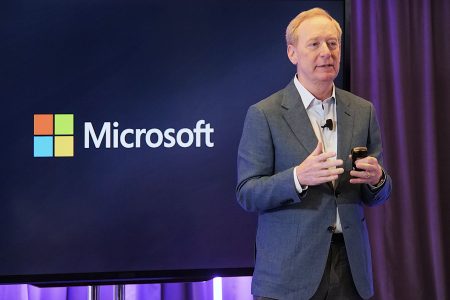
In a parallel effort, Microsoft has been quietly pioneering concrete, highly adaptable methods for managing internal workforce transitions, offering a practical case study that RAISE US hopes to refine and implement on a massive national scale. Rather than defaulting to layoffs when specific administrative or operational tasks are rendered obsolete by machine learning, Microsoft has tested the viability of lateral, career-altering training programs. A highly instructive example of this occurred when Microsoft successfully pilot-tested a transition model for junior and entry-level attorneys within its organization, systematically teaching them to integrate AI applications into their workflows and broadening their professional competencies so they could be seamlessly redeployed into newly created strategic roles. Microsoft President Brad Smith noted that this system is based on an active philosophy of transferring humans out of roles that are being naturally phased out and directly placing them into the new, highly specialized roles that are being created by the technology. This approach treats employees not as disposable expenses to be discarded at the first sign of automation, but as precious repositories of cultural knowledge, adaptability, and cognitive skill who deserve to be retained and protected. By showing that even highly trained white-collar professionals can be successfully guided through the retraining process, Microsoft is providing a powerful counter-narrative to the paralyzing doom-and-gloom storylines that dominate the public conversation surrounding AI and employment. Ultimately, the long-term legacy of RAISE US will not be determined by the massive quantities of capital it raised, but by the quiet, deeply personal victories of everyday American workers who find their lives made more secure, meaningful, and resilient because a supportive community stood ready to help them adapt.