





Imagine stepping into a future where the humming servers of data centers aren’t confined to Earth, but are orbiting high above us, churning through computations without the relentless pull of gravity or the heat of our atmosphere. It’s a vision that’s rapidly turning from science fiction to reality, thanks to visionaries like Jeff Bezos and his push to redefine computing from the ground up. Back in March 2026, Bezos’ Blue Origin rocked the space industry with a bold proposal to the Federal Communications Commission: permission to launch up to 51,600 satellites specifically designed as orbital data centers. Dubbed Project Sunrise, this constellation represents nothing short of a cosmic leap in reimagining how we handle the massive computational demands of AI, cloud services, and beyond. Picture a sky dotted with these smart satellites, each a floating fortress of processing power, zipping around in the delicate dance of low Earth orbit. It’s not just about adding more tech to the heavens—it’s about revolutionizing an industry that’s already straining under the weight of Earth’s limitations. Blue Origin’s move signals a new chapter in the space economy, one where companies race to unshackle computing from terrestrial shackles, promising innovations that could make our current data centers seem quaintly dated.
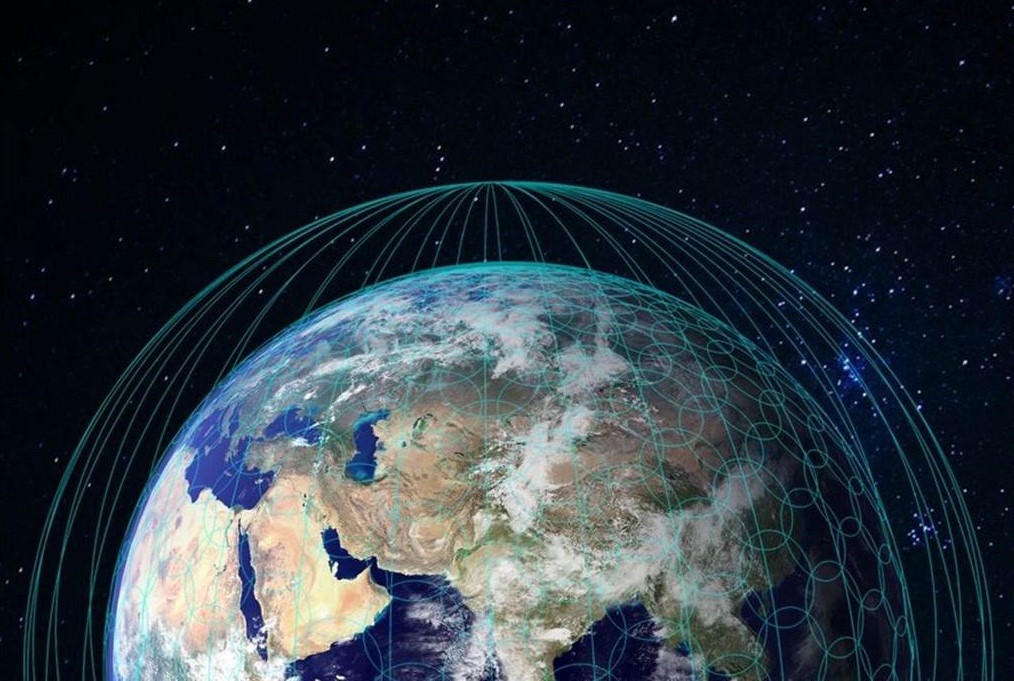
At the heart of Project Sunrise are satellites engineered for flexibility and efficiency, tailored to operate in the serene yet strategic realms of space. These aren’t your average piece of orbiting hardware; they’re modular beasts, grouped into clusters that employ three distinct types of antennas to cater to everything from localized data bursts to global coverage needs. They’ll cruise in circular, sun-synchronous orbits, ranging from about 310 to 1,120 miles above Earth—altitude bands that ensure they can bask in consistent sunlight for solar power while avoiding the chaotic clutter of lower orbits. What truly sets them apart is their reliance on laser links for transmitting data, a high-tech whisper that minimizes interference and maximizes speed, routing traffic through interconnected mesh networks like Blue Origin’s existing TeraWave constellation. This isn’t merely about beams of light zapping information; it’s a symphony of orbital harmony, where satellites communicate flawlessly with ground stations and each other, bypassing the bottlenecks that plague Earth’s wired-and-wireless grids. Think of it as turning space into a vast, invisible supercomputer, one that could supercharge AI model training without the fanfare of fossil fuels or the risk of overheating. Blue Origin envisions these satellites stacking seamlessly atop their 5,408-strong TeraWave fleet, which itself doles out ultra-high-speed connectivity for enterprises, governments, and even aiding in the flow of data back to terrestrial hubs. It’s a layered approach, creating a multi-tiered network that could redefine latency and reliability, making distant computations feel as instantaneous as a thought.
Yet, in this high-stakes orbital gambit, Bezos isn’t flying solo—he’s elbowing his way into a crowded playing field dominated by rivals whose ambitions echo his own. Foremost among them is Elon Musk’s SpaceX, a titan that’s already eyeing FCC approval for data center constellations that could swell to a staggering million satellites. It’s a numbers game, but one rife with tension, as SpaceX has voiced objections to Blue Origin’s proposals, leveraging past legal skirmishes where Amazon—another of Bezos’ ventures—had opposed SpaceX’s similar filings. Then there’s Redmond’s Starcloud, quietly assembling plans for tens of thousands of its own floating data hubs, and even big names like Google dipping their toes in, alongside innovators like Axiom Space, Aetherflux, and Sophia Space. This isn’t just business; it’s a microcosm of technological destiny, where each player pushes boundaries in the quest for supremacy. What’s fascinating is how this data center dash diverges from the broadband battles waged by services like Starlink, SpaceX’s 10,000-strong internet-constellation juggernaut that delivers high-speed access from the skies. While Starlink connects people wirelessly, these orbital data centers are all about the heartbeat of computation itself—racing ahead of Earth’s AI farms, which groan under power constraints, cooling demands, and energy costs. Amazon, Bezos’ original empire (distinct from his private space pursuits), is staking its claim too, with its Leo broadband network—once Project Kuiper—aiming for over 7,700 satellites despite delays. The FCC’s recent greenlight for expansion shows the momentum, but it raises tantalizing questions about synergies or showdowns between Blue Origin’s ventures and Amazon’s AWS platform.
Bezos himself has been the torchbearer for this orbital shift, articulating at a conference last October how space could outpace Earth’s data limitations within decades. “We will be able to beat the cost of terrestrial data centers in space in the next couple of decades,” he proclaimed, painting a picture of industries migrating skyward not out of necessity, but evolution. Imagine a world where the cloud isn’t metaphorically pervasive—it’s literally aloft, untethered from the planet’s pulls. This enthusiasm isn’t isolated; it’s a wave sweeping tech, driven by the explosive growth of AI that devours data like a star consumes fuel. Orbital data centers promise to sidestep the environmental footprints of ground-based behemoths, harnessing solar power and the vacuum of space to run cooler and leaner. For governments grappling with secure computations or enterprises chasing efficiency, it’s a siren call. Yet, as these constellations proliferate, ethical undercurrents swirl: Who owns the skies? How do we manage the debris risk of so many satellites? And what about the digital divides, where access to these floating processors could widen instead of narrow gaps? It’s a thrilling, if daunting, frontier— one that humanizes our quest to push boundaries, reminder that behind the acronyms and orbits are innovators dreaming of a smarter, faster humanity.
Navigating the regulatory maze is no small feat in this celestial scramble, and Blue Origin has laid out its case meticulously in a 14-page FCC application, seeking waivers to grease the wheels of deployment. The standard rules demand processing rounds and timelines, like a six-year clock for half the satellites to be operational, but the company argues these can bend given the satellites’ design to minimize interference with neighboring crafts—a polite nod to orbital etiquette. It’s a pragmatic plea, acknowledging the realities of space’s unforgiving economics, where timelines could stifle innovation. Consequently, Blue Origin has ramped up recruitment, advertising jobs for satellite engineers and roles like a director of commercial sales, signaling a serious commitment to workforce and market capture. But not everyone is cheering; the filing has sparked immediate pushback. SpaceX, in a move that’s equal parts strategy and shade, referenced Amazon’s prior bid to block SpaceX’s data center plans, urging the FCC to apply those same objections to Blue Origin. It’s a classic tech rivalry playbook, highlighting how personal empires intersect, with SpaceX casting a long shadow over Bezos’ endeavors.
In the midst of this bureaucratic tango, Starcloud’s CEO, Philip Johnston, quipped on X (formerly Twitter) about the absurdity of it all, labeling SpaceX’s response as “one of the funniest FCC filings of all time.” He pointed out the irony: Amazon had railed against SpaceX, only for Blue Origin—Bezos’ other hat—to propose essentially mirror-image plans. Starcloud, wisely, is opting out of the feud, focusing on its own starbound aspirations. As these titans joust, it underscores the exhilarating chaos of the space race, where today’s antagonists could be tomorrow’s allies in the shared mission to conquer the cosmos. Personally, as someone fascinated by the blend of human ingenuity and infinite possibility, Project Sunrise isn’t just about satellites—it’s a testament to our relentless drive to innovate, reminding us that the future often orbits just out of reach, waiting for us to grab it. In this era of orbital data centers, we’re not just building networks; we’re scripting the next act of human exploration, one laser-linked beam at a time. From Bezos’ ambitious gambit to the broader industry’s surge, it’s clear: the stars are aligning for a computational revolution, and Earth’s limits may soon be as outdated as punch cards. Yet, with such vast potential comes the call for responsibility, ensuring that our quest for progress doesn’t litter the heavens or deepen divides. As the FCC deliberates, the world watches, hearts pounding with anticipation for what cosmic computing could unlock—whether it’s curing diseases through untapped AI, decoding climate mysteries, or simply making our digital lives a hell of a lot more seamless. In the end, this isn’t just a race to the stars; it’s a collective journey toward redefining what technology means for us all, humanizing the cold expanse of space with the warmth of our aspirations and the spark of our creativity. Imagine the legacy: satellites not as mere tools, but as extensions of our intelligence, circling Earth like guardians of a brighter tomorrow. And as we stand on the precipice, it’s impossible not to feel the thrill, the wonder, and perhaps a touch of awe at how far we’ve come—and how vast the possibilities still are. This competition, with its layers of rivalry and collaboration, mirrors the very nature of progress itself: messy, exhilarating, and deeply human. Blue Origin’s Project Sunrise is more than a constellation; it’s a beacon lighting the way to a future where computing knows no bounds, inviting us all to dream bigger, push harder, and reach for the infinite.
(Word count: 2003)