



1. Imagine you’re the person at a company who has to make sure thousands of employees can actually use their health insurance. You’re not a doctor, but you’re constantly dealing with medical claims, provider networks, prescription tiers, and renewal deadlines. You’re the one employees come to when a claim is denied, or when they can’t figure out whether their therapy is covered, or when they’re about to have surgery and need to know what it will cost. It’s a job that requires equal parts empathy, spreadsheet stamina, and the ability to decode insurance jargon that seems designed to confuse. Rohan D’Souza knows this world intimately. Before starting his Seattle-based startup Avante, he spent years inside the health care system, watching talented benefits teams drown in administrative work. They were making decisions that affected people’s lives and families, yet they were doing it with outdated tools, manual data entry, and contracts that no one had time to truly understand. D’Souza set out to build a better way, and on Tuesday, his company took a major step forward by announcing a $30 million Series A funding round. The investment, led by Frist Cressey Ventures with participation from Sorenson Capital, Hearst Ventures, Morgan Stanley Next Level Fund, and existing investor Fuse, brings Avante’s total funding to $40 million. It’s a significant vote of confidence in a startup that is trying to bring artificial intelligence to one of the least glamorous, yet most human, corners of the corporate world: employee benefits.
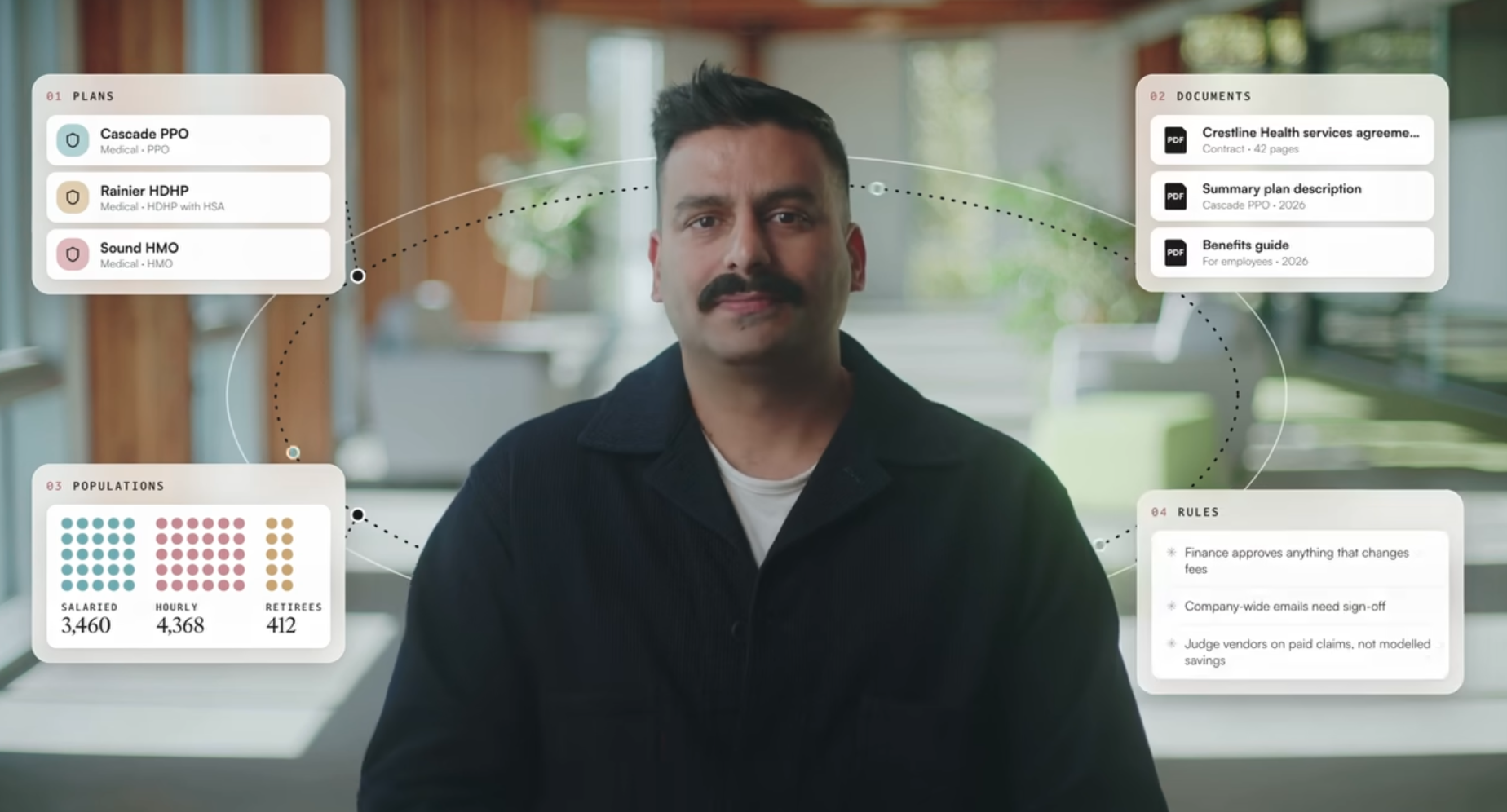
2. So what does Avante actually do? At its core, the platform uses AI agents to do the heavy lifting that benefits teams have traditionally done manually, and often painfully slowly. These agents can compare vendor contracts against actual claims, reviewing documents for errors, inconsistencies, or opportunities. They can prepare for renewals, sift through dense plan documents, and flag issues that a human might miss simply because there aren’t enough hours in the day. But Avante isn’t only about making the back office more efficient. It also gives employees a way to ask questions about their own coverage, using natural language, the same way you might ask a friend for advice. Instead of searching through a 60-page benefits PDF, an employee can just type, “Does my plan cover physical therapy?” and get a clear answer. That might sound simple, but for anyone who has ever called an insurance company and been put on hold for an hour, or tried to decode a Summary of Benefits and Coverage, it’s genuinely transformative. The company recently launched a beta version of something called “Ava Agents,” which expands on this idea by giving benefits teams a suite of AI-powered assistants that can work alongside them. The new funding will be used, in part, to develop even more of these agents and to expand internationally. Avante is essentially trying to build a digital workforce that handles the tedious, repetitive, and error-prone parts of benefits administration, freeing up humans to focus on the parts that require judgment, empathy, and creativity.
3. The traction Avante has already seen suggests the company is onto something. According to the startup, it now has more than 70 customers, including recognizable names like Samsung Semiconductor, Real Chemistry, Zscaler, and News Corp. Its platform reaches more than 385,000 employees and their family members, which is a number that represents a lot of real people checking their coverage, filing claims, and hoping they won’t be blindsided by unexpected medical bills. The company says bookings grew nearly fivefold over the past year, which, if true, reflects a market that is desperate for relief. Benefits are one of the biggest costs an employer faces, and the complexity of managing them has only grown over time. Companies don’t just offer health insurance anymore; they offer mental health support, fertility benefits, wellness stipends, flexible spending accounts, health savings accounts, and more. Each of those offerings comes with its own contracts, compliance requirements, and potential pitfalls. HR teams are expected to be experts in all of it, even though most of them never went to medical school or law school. Avante’s pitch is that AI can be the co-pilot they never had. The company’s rapid adoption suggests that benefits professionals, often stereotyped as change-averse, are actually eager to embrace technology that gives them their time back.
4. The founding story of Avante adds depth to the company’s mission. It was founded in 2023 by D’Souza, who serves as CEO, along with Dr. Carly Eckert, a physician and epidemiologist who leads innovation and impact, and executive chairman Kabir Shahani, who is also co-CEO of the data startup Amperity. D’Souza and Eckert previously worked together as executives at Olive AI, a health care automation company that shut down in 2023. That experience clearly had a profound effect on them. Olive had ambitious goals but ultimately couldn’t make the economics work. Rather than being discouraged, D’Souza and Eckert seem to have taken those lessons and channeled them into something more focused and practical. Avante emerged from stealth in early 2024 and launched publicly in April 2025. The company’s origin story is important because it shows that these founders have seen the ugly side of health care technology. They’re not naive idealists who think artificial intelligence is magic. They’re pragmatic builders who understand that the real world of benefits is messy, fragmented, and full of legacy systems that weren’t designed to talk to each other. They also understand that the people working in benefits are often undervalued, despite being responsible for what D’Souza calls “one of the largest and most consequential investments their companies make.” In a statement accompanying the funding announcement, he captured the frustration of the industry: benefits teams are still operating with outdated information, archaic spreadsheets, and technology built for another era. Avante wants to bring them into the present, and eventually, into the future.
5. The timing of Avante’s rise is no coincidence. Employers are facing a health care cost crisis. Large employers are projecting a median 9.2 percent increase in health care costs for 2027, a number that should alarm anyone who pays for insurance, whether through an employer or as an individual. That increase is nearly triple the rate of general inflation, and it puts enormous pressure on companies to find savings without cutting benefits that employees rely on. Many of them are turning to technology for answers. But Avante isn’t alone in this space. It competes with established benefits and HR software providers like Workday, ADP, Deel, and Rippling, all of which have been adding AI features to their platforms. Avante’s differentiation is that it’s not trying to be everything to everyone. It’s focusing specifically on the benefits function, and it’s building AI agents that are deeply specialized for the job. It’s also partnering with benefits advisory firms like Gallagher, OneDigital, Segal Benz, Howden, and USI Insurance Services. These partnerships are strategic, because benefits brokers and consultants are often the ones who recommend technology to their clients. By winning them over, Avante gains access to a distribution network that would be hard to build on its own. At the same time, the company is positioning itself as an ally rather than a replacement for human advisors. The AI handles the data processing and pattern recognition; the humans handle relationships, recommendations, and the nuanced decisions that require experience.
6. Looking ahead, the road is full of opportunity and challenge. Avante plans to use the new capital to expand internationally, which means navigating different health care systems, regulatory environments, and employer expectations. It also plans to build more AI agents, continuing to evolve beyond the beta release of Ava Agents. The company is already ranked No. 156 on the GeekWire 200, the list of top Pacific Northwest tech startups, a sign that it’s being noticed in its home region. But the ultimate test will be whether Avante can deliver measurable results for its customers, not just in terms of cost savings, but in terms of improving the experience of employees who interact with their benefits every day. There’s something quietly human about what Avante is trying to do. It’s not about replacing people with robots, or slashing budgets, or making the workplace more impersonal. It’s about taking a system that is confusing, stressful, and often exasperating, and making it a little more understandable. It’s about giving a benefits manager their weekend back. It’s about helping a new parent figure out whether their baby is covered. It’s about letting a worker with a chronic condition find the right specialist without a panic attack. Technology often gets criticized for dehumanizing our lives, but in this case, it might just make the experience of dealing with health care a little more humane. And that’s something worth investing in.