



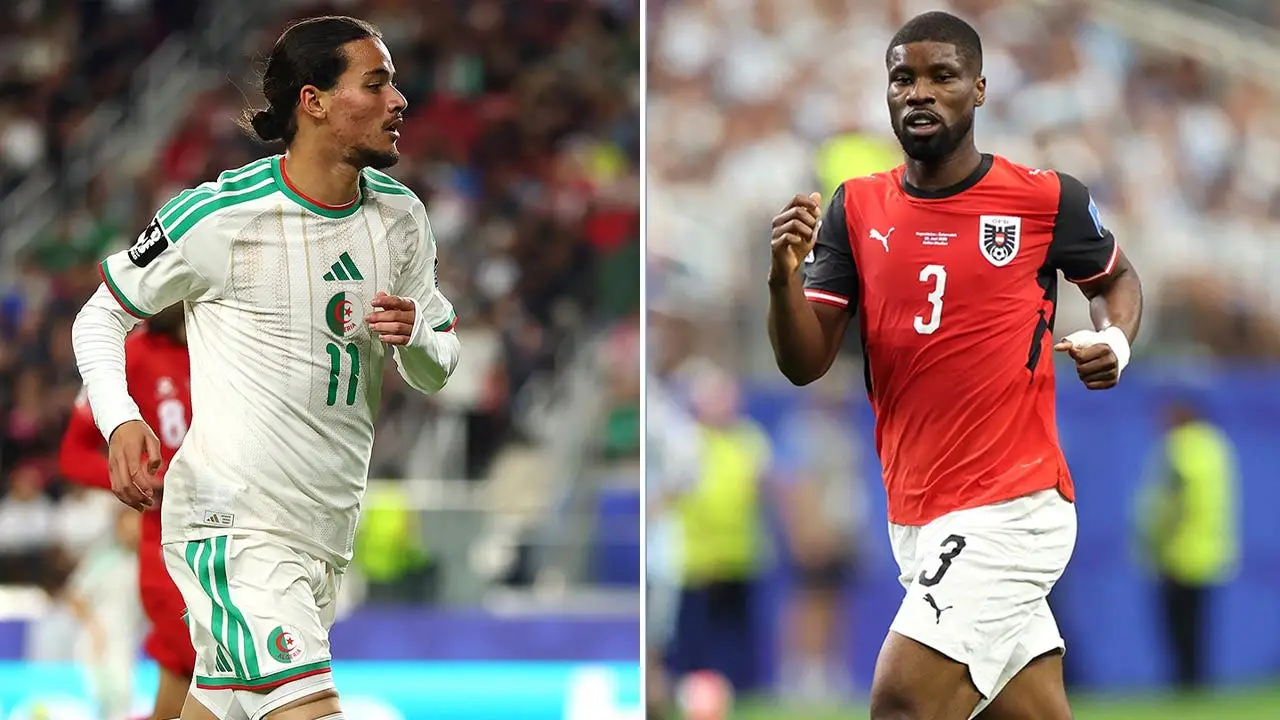
In the high-stakes, adrenaline-fueled world of international football, victory is normally the ultimate pursued glory, a euphoric release that validates years of grueling physical preparation and tactical planning. Yet, Spain’s clinical 1-0 triumph over a resilient Uruguay on a tense Friday night managed to turn the conventional wisdom of the sport completely on its head, sending ripples of strategic panic through the competitors of Group J. By securing Spain the coveted top spot in Group H, this hard-fought victory did not just solidify their reputation as a terrifying tournament juggernaut; it also meant that whoever emerges as the runner-up of Group J on Saturday night will earn the somewhat cursed reward of facing La Roja in the Round of 32. Spain presently sits proudly as the third-best FIFA-ranked nation on the planet, possessing a mesmerizing, possession-heavy style of play—honed over generations of technical mastery—that can physically exhaust opponents and leave even elite teams chasing shadows for ninety minutes. For Austria and Algeria, currently ranked 22nd and 29th respectively, the looming threat of this Spanish footballing powerhouse has completely rewritten the playbook of their crucial upcoming clash. Rather than dreaming of a glorious, statement-making victory that would catapult them into the next round with maximum momentum, both squads now find themselves staring down a deeply complex, psychological paradox where winning might actually represent the worst possible sporting outcome. The sheer prospect of having to break down Spain’s immaculate midfield or withstand their lethal transition play has turned what should have been a straightforward, passionate battle for athletic supremacy into an intricate, chess-like dilemma that challenges the very competitive DNA of these two proud sporting nations.
This bizarre state of affairs highlights the fascinating, sometimes deeply counterintuitive dynamics of the expanded 2026 World Cup tournament structure, where mathematical calculations can occasionally override honest competitive drive. When the governing bodies designed the complex, multi-layered tiebreaker systems and the new Round of 32 format, they envisioned spectacular drama and relentless fighting till the final whistle, but they also unwittingly created fertile ground for strategic manipulation. Under the current rules, the path to the golden trophy is rarely a straight line, and the bracket placement often dictates a nation’s ultimate fate far more than their actual form or raw roster strength on any given day. For managers and coaching staffs, this reality demands a cold, analytical approach that strips away the romantic, old-school notions of playing purely for the badge and replaces them with spreadsheets, probability matrices, and live scoreboard monitoring. The players themselves find themselves trapped in an unusual mental purgatory, caught between the instinctual, deeply ingrained urge to score goals and win matches, and the sobering reality that a victory could set them on a direct collision course with a Spanish side that is historically ruthless against lower-ranked opponents. It is a highly cynical yet entirely rational aspect of modern tournament football, where surviving to play another day by taking the path of least resistance is infinitely more valuable than a fleeting, hollow moment of competitive triumph on a Saturday night. Historians of the game will remember that this is not the first time a tournament structure has forced teams to weigh the ethics of fair play against the absolute necessity of strategic advancement, making this match a modern case study in tactical pragmatism.
For Algeria, the calculation is particularly razor-thin, presenting a delicate tightrope walk that will test the nerves of every player on the pitch and every passionate fan watching from home. Currently standing on the precipice of the knockout rounds, the Desert Foxes know that a draw is their absolute golden ticket to survival. Splitting the points would allow them to comfortably secure a spot in the next round as one of the highly coveted best third-place finishers, a strategic placement that would steer them completely clear of Spain’s formidable path in the bracket. Instead of facing the Spanish armada, a third-place finish would see Algeria matched up against one of the other group giants like Belgium, Switzerland, England, or Ghana—opponents who, while undeniably world-class and dangerous, do not carry the same psychological dread as Spain right now. Conversely, if Algeria accidentally stumbles into a victory, they would claim the runner-up spot in Group J and be forced into a daunting showdown with Spain, while a loss would be utterly catastrophic, leaving them with less than a one percent chance of survival according to advanced statistical models from outlets like The Athletic. This puts Algeria in the incredibly rare and awkward position of needing to play for a deadlocked tie, knowing that too much offensive ambition could lead to an unwanted win, while any defensive lapse could result in a fatal defeat that sends them packing back to North Africa. The coaching staff must somehow communicate this highly sensitive defensive strategy to a team whose natural instinct is to counter-attack with pace and flair, making for a truly fascinating psychological struggle.
Austria’s mathematical puzzle is no less agonizing, though their destiny is tied to a completely different set of variables that will unfold across the globe hours before they even walk onto the pitch in Kansas City. Unlike Algeria, a loss does not instantly spell doom for the Austrians, as they possess a much higher baseline of tiebreaker advantages that could allow them to sneak into the Round of 32 even with a defeat. This creates a remarkably strange scenario where the Austrian squad might actually find themselves quietly rooting for their own demise, hoping that a controlled loss will shield them from Spain while allowing them to advance through the back door of the third-place rankings. However, this strategy is entirely dependent on external results: if Ghana secures a crucial victory earlier in the day at five p.m. Eastern Time, Austria’s chances of advancing with a loss jump to a respectable sixty-five percent, a figure that climbs even higher to seventy-two percent if Uzbekistan can salvage a positive result against the Democratic Republic of Congo at seven-thirty p.m. Eastern Time. But if those early games do not fall in Austria’s favor—if Ghana ties or loses to Croatia, and D.R. Congo emerges victorious—the luxury of playing for a strategic defeat completely evaporates, forcing the Austrian coaching staff to pivot instantly, abandon their calculations, and instruct their players to fight tooth and nail for a win or a draw just to keep their World Cup dreams alive, regardless of the Spanish storm waiting for them on the other side. This constant shifting of probabilities means the Austrian players will likely be glued to their phones in the hotel, anxiously watching matches that are happening thousands of miles away before their own kickoff.
The human and ethical element of this strategic quagmire is where the true drama lies, as it forces us to look past the cold spreadsheets of probability and consider the intense emotional conflict experienced by the athletes themselves on the field. Imagine being a professional footballer who has dedicated their entire life, sacrificed family time, and overcome severe injuries to reach the grandest stage in sports, only to be told by tacticians that playing at one hundred percent capacity might actually sabotage the country’s long-term aspirations. It goes against every fiber of a competitor’s being to step onto a pitch and deliberately hold back, to hesitate before taking a shot, or to defend with less than complete intensity. There is a profound ethical dilemma here, one that evokes memories of some of the most controversial matches in World Cup history, such as the infamous “Disgrace of Gijón” in 1982, where teams engaged in silent pacts of passive play to ensure mutual advancement at the expense of fair competition. Rumors and hypothetical scenarios even suggest that Algeria might have to resort to extreme, seemingly absurd measures—such as a late-game deliberate own goal—if they find themselves mistakenly winning and desperately needing to level the score to preserve their preferred draw. Such extreme scenarios show how the beautiful game can sometimes be warped by the sheer pressure of survival, transforming an exhibition of athletic excellence into a tense, uncomfortable theater of psychological warfare, passive ball-circulation, and strategic manipulation that could alienate fans who paid hard-earned money to witness a true competitive spectacle.
As the clock ticks closer to the ten p.m. kickoff under the bright, expectant stadium lights of Kansas City, the tension will be palpable not just in the stands, but in the dugout and high up in the executive boxes where calculations will be running in real-time. By the time the referee blows the opening whistle, both Austria and Algeria will have a crystal-clear understanding of the global landscape, having watched the earlier matches conclude and their respective mathematical pathways solidify. Fans can expect a match unlike any other, characterized not by furious, end-to-end attacking displays, but by a cautious, highly controlled rhythm where every pass is heavy with subtext and every movement is deeply scrutinized by analysts worldwide. The true beauty of this fixture lies in its sheer unpredictability, as both benches will be constantly communicating with their players, adjusting their tactics on the fly as scoreboards shift and news arrives from other stadiums. Ultimately, this matchup serves as a powerful reminder that the World Cup is as much a mental gridiron as it is a physical one, a beautifully flawed tournament where sometimes, the most heroic thing a team can do is swallow their pride, play the percentages, and navigate the bureaucratic labyrinth of tiebreakers in order to keep the ultimate dream alive. Whether the game ends in a tense, mutually beneficial draw or a chaotic scramble for survival, it will undoubtedly go down in football history as one of the most intellectually fascinating and emotionally draining group stage conclusions ever witnessed.