



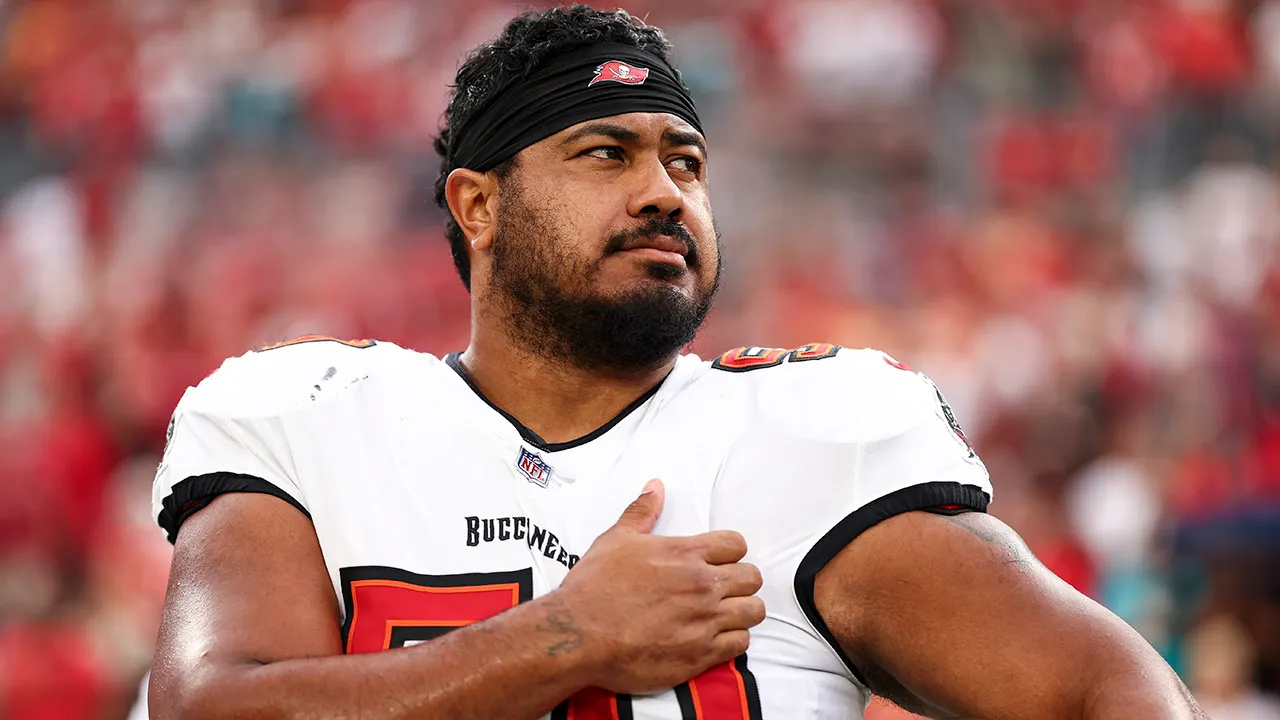
In the high-stakes, multi-billion-dollar theater of the National Football League, timing is everything. It is the invisible currency that dictates contract values, determines leverage, and often separates championship contenders from franchises lost in rebuilding purgatory. When Tampa Bay Buccaneers nose tackle Vita Vea decided to request a trade on the absolute eve of training camp, he chose a maneuver that is the professional football equivalent of reaching for the nuclear launch codes before even sitting down at the negotiating table. This was not a subtle, behind-the-scenes murmur passed quietly from an agent to a general manager over a steak dinner; this was a calculated seismic event, intentionally detonated at the precise moment to cause maximum disruption. For a franchise preparing to gather its roster, establish its identity for the upcoming campaign, and build the physical and mental stamina required for an grueling seventeen-game season, Vea’s bombshell request instantly rewrote the narrative of their entire summer. The two-time Pro Bowl defensive stalwart had reached his breaking point after a long, grueling offseason of unproductive contract talks. Having poured his sweat, blood, and immense physical power into the Tampa Bay turf for years, the realization that the front office did not view his future with the same urgency or financial commitment that he did left him feeling alienated. This emotional disconnect ultimately led to his definitive request to play his football elsewhere. While a trade demand of this magnitude sends shockwaves through a fanbase and dominates sports highlight reels, the cold reality of NFL labor dynamics suggests that a resolution is rarely swift or simple. Vea remains firmly under contract through the 2026 season, a deal that could pay him up to $18 million in its final year if he manages to find his way onto the active roster for all seventeen games. Yet, the Buccaneers’ front office, led by a seasoned management group that has navigated draft-day pressures and high-profile contract disputes before, is highly unlikely to panic. They have made it clear through organizational leaks that they will not engage in a fire sale or compromise the long-term competitive health of their roster just to rid themselves of an uncomfortable training camp distraction.
At the core of this dramatic standoff is a stark, mathematically quantifiable dispute over value, respect, and market inflation. The modern NFL economy has experienced an astronomical surge in salary caps and franchise valuations, which has in turn fueled a gold rush for interior defensive linemen—a position historically overlooked in favor of glamorous edge rushers and quarterbacks. When Vita Vea looks around the league’s financial landscape, he does not see a fair reflection of his contributions; instead, he sees himself sitting as the nineteenth-highest-paid interior defensive lineman in professional football. To a player who routinely commands double-teams, dictates opposing offensive game plans, and physically alters the geometry of the line of scrimmage, being ranked nineteenth is not just a statistical anomaly—it is a profound professional insult. Vea holds the deep, unwavering conviction that he is far superior to eighteen other players currently earning more than him, and in the unforgiving universe of the NFL, where a career can end in a single, catastrophic heartbeat, securing maximum value isn’t just about pride—it is about securing a legacy and generational wealth. The financial disparity becomes even more glaring when contrasted with the massive, groundbreaking contracts recently handed out to defensive tackles across the league, creating an environment where Vea’s current compensation feels like an artifact of a bygone era. For the Buccaneers, however, managing a salary cap is a delicate balancing act of maximizing resources while planning for future extensions, leaving them hesitant to tear up a legally binding contract that still has multiple years left to run. This classic clash between a player’s personal worth and an organization’s business-first spreadsheet calculations has effectively stalled communication, culminating in Vea’s dramatic declaration that he no longer sees a viable future in Tampa Bay.
To understand why this contract dispute is so critical, one must appreciate the unique, violent, and often unglamorous role that Vita Vea plays as the structural centerpiece of the Buccaneers’ entire defensive philosophy. In the modern, pass-heavy NFL, defensive coordinators still universally agree on one fundamental truth: if a defense cannot stop the running game, it cannot successfully do anything else. Vea is the very definition of a defensive anchor, a rare and precious physical specimen standing 6-foot-4 and tipping the scales at a colossal 347 pounds. But what makes Vea a generational talent is not merely his massive frame; it is the extraordinary, almost unnatural combination of sheer power, explosive leverage, and athletic mobility that allows him to dominate the middle of the formation from his nose tackle position. For years, opposing offensive coordinators have been forced to dedicate two, sometimes even three offensive linemen to block him, yet he consistently refuses to give up ground, clogging the critical interior rushing lanes and creating a human wall that prevents offensive linemen from climbing up to block Tampa Bay’s linebackers. His presence on the field is a cheat code that makes everyone around him better, freeing up his teammates to make spectacular, highlight-reel plays while he does the dirty, punishing work in the trenches. Since he stepped into the starting lineup as a full-time contributor in 2018 and matured into a dominant force by 2019, his impact has been reflected in historical statistical dominance. From the start of the 2019 season through the majority of 124, the Buccaneers established themselves as one of the most consistently terrifying run defenses in the entire league, ranking first overall in rushing yards allowed per game at a measly 94.1, first in yards allowed per carry at a stingy 4.0, and finishing in the top five against the run in five out of six seasons—including historic, suffocating number-one overall finishes during their championship run in 2019 and 2020.
Yet, characterizing Vita Vea as merely a space-eating, run-stuffing relic of an older era of football does a massive disservice to his evolution as an absolute, all-around defensive disruptor. While he missed a significant portion of the magic 2020 Super Bowl season due to a devastating fractured ankle, his resilience and durability in the years following have been nothing short of remarkable, as evidenced by his 78 starts over the past five seasons. It is in the passing game, however, where Vea has truly elevated his play, proving that a man of his size can generate a devastating interior pass rush that completely collapses the pocket from the inside out—the absolute worst nightmare for any starting quarterback. He set a career-high with seven sacks in 2024, and proved that was no fluke by returning in 2025 to register another impressive 4.5 sacks, alongside seven tackles for loss and thirteen quarterback hits. This rare ability to rush the passer from the nose tackle spot allowed the Buccaneers to join an elite club in 2024 as one of only three teams in the NFL to boast two defensive tackles with at least seven sacks each, as Vea paired beautifully with his young teammate Calijah Kancey to terrorize opposing offenses. His exceptional individual performance has earned him widespread recognition from both his peers and league analysts, resulting in two Pro Bowl selections following the 2021 and 2024 seasons, a prestigious spot on the NFL Players Association’s Top 100 list entering 2025, and a permanent place in franchise lore as a primary catalyst for the team’s triumphant Super Bowl LV championship victory.
This dramatic trade request represents a logistical and psychological nightmare for the Buccaneers’ coaching staff and front office, who are already walking a tightrope during one of the most critical junctures of their calendar year. The team is currently locked in their own high-stakes, incredibly delicate contract negotiations with starting quarterback Baker Mayfield, who is seeking a lucrative long-term commitment after resurrecting his career in Tampa. Managing a franchise quarterback’s financial demands is stressful enough on its own, but having to simultaneously manage a public, highly visible rebellion from their defensive masterclass centerpiece threatens to derail the team’s focus and fracture the locker room. The immediate danger for the Buccaneers is that Vea might resort to the increasingly popular modern negotiation tactic known as the “hold-in”—a scenario where a disgruntled player physically reports to training camp to avoid facing tens of thousands of dollars in mandatory daily fines, but absolutely refuses to participate in practices, drills, or team meetings. For head coach Todd Bowles, who relies heavily on defensive cohesion, discipline, and physical reps during the summer heat, having a 347-pound superstar looming on the sidelines in street clothes is a constant, suffocating distraction that invites relentless media scrutiny and disrupts the development of younger players. No coach, regardless of their experience or pedigree, wants to begin a grueling season answering daily questions about a star player’s loyalty and contract status rather than focusing on the actual schemes and opponents ahead.
Ultimately, this tense standoff between Vita Vea and the Tampa Bay Buccaneers serves as a poignant, deeply humanizing reminder of the fragile nature of professional sports, where the thin veneer of team loyalty often melts away under the harsh warmth of cold business reality. From the fan’s perspective, it is easy to view players as mere chess pieces on a board, or fantasy football statistics to be traded and managed for weekend entertainment. But for the human being wearing the helmet, the physical sacrifice required to play nose tackle in the NFL is immense, painful, and fleeting; every snap of the ball represents a collision akin to a car crash, and the window of physical prime is brutally short. Vea is looking out for his family, his health, and his future, refusing to let an organization benefit from his premier, elite-level labor without providing the premium compensation that aligns with his actual worth on the open market. For the Buccaneers, the challenge lies in balancing the cold, unsentimental mathematics of the salary cap with the emotional, human necessity of keeping their locker room leaders happy, respected, and motivated. As training camp kicks off under a cloud of uncertainty, whether this dispute ends in a record-breaking contract extension that keeps Vea in Tampa Bay, a blockbuster trade that sends him to a new city, or an uneasy, highly volatile truce, one thing remains absolutely certain: the battle lines have been drawn, and the human drama of the NFL business will continue to play out in real-time, long before the first official kickoff of the season.