



The Emotional Journey of a Skiing Legend: Lindsey Vonn’s Olympic Comeback Gone Wrong
Imagine waking up in a hospital bed, your body battered from the very sport you’ve loved and dominated for decades. That’s the reality Lindsey Vonn is facing right now, still recovering from her daring Olympic attempt at the Milan-Cortina Games last week. At 38 years old, this American skiing icon returned to the slopes after an eight-year hiatus, only to tear her ACL in a World Cup race just days before the Olympics. Undeterred by the pain and the risks, she pushed forward, believing in her dream of standing at the starting gate one more time. But as she shared in a heartfelt Instagram video from her hospital room in Italy, she’s far from being herself yet. “I’m finally feeling more like myself but I have a long, long way to go,” she said, her voice steady but tinged with vulnerability, her eyes showing the weariness of someone who’s poured everything into this moment. Immobilized in her bed after a “hard few days,” Vonn acknowledged the emotional toll—she was visibly emotional, a stark contrast to the tough, unyielding competitor the world knows. Tomorrow, she faces another surgery, her fourth since the injury, with hopes of potentially leaving the hospital afterward for yet another procedure back home. The uncertainty looms large; she awaits imaging results that could reveal the full extent of what lies ahead. It’s a humbling position for someone who’s skied through injuries before, but this time feels different—personal, raw, as if the mountains she conquered have momentarily turned against her.
Vonn’s Olympic comeback was more than a race; it was a testament to her unbreakable spirit. Entering the Milan-Cortina Olympics, she was undoubtedly the biggest American story, a symbol of perseverance and passion. After retiring temporarily in 2019 due to recurring injuries, Vonn had rebuilt her life—coaching, commentating, becoming a mother. But the call of the Olympics was too strong. She chose to compete in Alpine skiing, blending giant slalom and slalom on treacherous courses designed for speed and precision. Just a week before the Games, in a World Cup qualifier in Bulgaria, she tore that ACL, the ligament that stabilizes the knee and is crucial for the high-speed turns that define downhill skiing. Doctors warned her, family pleaded, but Vonn, ever the warrior, insisted on competing. She reasoned that racing with pain was nothing new; her career was built on overcoming setbacks—multiple ACL surgeries in the past, concussions, crashes that would sideline lesser athletes. “Standing in the starting gate yesterday was an incredible feeling that I will never forget,” she later posted, capturing the joy and adrenaline that masked the underlying grimace. For fans, it was inspiring—proof that age is just a number, that dreams don’t fade. Yet, beneath the glamour, it’s a reminder of the sacrifices athletes make, risking health for glory, for that fleeting sense of victory. Her father, Alan Vonn, reacted with a mix of pride and concern, calling her crash “terrifying” in an interview, his voice breaking as he described watching his daughter airlifted from the course, mirroring the protective panic any parent would feel.
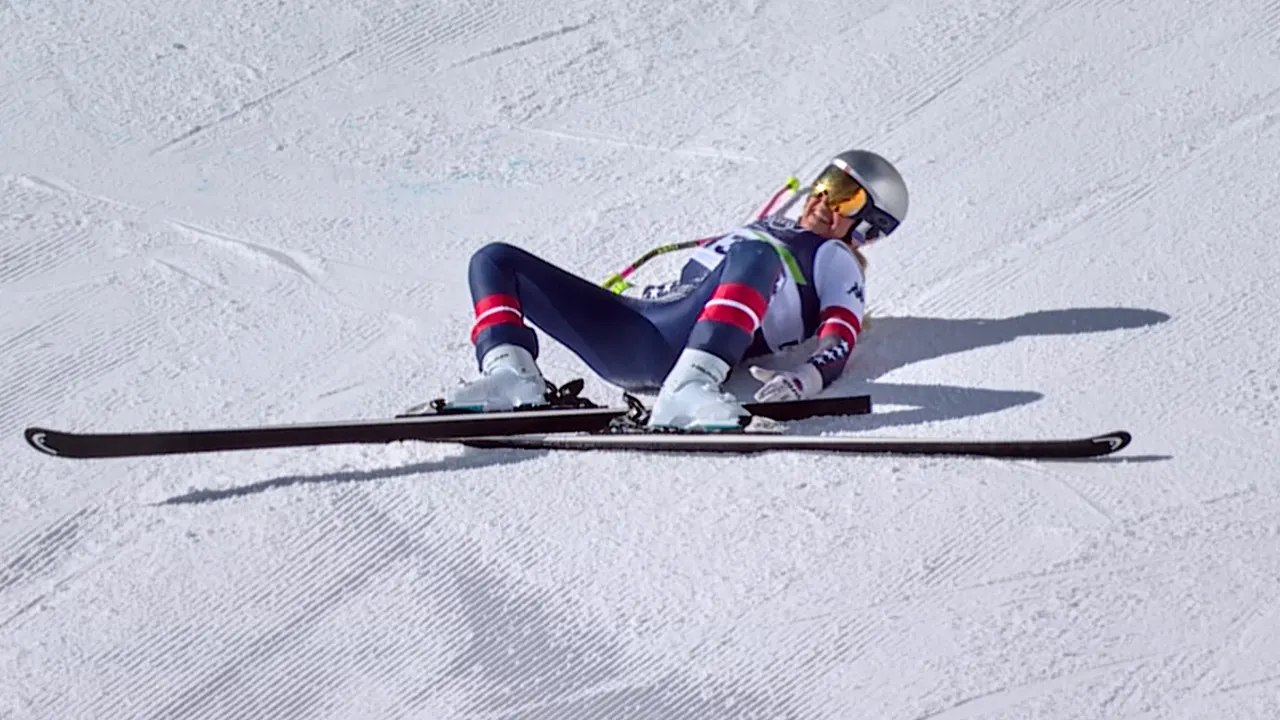
The crash itself was swift and brutal, a moment that stunned spectators and shattered Vonn’s hopes in an instant. Just 13 seconds into her first race—the women’s giant slalom on the Olympic slopes in Cortina—she hit a gate, a small but unforgiving obstacle on the piste. Her right arm hooked inside the gate, twisting her body with unexpected force. She tumbled, the world blurring in a painful spiral, before skiers and organizers rushed to her aid. An airlift to Ca’ Foncello Hospital in Treviso followed, where doctors stabilized her. It’s the kind of fall that haunts dreams, where seconds dictate life-changing outcomes. For Vonn, it meant the end of her Olympic dream before it truly began, but she refuses to see it as defeat. In her first post-crash Instagram message, she declared, “I have no regrets.” She emphasized that the torn ACL didn’t cause the maskan— a cruel twist but not related to her pre-existing injury. It was simply a miscalculation: “I was simply 5 inches too tight on my line,” she explained, highlighting how skiing demands perfection amidst chaos. This moment humanizes her; off the slopes, she’s thoughtful and reflective, but on them, she’s a human pushing physical limits. Her story resonates with anyone who’s chased a goal reckless, knowing the potential for heartbreak. The Olympics amplify this drama—nations watching, expectations soaring—yet beneath it all, it’s one woman’s courage against the elements.
In her raw videos and posts, Vonn shares her innermost thoughts, making her journey intensely relatable. Lying in that hospital bed, immobile and introspective, she processed the disappointment. “I’m just in the hospital, very much immobile,” she admitted, her voice cracking slightly, revealing the loneliness of recovery. It’s not just physical pain; there’s the mental weight of unfinished dreams. She could’ve walked away, but she didn’t, and that choice defines her. Her reflections extend beyond sports, touching on universal truths. “Knowing I stood there having a chance to win was a victory in and of itself,” she wrote, reframing setbacks as accomplishments. Vonn acknowledges skiing’s dangers—high speeds, unpredictable snow, the ever-present risk of injury—yet she embraces them as part of life’s tapestry. “We take risks in life. We dream. We love. We jump. And sometimes we fall.” Her words echo the human experience: pursuing passions, enduring heartbreak, learning from falls. For parents watching, athletes training, or dreamers everywhere, her candid admission—”Sometimes we don’t achieve the dreams we know we could have”—stirs empathy. It’s not self-pity; it’s wisdom hard-earned on icy slopes. Vonn’s vulnerability makes her more than a champion; she’s a storyteller, reminding us that courage persists through pain.
She takes care to clarify the accident’s mechanics, ensuring perspective. The crash stemmed from a technical error, not her prior injuries. “My ACL and past injuries had nothing to do with my crash whatsoever,” she stressed, defending her decision not to blame fate. This distinction counters critics who questioned her participation, portraying her as reckless. Instead, it shows calculated risk-taking. Vonn has always balanced danger with preparedness—rigorous training, mental coaching, family support. Yet, even legends slip; that extra inch too close to the gate, a momentary lapse in focus, and the course claims its toll. Her explanation humanizes the sport: skiing isn’t just adrenaline; it’s precise, punishing, where millimeters matter. It invites readers to imagine split-second decisions— should you pull out, or push on? Vonn chose the latter, modeling grit for others in adversity. Her message fosters understanding, shifting blame from her bravery to the unpredictability of human endeavor. In doing so, she uplifts not just herself but fellow risk-takers, from entrepreneurs to adventurers, all navigating their own turbulent paths.
As Vonn awaits further imaging and surgeries, her story offers hope and humility. She’ll heal, stronger perhaps, drawing from decades of resilience. “I tried. I dreamt. I jumped,” she concludes, a mantra for living fully. For fans, following her on social media or through news like Fox News provides that personal connection—now even with audio options for hands-free updates. Her dad’s reaction adds layers; his fear underscores the ripple effects on loved ones. Broader coverage in Fox News Sports and newsletters keeps the narrative alive, blending athletic drama with everyday inspiration. In humanizing her ordeal, Vonn reminds us: life’s beauty lies in attempting, even when falling. Her journey isn’t over; it’s evolving, encouraging us all to chase our gates, come what may. visiting publicados kit, but in the end, it’s about the heart that keeps dreaming.