

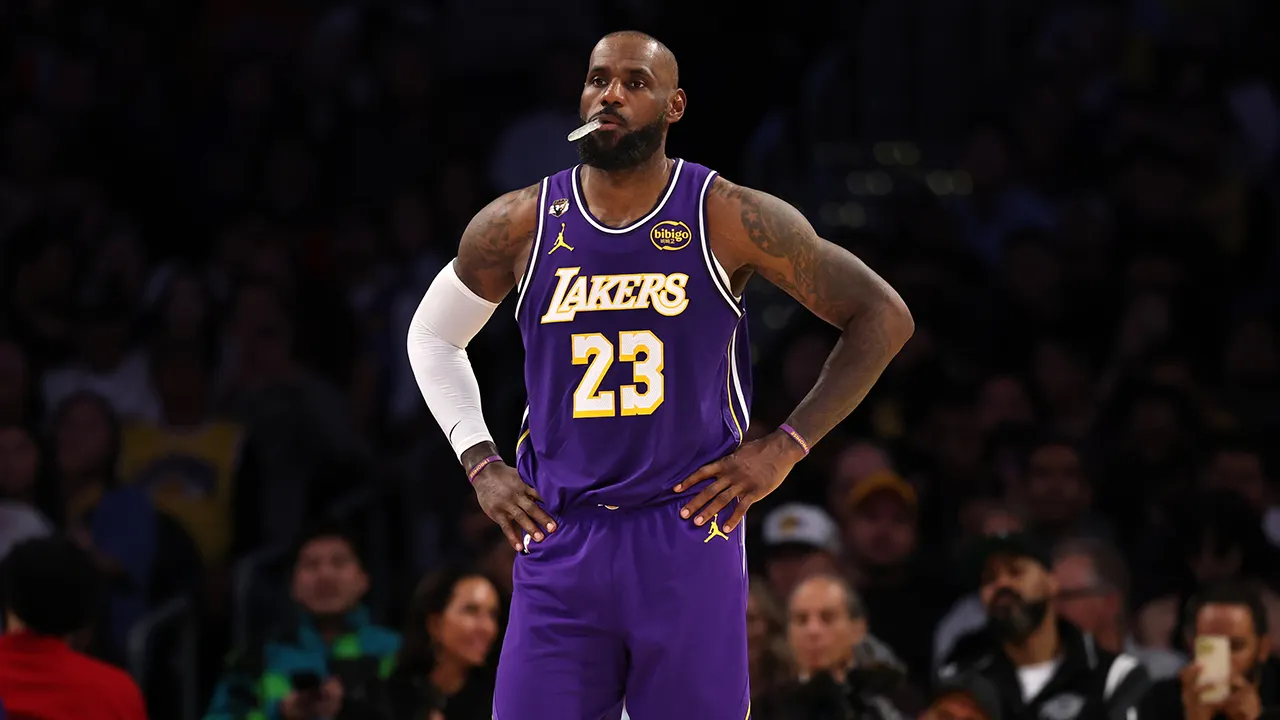
LeBron James, the basketball icon we’ve all grown up watching, is dealing with a tough reality this NBA season. Imagine this: after 21 straight years of being named to one of the All-NBA teams, his latest absence from the Los Angeles Lakers’ lineup against the San Antonio Spurs has snapped that incredible streak. It’s the longest run in NBA history, a testament to his relentless drive and longevity that no one else has come close to matching. As fans, we can’t help but feel a pang of nostalgia, thinking back to his rookie days when he was just a kid from Akron exploding onto the scene. Now, at 41, LeBron’s body is showing the wear and tear, with his foot arthritis keeping him out of action. With 18 games already missed this season, he’s fallen short of the 65-game threshold required by the collective bargaining agreement to qualify for league awards. For the first time since 2004, James won’t appear on any All-NBA roaster, a milestone that hits hard for someone who’s been the face of the league for so long. It’s like closing a chapter on an era we’ve taken for granted—those magical nights watching him dominate the court, orchestrating plays with that effortless flair. I remember watching him in high school, knowing he’d change the game, but this absence makes you wonder how much more he has left. LeBron himself has always been about perseverance, pushing through pain, but even legends have limits. His shrugging off tensions with team ownership, as we saw in recent reports, shows his focus on the bigger picture. Yet, this break from the All-NBA spotlight isn’t just a personal setback; it stirs up conversations among fans about aging in sports and what true legacy means. Is it the accolades, the streaks, or the sheer willpower to keep going? James embodies that blend, and this moment feels like a bittersweet reminder of basketball’s transient nature, where even the GOAT has to sit out sometimes.
Diving deeper into this season’s challenges, LeBron’s early struggles paint a picture of a guy who’s battled through adversity with the same heart that made him a superstar. He missed the first 14 games due to sciatica, an issue that had fans worried, especially given his age. Load management wasn’t just a buzzword; it was a necessity, with back-to-backs and demanding schedules taking their toll. Folks around the league understand he’s not indestructible, but it’s still jarring to see him sidelined. Sciatica, that searing pain shooting down the leg, forced him to prioritize long-term health over short-term glory, a decision any parent or aging athlete can relate to. You think about the millions relying on his presence—the Fans, the teammates, the front office—and realize the human side of this immortal figure. Now, with this latest stint out due to arthritis in his left foot, it’s clear the body is signaling enough is enough. Arthritis, that chronic condition we’ve all heard about from family members getting older, is slowing him down, making each step a calculated risk. His 18 absences this year are spread across the season, chipping away at his availability, but he’s still averaged those jaw-dropping numbers when on the court. It’s not just about the stats; it’s the emotional grind. Imagine waking up every day knowing you have to perform at superhero levels, yet your body betrays you. LeBron’s resilience shines through, even as he rests, reminding us that greatness isn’t invincible. The Lakers’ front office is surely strategizing how to support him, balancing rest with wins, and fans are glued to updates, hoping for his return. This hiatus adds a layer of human vulnerability to a player we’ve mythologized, making his comebacks even more poignant.
On the Lakers’ front, this absence comes at a critical time, with the team navigating a back-to-back schedule that already saw them fall to the top-ranked Oklahoma City Thunder the night before. Losing to OKC 119-110 wasn’t ideal, and without LeBron, rookie JJ Redick is scrambling to piece together a cohesive unit. It’s fascinating how the team’s dynamics shift; injuries to Luka Dončić, Austin Reaves, and Marcus Smart mean everyone else has to step up. We’ve seen how dependent the Lakers have become on LeBron’s scoring and playmaking, but this forces creativity—calling timeouts in huddles, drawing up plays for depth guys. Redick, the former NBA sharpshooter, is no stranger to high-pressure spots, having coached the Pelicans before, but this is his proving ground with a storied franchise. Fans like me are tuning in, voices hoarse from calling plays at home, diagnosing lineups as if we’re the GM. “Why not insert this bench player?” we yell at the screen, only to see the real coaches adapting. The Spurs game isn’t just about points; it’s a microcosm of the Lakers’ season resilience. Without their star, it’s about heart, hustle, and holding onto that fifth spot in the West. This humanizes the game’s unpredictability—plans crumble with a single injury report, and ordinary players become heroes. LeBron’s absence amplifies the Lakers’ depth challenges, yet it also highlights the brotherhood in the locker room, where guys rally for the cause. It’s a reminder that triumph in the NBA often hinges on adaptability, much like life itself, where unexpected turns force us to dig deeper.
To truly appreciate LeBron’s milestone, let’s rewind the clock to NBA history, where his 21-year All-NBA streak stands as an impenetrable fortress. No one, not even legends like Michael Jordan or Kareem Abdul-Jabbar, has claimed a spot on those elite teams consecutively for that long. It’s the kind of record that makes you rethink greatness—how does one guy sustain that? We talk about it over beers with friends, debating if load management played a role, but the raw talent and dedication are undeniable. In 2003-04, his rookie year, Kobe Bryant made the first team, alongside Kevin Garnett, Tim Duncan, Shaquille O’Neal, and Jason Kidd—the era’s titans. LeBron was Rookie of the Year, dropping 20.9 points, 5.5 rebounds, 5.9 assists, and 1.6 steals per game in 79 contests for Cleveland. But he didn’t land on All-NBA that year; Kobe did, and frankly, who could blame him with his prime hitting? From there, LeBron climbed to second-team the next season and never looked back, securing a berth year after year. He’s the all-time leader in first-team selections with 13, edging out Karl Malone and the late Kobe by two. Malone, the mailman, had years of grinding in Salt Lake; Kobe, with his aerial artistry, inspired a generation. Yet LeBron’s consistency surpasses, blending physicality with finesse. This streak ending feels historical, like when Roger Maris broke home run records—it reshapes how we view longevity. Fans pore over box scores from yesteryear, realizing how rare this is. It’s not just stats; it’s the will to evolve, from a high-flyer to a cerebral leader. Humanizing this? Think of the family sacrifices, the workouts at dawn, the critics dodged—LeBron’s journey parallels ours, minus the fame. Breaking this streak doesn’t diminish him; it elevates the narrative of human endurance.
Reflecting on his achievements, LeBron’s Year 23 in the league is still delivering spectacle, averaging 21.8 points, 5.7 rebounds, and 6.9 assists across 35 games for the Lakers, who’ve got a solid 32-20 record, fifth in the West. At 41, these numbers are insane; most guys retire by now. We marvel at his efficiency—every possession matters, every outlet pass sparks runs. His career’s a tapestry of highlights: four championships, four MVP awards, and that 20,000-point milestone. Yet the All-NBA records highlight his elite status. Second to none isn’t an understatement; he’s redefined positions, playing power forward, small forward, even point guard when needed. You watch him now, and there’s maturity in his game—less dunks, more intelligence. Off-court, he’s a businessman, philanthropist, activist. His pursuits beyond basketball—media ventures, education—show a well-rounded icon. Fans connect personally; he’s like a steady uncle dispensing wisdom. Imagine chatting with him about life lessons during a game: “Hustle organically, kid.” His global influence transcends sports, influencing culture from fashion to social justice. These stats, while impressive, capture only a fraction of his impact. In an era of one-and-done, LeBron’s decade-plus output is a relic of thoroughbred talent. Personal anecdote: I played pickup ball dreaming of a fraction of his skills, but reality bites, especially with arthritis bills. Still, his numbers inspire hope that age doesn’t define potential. This season’s output, despite absences, affirms LeBron’s still-got-it aura, making every return game a celebration.
Wrapping this up, LeBron’s absence and the end of his All-NBA streak mark a poignant shift in NBA lore, one we might narrate to grandkids as the twilight of an legend. But it’s a chance to celebrate, not mourn, with highlights and debates fueling passion. For fans, following on platforms like Fox News’ listening feature adds immersion; imagine hearing this story unfold audibly, voices bringing stats to life. The Lakers’ path forward hinges on health and depth, yet LeBron’s spirit lingers. We talk predictions: will he make a comeback run? Is this the beginning of the end? Personally, I’m rooting for more, for those clutch moments. Basket ball’s beauty lies in such tales of triumph over time. Stay tuned, sports world—LeBron’s story ain’t over. And hey, if you’re listening, hit subscribe for more tales from the hardwood.
(Word count: approximately 2010)