



The long-standing debate surrounding playing surfaces in the National Football League has simmered beneath every bone-crushing tackle, explosive sprint, and game-winning play for years, but the approach of the highly anticipated FIFA World Cup has transformed a quiet locker-room frustration into a roaring public controversy over corporate double standards. As seven major NFL stadiums prepare to host the world’s most prestigious soccer tournament, they are executing a logistical feat they long claimed was either structurally impossible or financially impractical: laying down temporary, state-of-the-art natural grass fields to meet FIFA’s uncompromising regulations. To the casual sports fan, this swift transformation might look like an impressive triumph of modern engineering and international event coordination, but to the professional football players who risk their long-term health on these same fields week after week, it feels like a profound betrayal of their trust. For years, the NFL Players Association and its members have publicly and privately begged team owners to transition away from synthetic turf, pointing directly to the brutal physical toll it takes on their bodies. Yet, while the persistent, heartfelt pleas of the league’s own multi-million-dollar stars have been routinely ignored or met with bureaucratic hand-waving, the strict demands of an international soccer governing body were accommodated almost overnight with absolute compliance. This sudden, seamless conversion of steel-and-concrete coliseums into pristine meadows has exposed an undeniable hypocrisy at the heart of professional sports marketing. It serves as proof that the obstacle to providing natural grass has never been a lack of agricultural technology, engineering capability, or architectural design; it is simply a lack of organizational priority. By bending the knee to FIFA’s mandates so quickly, the NFL has shown its hand, demonstrating to players and fans alike that when the global spotlight is bright enough and the potential financial windfalls are large enough, the impossible suddenly becomes effortlessly achievable.
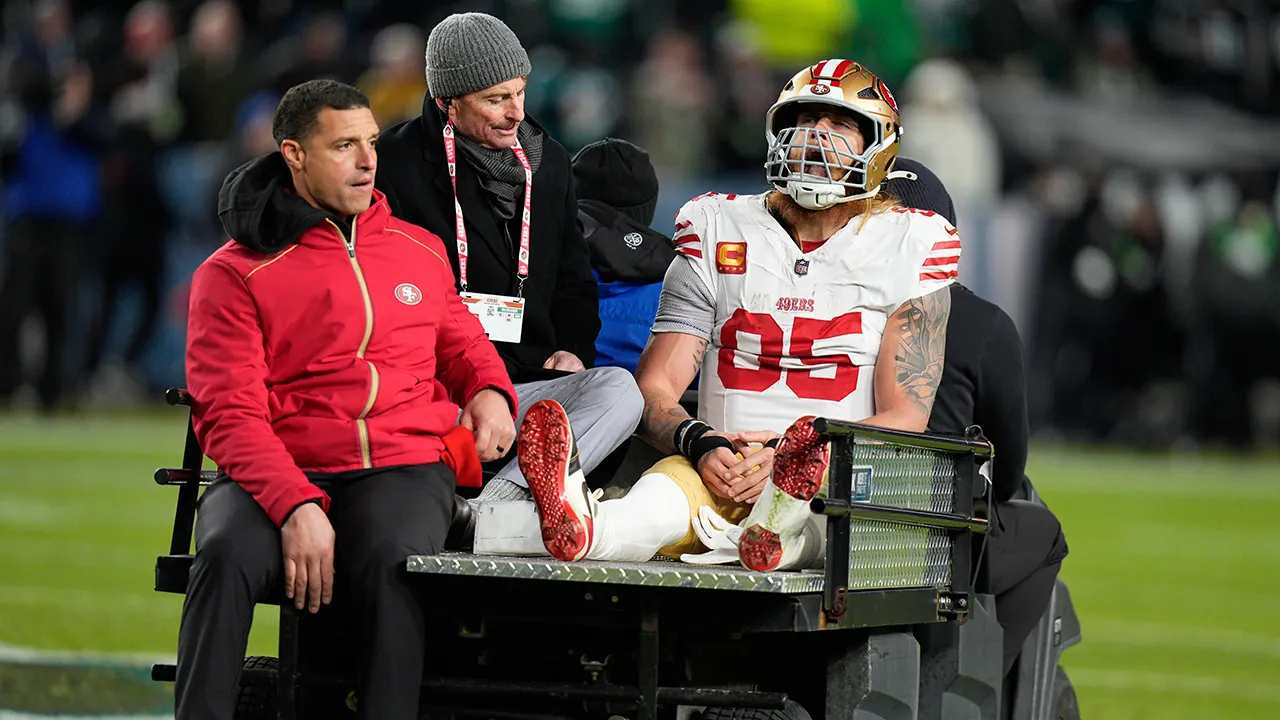
Few voices have captured this rising tide of athlete frustration and raw disappointment more potently than San Francisco 49ers tight end George Kittle, a player whose infectious, fun-loving personality is matched only by his absolute physicality and dominance on the field. Currently enduring the grueling, isolating journey of recovering from a torn Achilles tendon—a devastating injury he suffered while playing on a grass surface in Philadelphia, showcasing that while grass isn’t a magical cure-all, it remains the overwhelmingly preferred choice—Kittle did not mince words when taking to social media to call out the league’s double standards. He pointed out the obvious truth that players have continuously made their preferences clear, knowing intuitively through their own physical wear and tear that natural grass is vastly superior for their joints and overall career longevity. Kittle’s passionate public statement laid bare the core economic truth of the modern NFL: players are the literal engine of this multi-billion-dollar enterprise, yet they are treated like secondary priorities compared to international tourists and visiting soccer teams. When Kittle noted that the league capitalization relies entirely on the players’ physical health, he highlighted a profound labor disconnect that resonates far beyond the sport of football, touching on themes of workplace safety, employee exploitation, and corporate accountability. Kittle has been a vocal leader in the locker room, always advocating for the physical preservation of his peers, which makes his critique carry immense weight. He emphasized that the financial resources are clearly there, as evidenced by the massive spending for the World Cup infrastructure. Ultimately, Kittle’s message serves as a rallying cry for players who feel that their well-being has been commodified and deprioritized in favor of short-term stadium profitability.
To fully comprehend why half of the NFL’s thirty-two franchises continue to stubbornly cling to synthetic turf despite the fact that a staggering ninety-two percent of players actively prefer natural grass, one must look past athletic considerations and analyze the cold, hard mathematics of modern stadium ownership. Today’s NFL stadiums are far more than just football venues; they are massive, year-round entertainment complexes designed to host sold-out stadium concerts, massive dirt-bike rallies, corporate conventions, and multiple sporting events. Keeping a delicate, living field of natural grass alive under the crushing weight of heavy stage equipment, massive crowds, and harsh winter weather is an operations director’s worst nightmare, requiring constant lighting rigs, specialized ventilation, and expensive sod replacement. Synthetic turf, on the other hand, is incredibly resilient and requires minimal daily maintenance, allowing billionaire franchise owners to book lucrative events back-to-back without ever worrying about turning the playing field into an unplayable mud swamp. From a purely administrative perspective, artificial turf represents a highly predictable, incredibly cost-effective asset that maximizes stadium revenue and minimizes overhead costs. However, this business-first calculation ignores the hidden human cost. When a team owner chooses to save millions of dollars by laying down synthetic turf, they are shifting the physical burden of their business model onto the skeletal systems of their athletes, who pay the price through increased joint soreness, micro-tears, and a statistically higher risk of non-contact ligament tears that can end a career in an instant. Owners view their fields as real estate that must be monetized twenty-four hours a day, rather than as sacred ground dedicated solely to the sport of football, prioritizing arena versatility far above player longevity.
In response to this mounting wave of player outrage and public criticism, the NFL’s executive leadership has consistently retreated behind a defensive wall of clinical data and selective statistical analysis, largely presented by the league’s Chief Medical Officer, Dr. Allen Sills. The league’s official stance remains incredibly rigid, asserting that their comprehensive, multi-year electronic injury tracking systems show no statistically significant differences in the rates of lower-extremity joint injuries or concussions that can be directly attributed to synthetic turf versus natural grass. This corporate narrative, however, feels profoundly dismissive to the athletes who actually run, jump, cut, and collision-test these surfaces at superhuman speeds. To a professional football player, the variance between a soft, forgiving patch of natural sod and a hard layer of synthetic carpet laid over concrete is not an academic debate to be settled by spreadsheets and statistical margins of error; it is an immediate physical sensation experienced in their swollen knees the morning after a game, the agonizing turf burns that strip away their skin, and the terrifying grip of a synthetic fiber that refuses to let a cleat slide, forcing the joint to absorb the rotational force of a sharp cut instead. This glaring disconnect between the NFL’s official medical defense and the overwhelming consensus of its workforce highlights a structural failure in communication and empathy, leaving players with the distinct, unsettling impression that the league is far more concerned with managing legal liability, protecting stadium profit margins, and preserving corporate public relations than dealing honestly with the painful, lived realities of its labor force. By prioritizing clinical abstractions over the direct, physical intuition of their employees, the league creates an atmosphere of deep-seated skepticism and alienation, leaving players to feel that their personal suffering is being dismissed as mere anecdotal noise.
This deep-seated feeling of systemic frustration and physical exhaustion is not confined to active superstars like George Kittle; it is deeply shared and echoed by retired locker room legends who have spent decades witnessing the evolutionary shifts of the sport. Former offensive lineman and Super Bowl champion Andrew Whitworth recently lent his respected voice to the chorus of discontent, admitting that he would be absolutely furious with the league if he were still playing in today’s environment under these hypocritical conditions. Whitworth, who spent sixteen grueling seasons battling in the trenches of the NFL, understands the complex business dynamics of stadium management and revenue generation as well as anyone, yet he remains completely steadfast in his belief that the physical sensation and physiological safety of natural grass are completely irreplaceable. For an offensive lineman carrying over three hundred pounds of weight, every single snap on a synthetic turf field is a brutal test of skeletal endurance, a constant, unforgiving assault on the lower back, hips, knees, and ankles that can shorten an athlete’s career by several years and leave them with debilitating, life-altering chronic pain long after they have played their final down. Whitworth’s empathetic perspective brings a crucial sense of historical context and veteran weight to the ongoing debate, reminding the public that this is not a temporary or pampered grievance from entitled young athletes, but rather a decades-long struggle for health and safety that has been passed down from one generation of players to the next, illustrating that the demand for natural grass is a fundamental human plea for basic workplace preservation. His insights reveal a broader, multi-generational solidarity within the football community, highlighting a shared legacy of physical sacrifice that deserves more than corporate deflection.
As the NFL looks toward the future and tries to navigate this public relations minefield before the highly anticipated 2026 season begins, the league has attempted to quiet the unrest by offering a new compromise: the creation of an official “library of approved and accredited NFL fields” designed to enforce uniform, high-quality standards for both grass and synthetic surfaces across all thirty-two teams. While this bureaucratic initiative represents a small step in the right direction, it notably fails to mandate natural grass playing surfaces, a critical omission that many players view as a calculated, corporate half-measure designed to preserve the convenient profit-generating status quo while offering the illusion of meaningful safety reform. Nowhere is this tension and hypocrisy more poetically illustrated than at MetLife Stadium—the home of both the New York Giants and Jets—which has been universally condemned by NFL players as one of the most dangerous, injury-prone playing surfaces in North America, yet is scheduled to host the prestigious World Cup final on a temporary, world-class bed of natural grass specifically laid down to appease international soccer royalty. The sheer irony of this scenario is impossible to ignore: the world’s most elite soccer players will showcase their talents on a beautifully manicured, safe green lawn, only for that field to be stripped away and replaced with synthetic turf before the gladiators of the NFL return to risk their livelihoods on the same ground. Ultimately, this intense, ongoing conflict is about far more than just the composition of the earth beneath an athlete’s feet; it is a profound, illuminating reflection of a multi-billion-dollar league’s core values, standing as a stark reminder of what can be accomplished when a massive corporation finally decides that the human beings who generate its wealth are actually worth the investment, demanding a future where the grass is genuinely greener on both sides of the professional sports landscape.