

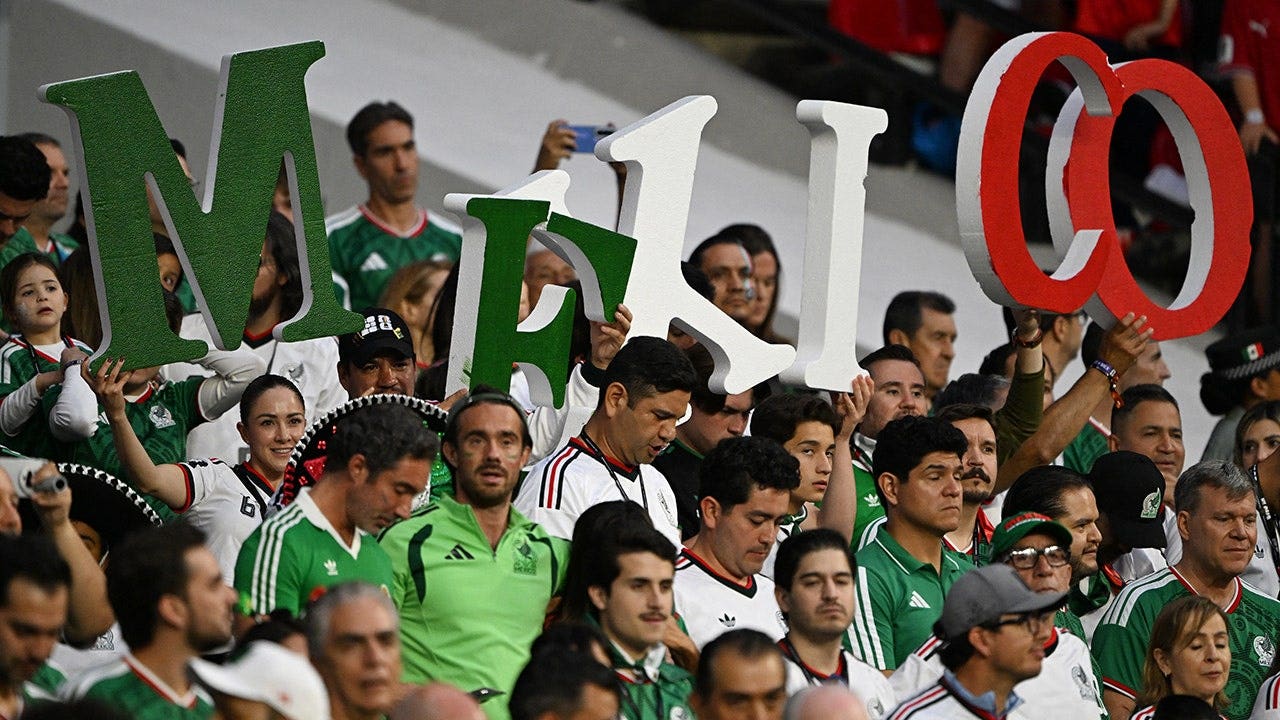
The beautiful game of football has always possessed a unique, almost magical capacity to unite disparate communities, transforming massive, concrete stadiums into cathedrals of shared joy, hope, and raw human emotion. Yet, during a recent international friendly on a Wednesday night, as the Mexican national team cruised to a convincing and athletically dominant 3-0 victory over the Czech Republic (Czechia), this shining spectacle was once again darkened by a familiar, stubborn shadow. In at least three distinct, highly audible instances over the course of the ninety minutes, a deep, collective roar echoed from the stands—not of encouragement for their brilliant players, but of a deeply entrenched homophobic slur directed with aggressive precision at the opposing goalkeeper. For the thousands of passionate supporters who had gathered to lose themselves in the drama of the match, the comfortable victory should have been a moment of pure, unadulterated celebration, particularly as the countdown to the highly anticipated 2026 FIFA World Cup begins to intensify. Instead, the persistent return of this derogatory chant transformed the stadium atmosphere into a battleground of cultural values, leaving many fans, television viewers, and LGBTQ+ advocacy groups feeling deeply marginalized, alienated, and disappointed. Curiously, despite FIFA’s clear and widely publicized directives designed to immediately halt play in the face of such discriminatory behavior, the match officials on this particular night chose to let the action proceed uninterrupted, allowing the stadium’s ambient acoustics to carry the controversial chant to millions of screens worldwide. This passive response from the refereeing crew has thrown the ball squarely back into FIFA’s disciplinary court, reigniting an intense global conversation about whether sporting institutions possess the courage and moral clarity required to enforce their own codes of conduct, or if they will continue to let commercial interests and fear of fan backlash dilute their commitment to human rights.
To truly understand the human weight of this ongoing controversy, one must look closely at the anatomy of the chant itself and the complex, often defensive cultural gymnastics that surround its continued usage among certain segments of the Mexican fan base. At the heart of the dispute is a specific, highly offensive Spanish word shouted in unison as the opposing goalkeeper runs up to take a goal kick—a practice that began as a localized distraction tactic in domestic Mexican club matches decades ago before spreading to the international stage. Those who stubbornly defend the chant often argue that it is merely a harmless, traditional piece of sporting folklore, a linguistic relic meant to imply cowardice rather than literal homophobia, and that international regulators are overreaching by applying a clinical, overly sensitive lens to a colorful expression of raw stadium passion. However, this defense falls incredibly flat when contrasted with the lived realities of LGBTQ+ individuals both within Mexico and across the global diaspora, who have historically heard this exact word weaponized against them on school playgrounds, on violent street corners, and in hostile workplaces as a direct tool of emotional and physical intimidation. Words do not exist in a cultural vacuum; they carry the historical weight of the societal biases they reflect, and when seventy thousand voices shout a term intrinsically linked to the devaluation of homosexual lives, it sends a clear, chilling message that the stadium is not a safe or welcoming space for all humans. By refusing to let go of this linguistic habit under the guise of defending national identity or fan autonomy, supporters who participate in the chant fail to recognize the profound disconnect between their pursuit of a cheap, momentary psychological edge over an opposing keeper and the genuine emotional harm inflicted upon fellow human beings who simply wish to love the sport without having their basic dignity compromised.
The historical record shows that this is far from a new conflict, but rather the latest chapter in a long-running, frustrating cycle of defiance, institutional warning, and subsequent hand-wringing that has plagued Mexican football for well over a decade. During the 2018 FIFA World Cup in Russia, the governing body attempted to draw a firm line in the sand, demonstrating to the global community that it would hold national federations strictly accountable for the systemic, discriminatory behaviors of their traveling supporters. When the offensive chant reverberated through the Luzhniki Stadium during Mexico’s historic and deeply emotional 1-0 upset victory over Germany, FIFA moved swiftly to issue a substantial financial fine, a punitive measure that initially seemed to yield positive, humanizing results. Indeed, in the very next group-stage match against South Korea, a remarkable wave of self-policing swept through the Mexican stands; fans actively shushed one another, replacing the slur with shouts of encouragement in a beautiful display of collective responsibility and respect. Unfortunately, this heartening shift proved to be temporary, as the chant reared its head again during the 2019 CONCACAF Gold Cup, forcing the regional governing body to release strongly worded condemnations that ultimately did little to deter the crowds during high-stakes matches against rival nations like the United States. In direct response to this persistent obstinacy, FIFA was forced to overhaul and update its disciplinary code, introducing a strict, highly controversial three-step protocol that gave referees the power to first pause the match, then suspend it and send players to the locker rooms, and finally abandon the contest altogether if the fan behavior persisted. This progressive system represents a fascinating, high-stakes human experiment in crowd psychology, effectively threatening to turn the actions of a few disruptive fans into a disaster for an entire team, forcing the vast majority of peaceful supporters to decide whether their love for their national team outweighs their attachment to a harmful piece of slang.
Faced with the terrifying prospect of having matches abandoned on the world stage and seeing their national team disqualified from major international tournaments, the Mexican Football Federation (FMF) has spent years launching intensive, multi-layered internal campaigns to educate their fan base. In 2021, the federation took the unprecedented step of producing and widely distributing highly emotional public service announcements, including a poignant video that explicitly labeled the chant as deeply discriminatory and toxic to the growth of the sport. A second, highly influential campaign featured some of the country’s most beloved and iconic football heroes—men who have bled for the national jersey and earned the eternal respect of the public—standing before the camera to make a direct, heartfelt appeal to their own supporters’ sense of honor and empathy. These players did not speak as distant, clinical bureaucrats; they spoke as passionate Mexicans who desperately wanted to represent their country with pride, pleading with fans to understand that the chant was not just hurting the feelings of opponents, but was actively embarrassing their nation on the global stage. Alongside these appeals to empathy, the federation also introduced harsh, practical deterrents, threatening to eject any fan caught participating in the chant and ban them from future matches, while a previous $65,000 fine from FIFA forced the national team to play two critical, silent World Cup qualifying matches in a completely empty, hauntingly quiet Estadio Azteca. The stark visual of the home team playing in a vast, empty canyon of concrete, devoid of the vibrant music, flying confetti, and thunderous cheers that usually define Mexican football, served as an incredibly powerful, somber reminder of what is at stake when a community refuses to adapt to a changing, more inclusive world.
This ongoing cultural and institutional struggle takes on a vastly heightened degree of urgency and global significance when viewed through the lens of the upcoming 2026 FIFA World Cup, which Mexico will jointly host alongside the United States and Canada. This tournament is poised to be one of the grandest, most expansive celebrations of human unity in sporting history, bringing together millions of international tourists, diverse cultures, and global eyes to some of North America’s most iconic cities. As a host nation, Mexico has a profound, undeniable responsibility to project an image of warmth, legendary hospitality, and unconditional safety to guests arriving from every corner of the planet, including LGBTQ+ fans, media personnel, and athletes who deserve to navigate the tournament without fear of harassment or systemic exclusion. If the Mexican fan base continues to defiantly utilize this slur on home soil during the world’s premier sporting event, it could lead to disastrous public relations fallout, devastating financial penalties, and even unprecedented athletic sanctions, such as point deductions that could abruptly end the host nation’s dream run. FIFA now finds itself navigating an incredibly delicate, high-stakes diplomatic tightrope, balanced between the necessity of enforcing its strict anti-discrimination guidelines to maintain its modern ethical standing and the commercial reality of managing one of its most passionate and economically vital market bases. The governing body’s handling of this recent incident against Czechia will be scrutinized intensely as a litmus test for their resolve, signaling whether the international community is truly prepared to prioritize human dignity over the lucrative spectacles of the tournament or if they will continue to exhibit a lenient, hands-off approach that quietly tolerates prejudice for the sake of uninterrupted match broadcasts.
Ultimately, the resolution of this deeply human conflict cannot be achieved solely through the external imposition of financial penalties from Zurich, the installation of high-tech stadium surveillance, or the bureaucratic threats of empty, silent venues. True, lasting cultural evolution must bubble up from the grassroots level, born from a profound collective awakening within the hearts and minds of the Mexican football community itself, recognizing that the defense of a vulgar, exclusionary tradition is never worth more than the preservation of another person’s dignity. When fans stand in the terraced stands of a football stadium, they are not merely passive spectators consuming a commercial product; they are active creators of a communal culture, and they hold the immense power to decide what values their nation will present to the rest of the world. By choosing to finally retire this chant and replace it with the rich, beautiful tapestry of traditional Mexican songs, legendary chants like “Cielito Lindo,” and cries of positive encouragement, the supporters can demonstrate a mature, deeply compassionate patriotism that celebrates their heritage without needing to diminish others. The path forward requires a shared commitment to empathy—a willingness to listen to the voices of marginalized fans who have long felt silenced by the roar of the crowd, and a realization that the beautiful game only truly achieves its full, transcendent potential when everyone, regardless of who they are or who they love, can stand together in the light of the stadium, united in their devotion to the sport. As the world turns its gaze toward North America for 2026, the passion of Mexican football sits at a critical crossroads, presented with a historic, golden opportunity to shed a legacy of exclusion and show the globe that their legendary love for the game is matched only by their capacity for human respect, kindness, and open-hearted inclusivity.