


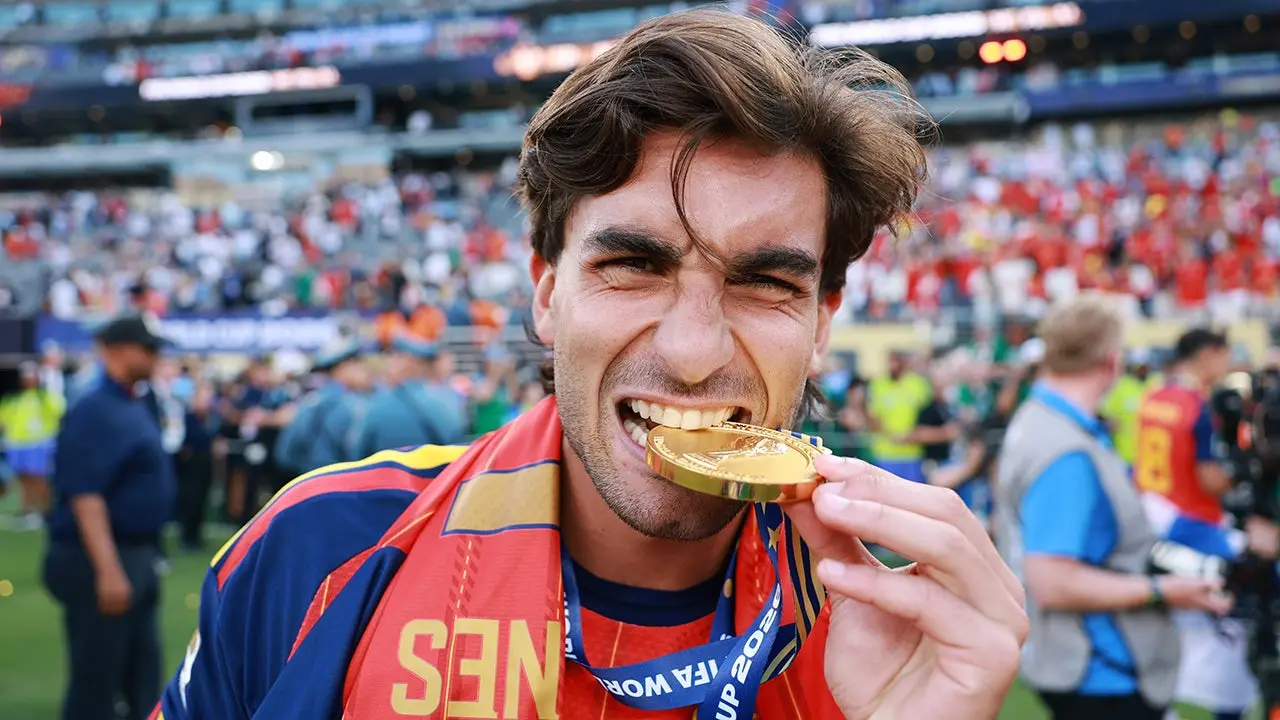
The electric atmosphere within the New York/New Jersey Stadium was filled with a thick, almost unbearable tension as the 2026 FIFA World Cup Final stretched deep into the grueling, physically exhausting minutes of extra time. For over an hour and a half of regular play, the immaculate pitch had transformed into an intense, high-stakes gladiatorial theater, pitting a relentless, possession-heavy Spanish side against a fiercely resolute, tactically disciplined Argentine squad. At the absolute center of the defensive fortress for Argentina stood the formidable goalkeeper, Emiliano Martínez, whose gravity-defying, miraculous saves had repeatedly denied Spain the crucial breakthrough they so desperately craved. The stadium scoreboard remained frozen in a stubborn, agonizing scoreless deadlock, and the looming specter of a nerve-wracking, unpredictable penalty shootout seemed almost inevitable as the players battled physical fatigue under the bright stadium lights. But destiny, as can frequently happen in the beautiful game of competitive football, had alternative plans, waiting to spectacularly unfold in the 106th minute of continuous play. It began with a brilliantly placed cross that soared gracefully through the New Jersey air, finding the rising, athletic figure of Nico Williams Jr. inside the penalty box. Williams connected with a precise, cushion-like header, dropping the ball beautifully and directly into the heart of the danger zone. In that chaotic fraction of a second, the ball found the clinical, waiting left foot of Ferran Torres. With supreme focus, ice-cold composure, and the collective hopes of an entire nation resting on his shoulders, Torres struck a grade-A shot past the lunging, desperate arms of Martínez, sending the ball rustling into the back of the net to seal a breathtaking, historic victory for Spain.
The sheer emotional release of that moment was historic, radiating far beyond the physical confines of the American stadium and echoing across the vast Atlantic Ocean to the Iberian Peninsula. In the immediate aftermath of the match, as sweat, tears of joy, and colorful ticker tape rained down on the pitch, Torres sought to put the magnitude of this monumental achievement into proper perspective. Speaking to FIFA host broadcasters in a state of breathless euphoria, he explained with deeply felt humility that the decisive goal did not belong to him alone, nor did it belong solely to the squad of elite players celebrating on the field; rather, it was a collective triumph birthed from the shared hopes, dreams, and spirits of all 47 million people residing in Spain. For a country that had only once before tasted the ultimate glory of a World Cup victory—back in 2010 during the legendary golden era of tiki-taka football—this triumph represented a profound reclaiming of their status at the very peak of global sports. Torres remarkably noted that destiny had already been pre-written for them, and that despite being thousands of miles away from their homeland on American soil, the team felt an unbreakable, invisible thread connecting them directly to the hearts of their compatriots back home. This profound sense of national unity, shared sacrifice, and predestined triumph transformed the victory into something much larger than a mere football match; it became a historical cultural milestone that would be proudly spoken about for generations to come.
The spectacular, larger-than-life nature of the final was further elevated by the presence of numerous high-profile global figures, turning the stadium into a cultural melting pot of politics, celebrity, and elite athleticism. Watching the intense drama unfold from the luxury suites were former United States President Donald Trump, accompanied by First Lady Melania Trump, alongside FIFA President Gianni Infantino and a host of other prominent academic, political, and international dignitaries. This high-status political backdrop collided directly with the sporting world during the post-match ceremony when Donald Trump stepped onto the pitch to present the iconic, glittering World Cup trophy to the triumphant Spanish squad. Led by their revered, hardworking captain, Rodri, the Spanish players received the ultimate prize in global sports to the roar of a divided yet mesmerized crowd. However, this moment of pure, unadulterated glory was almost immediately contrasted by dramatic, chaotic scenes on the pitch. As the final whistle blew, the intense competitive friction that had built up over 120 minutes finally boiled over into physical confrontation. Brawls and heated scuffles broke out between the passionate Spanish and frustrated Argentine players, prompting an immediate announcement of an official investigation by FIFA’s governing body, proving that even at the height of athletic triumph, major sporting blockbusters are rarely free of dramatic controversy.
But back home in Spain, any whispers of pitchside controversies, heated altercations, or looming administrative investigations were swiftly and decisively drowned out by a massive, overwhelming tidal wave of pure, unadulterated euphoria. In cities and towns across the country, but most notably in the beating heart of the nation’s capital, Madrid, a massive public celebration erupted that would continue unabated for days. The moment the referee blew the final whistle, the streets of Madrid transformed into a vibrant, undulating sea of red and yellow flags, with car horns blaring, fireworks illuminating the night sky, and millions of ecstatic fans rejoicing in the warm summer air. Having waited sixteen years to clasp the coveted trophy once again, the Spanish public was determined to throw a homecoming party of historic proportions. When the victorious squad finally landed back on Spanish soil, they were greeted by scenes of absolute pandemonium, as tens of thousands of adoring supporters lined the parade routes. Smiling, singing, and chanting the names of their new sporting heroes, the crowds created an electric, deeply moving atmosphere of national unity, proving that football possesses an unparalleled, magical ability to bring an entire society together in shared, harmonious elation.
Yet, amid the sea of waving banners and ecstatic cheers during the victory parade, it was the individual celebratory style of the matchwinner himself, Ferran Torres, that captured the attention of the international media and sparked a massive wave of online conversation. Riding atop the open-air team victory bus, a shirtless, sun-drenched Torres was photographed looking relaxed, jubilant, and triumphant as he took in the adoring crowd. What truly set the internet ablaze, however, was his choice of headwear: a bright red cap emblazoned with the words “Make Spain Great Again.” This direct play on Donald Trump’s deeply recognizable and politically charged “Make America Great Again” slogan immediately divided opinion and raised eyebrows worldwide. Analysts and fans alike began to dissect whether the hat was a simple, lighthearted coincidence, a cheeky wink to the former American president who had handed the team their trophy just a day prior, or a deliberate conservative political statement by the young striker. While some observers viewed the gesture with skepticism, others embraced it as a tongue-in-cheek piece of victory vanity, demonstrating how modern sports, celebrity culture, and global politics have become deeply, inextricably intertwined in the age of viral social media.
As the dust slowly settles on this historic tournament and the vibrant parade floats are packed away, the Spanish champions will eventually have to transition back to the reality of their demanding professional careers. In the coming months, Ferran Torres, Rodri, Nico Williams Jr., and the rest of this immortalized squad will disperse back to their respective domestic clubs across Europe to begin the grueling journey of another club season. Yet, the legendary legacy they forged under the bright stadium lights of New Jersey will remain permanently etched in the annals of sporting history. The debates over political hats, the dramatic brawls on the pitch tailing the final whistle, and the intense physical exhaustion of the tournament will inevitably fade into the background, leaving behind the shiny, untouchable gold of a World Cup title. Spain has once again proven its footballing supremacy to the world, and for the 47 million people who rode every wave of emotion alongside their team, the summer of 2026 will forever be remembered as the glorious moment when destiny was proudly, undeniably written in the stars, and Spain became truly great once again.