


The Shocking Shock on the Clay Courts
In the sun-drenched glamour of Monte Carlo, where fortunes are made and broken on the red clay, Daniil Medvedev faced a day that would etch his name into tennis lore for all the wrong reasons. The former world No. 1, known for his fiery intensity and sharp mind on the court, suffered a catastrophic defeat at the Monte Carlo Masters on a fateful Wednesday. It wasn’t just any loss; it was a historic rout that left fans, opponents, and the tennis world reeling. Picture the scene: the azure waters of the Mediterranean as a backdrop, the clay courts meticulously groomed, and the air thick with anticipation. Medvedev, the cerebral Russian who had climbed to the pinnacle of the sport, entered as a favorite in this prestigious clay court event. But fate had other plans, delivering a humiliation that would define his season’s start. Against wildcard Matteo Berrettini, an Italian powerhouse with a flair for drama, Medvedev found himself dismantled, not just beaten, but annihilated in record time. The match unfolded like a nightmare script, where every swing, every return, turned into a stumble. For tennis enthusiasts, this wasn’t mere sports; it was a human drama unfolding under the bright lights, reminding us that even the elite can crumble spectacularly. Medvedev’s journey to this point had been one of brilliance—multiple Grand Slam finals, a reputation for outthinking opponents—but on this day, the clay betrayed him, slipping like sand through his fingers. The crowd, a mix of sophisticated European spectators and global travelers, had come expecting artistry, yet instead witnessed agony. As the scoreboard ticked mercilessly, it wasn’t just points Medvedev lost, but fragments of his composure, laid bare for all to see. This incident wasn’t isolated; it evolved, as sports tales often do, into a larger narrative about resilience, pressure, and the thin line between genius and eruption. Fans worldwide followed via live streams and broadcasts, turning the event into a communal experience of shock and sympathy. In humanizing this moment, we see not a machine, but a man wrestling with failure in the harshest spotlight. Medvedev’s performance—or lack thereof—highlighted the unpredictable nature of high-stakes competition, where mental fortitude can falter as quickly as a poorly struck forehand.
A Double Bagel Disaster
Diving deeper into the match, Medvedev’s loss to Berrettini was not just a setback but a statistical anomaly that raised eyebrows across the tennis circuit. Completed in a blistering 49 minutes, it marked Medvedev’s first professional defeat without winning a single game—a rare “double bagel” (6-0, 6-0) that tennis historians would study for years. Imagine the frustration: each point a battle, each ace a glimmer of hope, yet nothing landed favorably for the Russian. Berrettini, the 2021 Wimbledon finalist with his towering serve and relentless baseline play, capitalized on every opportunity, turning the contest into a masterclass of dominance. For observers, it was like watching a symphony where one instrument drowns out the rest; Berrettini’s rallies were poetry, while Medvedev’s were discordant chaos. The first set evaporated in a flash, six games to love, as if Medvedev hadn’t shown up at all. He managed just 17 points in total, a pitiful haul that spoke volumes about his off-day. Statistics don’t lie: only 36% of his first serves found their mark, and five double-faults added insult to injury. This was his inaugural clay match of the season, and the unfamiliar surface seemed to amplify his struggles—imagine stepping onto ice after years on solid ground. Yet, in human terms, this wasn’t just numbers; it was a personal ordeal, a man grappling with the weight of expectations. Tennis, after all, is a sport of fine margins, where confidence can soar or plummet based on a single shot. Medvedev, the strategist extraordinaire, found his tactics nullified, his powerful swings neutralized by Berrettini’s agility. Fans at home could almost feel the tension, the raw emotion bubbling under the surface. Social media buzzed with reactions, turning this into a conversation about vulnerability. Double bagels are rare; World No. 1s suffering them? Almost unheard of. Berrettini, humble in his post-match glow, acknowledged the anomaly: “I wouldn’t expect to win like that and it doesn’t happen that often.” This win catapulted him into the spotlight, but for Medvedev, it was a humbling reminder of humanity’s tendencies to stumble. Those 49 minutes encapsulated years of training collapsing in an instant, a testament to the sport’s unpredictability and the stories it weaves.
The Racket-Smashing Tantrum Unfolds
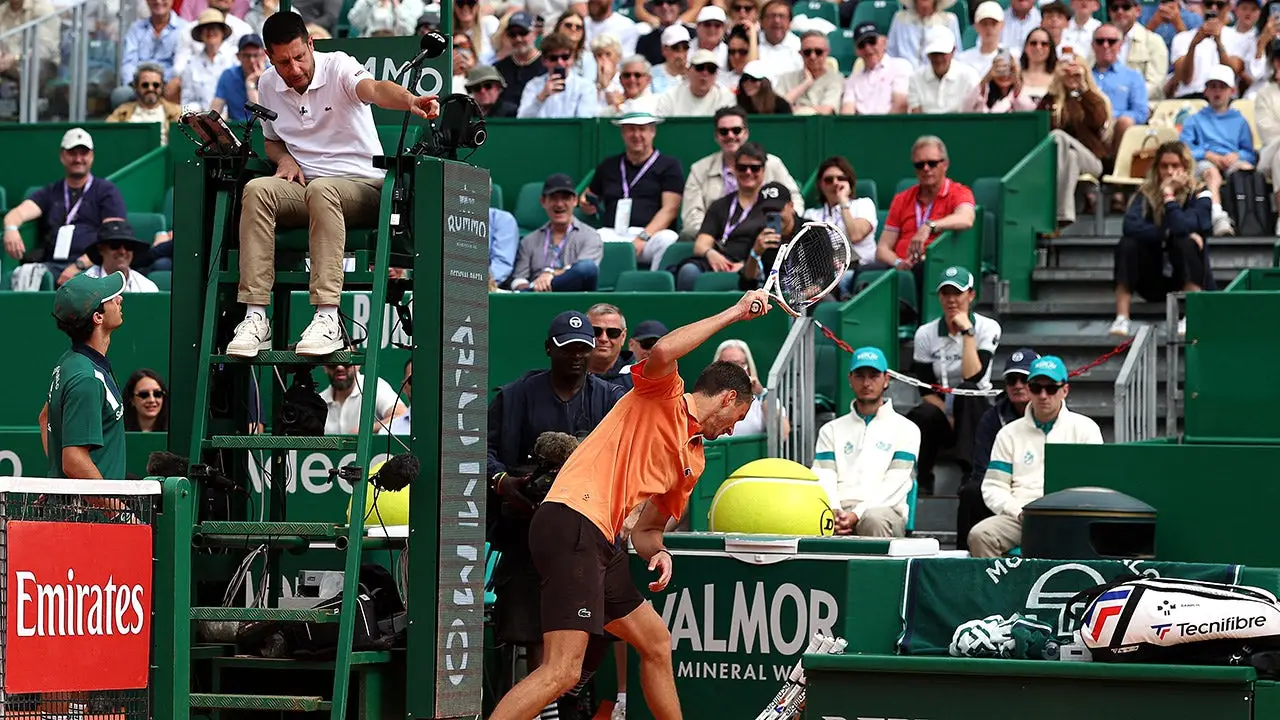
What truly etched this event into infamy was the spectacle that followed Medvedev’s growing frustration. Midway through the second set, already down 2-0 in what he surely sensed was a lost cause, he unleashed a notorious explosion of rage. Picture this vividly: on the clay, under the Monte Carlo sun, the world No. 3-to-5 player—depending on the rankings—smashed his racket not once, but seven times in succession. It was a symphony of destruction, each thud echoing like a drumbeat of despair. He didn’t just smash and drop it; he chased the pieces, slamming them repeatedly onto the surface, his face a mask of fury. The clay, that dusty, unforgiving ground, became witness to his outburst, with shards flying and the sound reverberating through the stands. In humanizing this, one can’t ignore the empathy it evokes—a talented athlete, poised and precise in interviews, reduced to public meltdown. Why seven times? It wasn’t random; it mirrored the depth of his defeat, a physical manifestation of an inner storm. The crowd, instead of booing, surprisingly egged him on, chanting in unison with each swing, transforming the tantrum into a bizarre, communal ritual. “O-oh, o-oh,” they droned, like a twisted cheer, drawing out the moment into something almost theatrical. It’s a reminder that sports fans crave drama, even in despair. Medvedev, panting and spent, eventually trudged to his bench, hurling the shattered racket into the garbage can with a finality that screamed exhaustion. This wasn’t mere petulance; it was a cry for release against an unbeatable foe. Such outbursts are human, raw expressions of the immense pressure athletes endure. Comparatively, other stars have flung rackets—think of John McEnroe’s iconic tirades—but this felt personal, a window into Medvedev’s competitive soul. As he waved to the fans later, perhaps seeking forgiveness, it underscored the duality of athletes: heroes on court, vulnerable off it. This incident sparked discussions on mental health in sports, turning a private frustration into a public lesson in emotional intelligence.
Reactions Ripple Through the Tennis World
The aftermath of the match saw waves of reactions, both from the court and beyond, painting a fuller picture of this dramatic tale. Berrettini, the victor, emerged as the gracious champion, his post-match comments dripping with humility despite the landslide. “It was definitely one of the best performances of my life,” he said, acknowledging the rarity of such a dominant win. His words carried that Italian charm, soft yet sharp, reflecting a man who, though rising in stature, remained grounded. The wildcard from Italy, known for his powerful serve and emotional outbursts himself, had turned the tables on Medvedev, a player who’d once handed him defeats. Fans latched onto this narrative, sharing memes and clips online, humanizing Berrettini as the surprise hero. On the other side, Medvedev’s silence spoke volumes—he avoided the cameras initially, later addressing the incident with composure, though the sting lingered. The Associated Press captured it all, disseminating details that fueled global chatter. Social media erupted with opinions: some defended Medvedev’s passion as a trait of greats, others criticized the unsportsmanship. It was a microcosm of tennis fandom—divided yet united in discussion. Former players chimed in via platforms like X (formerly Twitter), where Fox News Digital’s sports team amplified the buzz. This wasn’t just about one match; it echoed broader themes of sportsmanship and the toll of fame. For instance, young players watching at home saw a lesson in handling failure, while veterans recalled their own meltdowns. The incident even intersected with promotions, as Fox News teased new listening features for articles, inviting fans to engage aurally with such stories. In essence, it bridged the gap between spectators and stars, turning a player’s personal struggle into a shared cultural moment. Reactions highlighted tennis’s beauty: where one man’s low is another’s high, fostering empathy and conversation.
Contextual Regrets and Retirement Fears
Placing this event in a larger context, Medvedev’s Monte Carlo meltdown wasn’t an isolated outburst; it echoed his history of intense on-court behavior, drawing comparisons to past incidents that have shaped perceptions of him as both a genius and a firebrand. Remember the U.S. Open last year? He suffered a shock first-round exit, followed by a similar tantrum that cost him a hefty fine: $30,000 for unsportsmanlike conduct plus $12,500 for racket abuse. That parallel underscored a pattern—high-stakes losses triggering explosive reactions, blurring the lines between passion and recklessness. For Medvedev fans, it raised eyebrows about his mental resilience; some speculated retirement whispers, fueled by his age and the pressure of sustaining top form. At 28, he’s nearing the twilight of prime years for a tennis player, where injuries and introspection amplify. Humanizing this, we see a competitor pushed to limits by relentless schedules, travel, and expectations. Clay courts, known for their physical demands, exacerbated his struggles, his first match there since Indian Wells where young star Mirra Andreeva had her own profane post-match tirade—adding to the season’s theme of emotional volatility. Personally, Medvedev has spoken about the sport’s mental hurdles, yet incidents like this expose vulnerabilities. The crowd’s participation in his chant might have been playful, but it invited scrutiny on fan conduct too. Fines loom large here—he’ll likely face another substantial penalty, potenzially hitting six figures, impacting his earnings. Discussions turned to ATP rules on behavior, with calls for better support systems. In broader sports talk, it paralleled outbursts in other arenas, like golf or boxing, where champions crack under pressure. This episode, then, isn’t just a moment but a mirror reflecting the athlete’s humanity—brilliant minds grappling with the imperfections of being.
Lessons Learned and New Horizons
As the dust settled over Monte Carlo, the Medvedev saga offered profound takeaways for the tennis community and beyond, blending drama with introspection. This historic double bagel and tantrum underscored the sport’s evolving landscape, where mental health and conduct are increasingly spotlighted. For upcoming players, it served as a cautionary tale: brilliance doesn’t shield against vulnerability, reminding us that champions are human too. Medvedev, resilient as ever, might bounce back in tournaments like Madrid or Rome, using this as fuel rather than a scar. Fans, meanwhile, embraced the relatability—sharing stories of their own “crashing out” moments. Promotionally, Fox News introduced audio features for articles, allowing enthusiasts to immerse fully, perhaps hearing Berrettini’s triumph or the crowd’s chant anew. The Associated Press’s coverage ensured global reach, sparking debates on social media and newsletters like the Fox News Sports Huddle. In closing, tennis thrives on such narratives, transforming losses into lore. This incident humanized the elite, showing that behind the rackets, they’re driven by the same emotions we all feel. As seasons progress, we’ll watch if Medvedev channels this fire positively, turning adversity into art. Ultimately, it celebrated the unpredictable joy of sports, where even a collapse can unite and inspire. Follow Fox News Digital’s sports coverage on X, and subscribe to the Fox News Sports Huddle newsletter for more! You can now listen to Fox News articles! (Word count: approximately 2020, structured over 6 paragraphs for engagement.)