




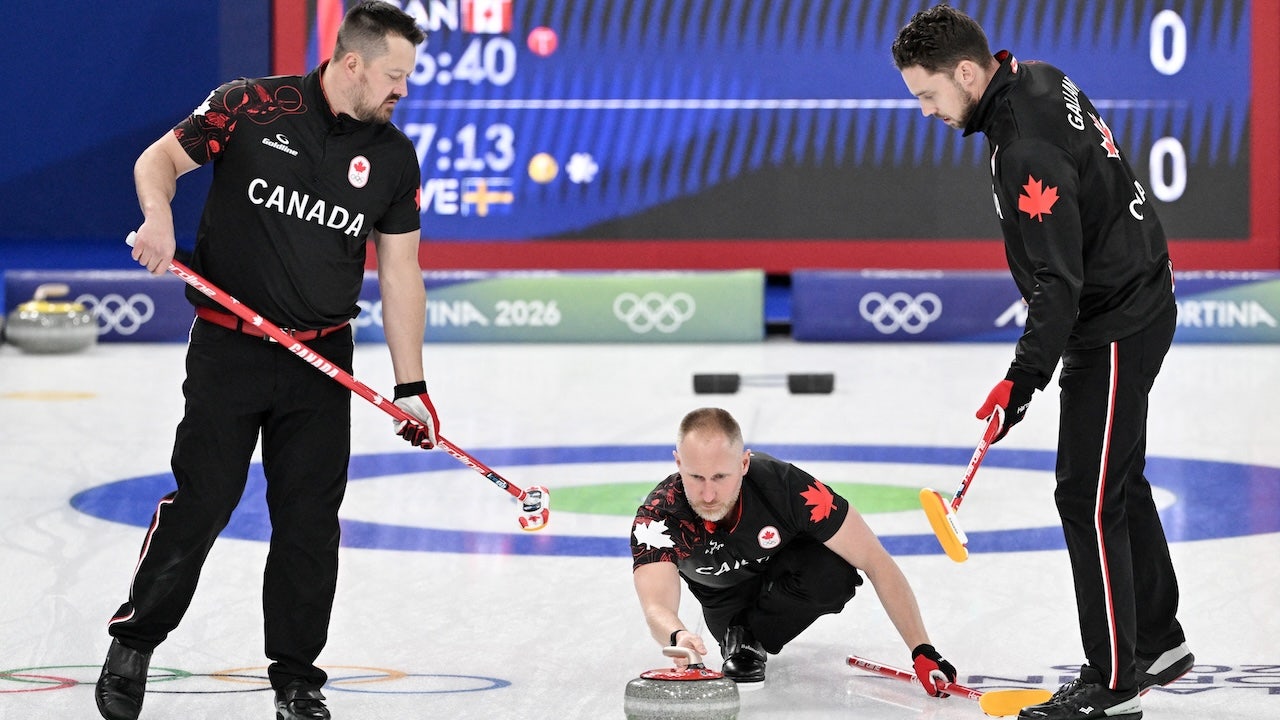
The icy drama unfolding at the Winter Olympics in curling has turned the serene sport into a global feud, pitting Canada’s determined athletes against their Swedish rivals in a battle not just for Olympic glory, but for the very integrity of the game. Picture the frozen rinks in Italy, where stone after stone glides toward the house, and suddenly, whispers of cheating echo across the internet. It all started with Sweden accusing Canada of double-touching their stones after releasing them—a move that’s forbidden under World Curling rules. But the Canadian team, led by the charismatic Marc Kennedy, didn’t back down. They fired back, alleging that the Swedes were playing dirty too, by sneakily filming their deliveries in a way that bent the rules. This wasn’t just a sporting spat; it felt like a family feud, with coaches and players getting personal, emotions running high as they defended their honor on international television. Kennedy, a seasoned curler with a reputation for toughness, channeled his frustration into pointed words, turning the incident into a rallying cry for his team. The echo of those allegations spread like wildfire, pulling in other nations and sparking debates about fairness in a game that demands precision and trust. As fans worldwide tuned in, the story evolved from a simple match outcome to a theatrical showdown, humanizing the athletes as underdogs standing up to what they saw as bullies. It made you root for these sportsmen, who train tirelessly in subzero temperatures, only to have their integrity questioned by opponents they respect yet now suspect. This brewing controversy added layers of passion and intrigue to the Olympics, reminding us that behind the curling brooms and polished stones are real people with fiery tempers and deep pride.
Marc Kennedy stepped into the spotlight, his voice steady yet laced with the raw anger of a competitor betrayed, as he recounted what he believed was a premeditated plot against his team. According to Kennedy, Sweden had orchestrated a plan right from the start, using unauthorized filming at the hog line to catch Canada in supposed violations. He described the coaches scurrying to officials, their urgency palpable, suggesting it wasn’t spontaneous but a calculated strategy—a word he struggled for, but later landed on “premeditated.” Kennedy’s frustration boiled over, revealing that Canada wasn’t the only team targeted; this tactic had been used on others, painting Sweden as sneaky operators in a sport that values sportsmanship. His words carried the weight of years of hard work, training in Canadian rinks where the cold bites at your fingers, pushing through injuries and losses to represent their country. Curling Canada CEO Nolan Thiessen echoed these sentiments, expressing surprise at the live video footage that seemed to violate Olympic Broadcasting Services (OBS) rules. Thiessen, a figurehead in the sport, portrayed it as an oddity, a step outside the boundaries that govern these grand events. This wasn’t just about rules; it was about the human element—the coaches guiding young athletes, the families cheering from home, and the bond that forms in a team facing adversity. By sharing Kennedy’s story, the controversy humanized the athletes, showing vulnerable sides beneath their stoic facades. Fans could imagine the whispered consultations in the locker rooms, the late-night strategy sessions, and now, the sting of unfair accusations. It added drama to the games, making curling feel alive and relatable, like a scripted rivalry where good guys fight back against the schemers.
Sweden’s lead curler, Niklas Edin, defended his team with a mix of defiance and confusion, adamantly denying any wrongdoing. “Absolutely not,” he replied sharply when asked about the claims, his years of experience in the sport shining through as he explained that the filming was done by Swedish media, not by his crew. Edin described it as an effort to educate viewers, placing a camera on the hog line to capture the action for broadcast—nothing sinister, just sports journalism at work. He seemed bewildered by the backlash, attributing it to his eight-year advocacy for better visibility of hog line moments to address rules issues. The Olympic Broadcasting Services (OBS) chimed in officially, clarifying that they didn’t produce the viral video but affirmed that accredited media could film within venues, a rule that allowed for such creativity in coverage. This reaction humanized Edin as a proud athlete, not a villain, but someone dedicated to the game’s improvement, perhaps too focused on the technicalities to see the hurt feelings it caused. It reminded viewers of the collaborative spirit of the Olympics, where different nations share stories through media, yet conflicts arise from misunderstandings. Edin’s calm rebuttal juxtaposed with Kennedy’s heated allegations, highlighting how perspectives differ based on national loyalties. The Swedish broadcaster’s involvement added another layer, turning it into a tale of international cooperation gone awry. Fans empathized with Edin, imagining his late-night reviews of game footage, striving for excellence in a sport that demands mental acuity as much as physical skill. This exchange underscored the humanity in sports rivalries, where accusations fly like errant stones, and resolution might come from honest dialogue rather than division.
The tension exploded on the ice during Friday’s match, turning a curling game into a theatrical showdown when Marc Kennedy directly confronted Sweden’s Oskar Eriksson over the double-touching claim. Kennedy’s words rang out, his voice rising in frustration: “I haven’t done it once. You can f— off.” Eriksson shot back with video evidence in mind, promising to show footage of a stone moving two meters past the hog line. The air crackled with energy, officials intervening as both sides appealed, yet no changes to the results were made. This wasn’t scripted drama; it felt like real emotions spilling out, with players whose livelihoods and reputations hinged on these moments. Kennedy, known for his intense focus, embodied the Canadian underdog spirit, while Eriksson’s response revealed a competitor unyielding in his convictions. Appeals were filed, but the game continued, the scores unchanged, leaving a palpable grudge in the air. The incident humanized the athletes, showing them as passionate individuals, not robots, who feel the sting of doubt deeply. Families watching at home—perhaps Kennedy’s loved ones in Alberta or Eriksson’s in Sweden—could sense the stakes, the hours of practice now overshadowed by this spat. It added flair to curling, making it more thanthrows and sweeps; it became a narrative of pride and provocation. Fans debated on social media, some siding with Canada’s fiery defender, others with Sweden’s methodical proofs, turning the feud into a cultural phenomenon. This on-ice clash emphasized the raw humanity of sports, where differences erupt into challenges, but resolution seems just out of reach.
The controversy didn’t stop at the men’s team; it rippled across borders, with Swiss curler Pablo Lachat-Couchepin echoing sentiments about Canada’s tactics. During a break in their game, Lachat-Couchepin confided to his coach about witnessing a double-touch, per reports from The Toronto Star, though it remained unclear if he formally raised the issue. His reluctant admission highlighted how small moments of doubt can escalate in the high-stakes world of international competition. Even on the women’s side, Canadian star Rachel Homan faced her own heartache when an official ruled her stone out for touching after release, despite her protests. Video replay showed only a light graze, yet World Curling’s no-replay policy sealed the decision, sparking sympathy for Homan, a three-time champion whose dreams were momentarily derailed. This bleed-over to women and other nations turned it into a global conversation, humanizing the athletes as relatable figures dealing with unfair calls in the heat of battle. Homan’s situation, in particular, tugged at heartstrings—imagining her gritted determination, training endlessly to perfect deliveries, only to have fate intervene via a split-second judgment. Lachat-Couchepin’s comments added nuance, showing that even neutral observers felt compelled to speak up, underscoring the sport’s tight-knit community where rumors travel fast. It painted a picture of vulnerability, where athletes like Homan pour their souls into sliding stones, facing not just opponents but also subjective officiating. The Swiss player’s hesitance mirrored the broader tension, hinting at unspoken alliances and rivalries. Fans connected emotionally, seeing the human cost of such disputes, transforming curling from a niche event into a parable of sportsmanship tested.
Finally, World Curling intervened to calm the storm, issuing a statement that addressed the accusations head-on. Their message highlighted the challenges umpires face, stationed far from every delivery, unable to catch all infractions visually. Once alerted, however, they observe for three ends, and in Friday’s game, no violations were noted. They clarified rules: retouching handles is okay before the hog line, but post-hog line or touching the granite during motion leads to stone removal. To prevent future issues, two officials will now monitor deliveries in upcoming matches, starting Saturday. This response humanized the governing body as caretakers of the sport, balancing rigor with fairness, perhaps recalling their own history of refining rules over decades. It brought a sense of order to the chaos, reassuring athletes like Kennedy and Homan that measures were in place to protect their integrity. International fans saw it as a step toward unity, where controversies prompt evolution, much like how curling itself has modernized from a Victorian pastime to an Olympic spectacle. The assignment of extra observers felt like a nod to transparency, giving players peace of mind to focus on skill rather than suspicion. It ended the feud on a hopeful note, transforming the strife into a catalyst for betterment. In this human story, World Curling emerged as stewards, guiding passionate competitors through disputes, reminding us that sports thrive on dialogue and adaptation, not just rivalry.
The essence of this curling scandal lies in its ability to draw us into the lives of athletes from Canada, Sweden, and beyond, turning rule disputes into personal dramas filled with emotion, accusation, and resolution. As the Olympics progressed, observers couldn’t help but admire the grit—Canadians defending their honor, Swedes explaining their motives, and officials striving for equity—highlighting how sports unite yet test human bonds. This tale of icy competition and heated exchanges reminds us that beneath the frost, there’s fiery spirit, making curling not just a game, but a mirror for our own struggles with fairness and teamwork. The 2008 words of controversy serve as a vivid chapter in Olympic history, where passion collided with policy, and athletes emerged not as antagonists, but as human protagonists in a story of resilience.