


The wind sweeping across the formidable dunes of Royal Birkdale has long had a way of stripping golfers down to their rawest, most vulnerable selves, but during the 2026 Open Championship, it blew open a sporting drama that transcended the boundaries of the fairways and entered the surreal halls of global political power. Bryson DeChambeau, a figure who has spent his entire career trying to engineeringly conquer the natural unpredictability of golf, found himself utterly ensnared by the ancient, unyielding rulebook of the Royal and Ancient Golf Club. During a grueling second round, faced with the punishing, waist-high fescue grass that characterizes the classic English links, DeChambeau let frustration override his mechanical discipline. In a moment of sheer desperation to secure a clean path for his backswing, the LIV Golf star was observed clearing and stomping down the long grass surrounding his ball—a fundamental violation of the game’s strict regulations regarding improving one’s lie. The ensuing two-stroke penalty transformed his brilliant, hard-fought round of 66 into a compromised 68, sparking a firestorm of controversy that would ignite the sports world, exposing the deep-seated pride of an athlete who refused to accept the finality of a referee’s whistle.
What followed the penalty was not a quiet acceptance of the rules, but a prolonged, highly public standoff that laid bare the intense psychological pressure of competing at the highest level of modern sports. DeChambeau’s immediate reaction was one of fierce defiance, culminating in an extraordinary thirty-minute debate in the scoring area where he reportedly refused to sign his second-round scorecard, effectively halting the administrative flow of the final major of the season. This act of protest drew sharp, biting criticism from his peers, most notably Rory McIlroy, who accused DeChambeau of holding the prestigious tournament hostage through his stubborn refusal to accept the official ruling. McIlroy’s comments highlighted the deep, lingering ideological divides within professional golf, where the traditionalists view the rules as sacred, self-policed boundaries of honor, and the new wave of disruptors often view them as obstacles to be challenged and negotiated. For half an hour, the scoring trailer became a crucible of tension, with officials offering DeChambeau the rare and agonizing dispensation to return to the scene of the infraction to reconstruct his actions, a tense exercise in futility that ultimately failed to overturn the cold reality of the two-stroke deduction.
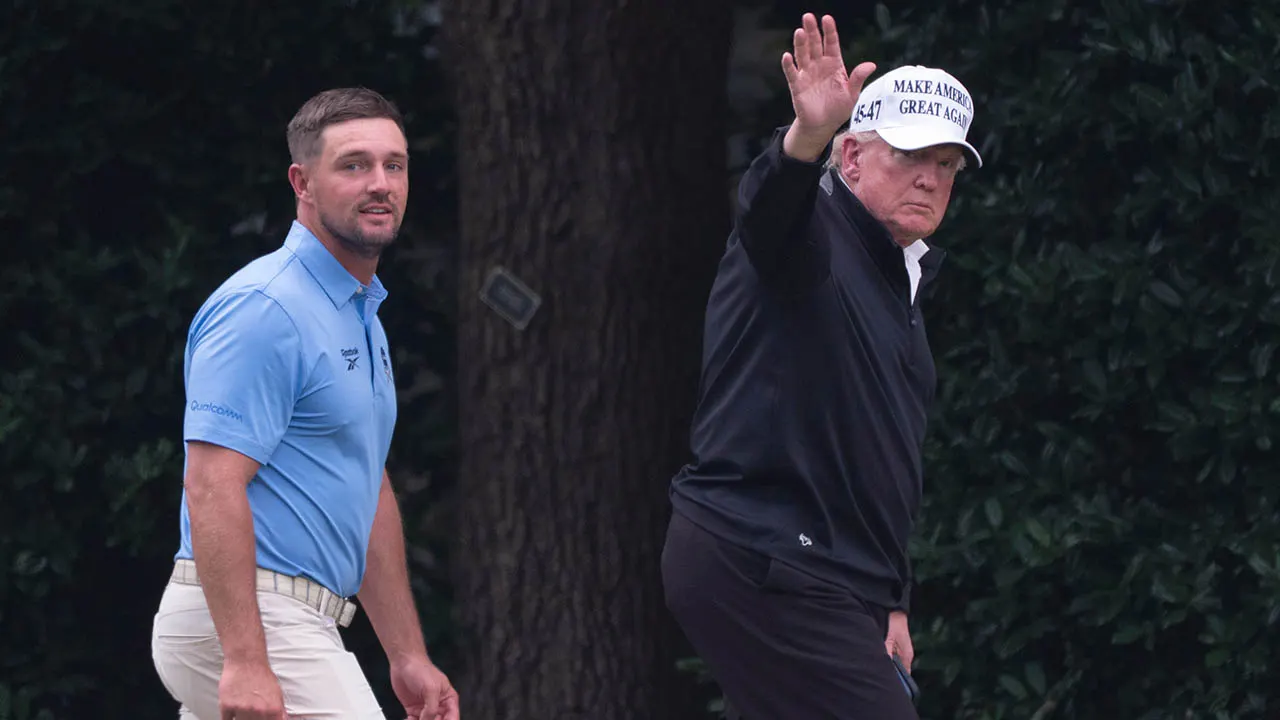
As the dust began to settle on the golf course, the true absurdity of the situation began to leak from behind closed doors, revealing that DeChambeau’s desperation had led him to seek an ally in the highest of places. According to reports from seasoned golf writer Geoff Shackelford, DeChambeau sought to leverage his close personal friendship with President Donald Trump to launch a public campaign against the R&A’s decision. The bond between the two men had been well-documented, cemented in the public eye through viral collaborations on DeChambeau’s YouTube channel, where they traded golf tips and political pleasantries in front of millions of viewers. Believing that this unique line of communication could somehow bend the ironclad statutes of golf’s oldest governing body, DeChambeau allegedly reached out to the President in hopes of rallying a high-profile executive defense against the ruling class of Royal Birkdale. To many, the mere suggestion of involving a sitting or former world leader in a local sporting infraction seemed like a satire of modern celebrity culture, highlighting the profound isolation and distorted sense of reality that can envelop elite athletes when their ambitions are suddenly thwarted by a blade of grass.
The idea of political intervention in sports was not entirely without precedent, however, which perhaps explains why DeChambeau believed such a fantastical intervention was possible in the first place. Just weeks prior, during the highly charged atmosphere of the FIFA World Cup hosted in North America, President Trump had successfully intervened in a major sporting controversy involving Team USA’s star striker, Folarin Balogun. After Balogun received a highly contested red card that threatened to bench him for a critical knockout match against Belgium, Trump reportedly contacted his close associate, FIFA President Gianni Infantino, to advocate for a swift re-examination of the penalty. In a stunning display of executive influence over global soccer, FIFA ultimately chose to suspend Balogun’s red card, allowing him to take the field in the Round of 16. Though that particular intervention ultimately ended in disappointment—with Belgium handling the United States a decisive 4-1 defeat—it created a dangerous illusion for athletes like DeChambeau that the rules of international governance were flexible if one possessed the right phone numbers in their contact list.
Yet, the ancient game of golf, with its centuries of monastic devotion to self-regulation and unyielding integrity, proved to be a boundary that even the most powerful man in the world was unwilling to cross, as Trump reportedly declined DeChambeau’s request to intervene. The silence from the White House spoke volumes, serving as a stark reminder that while soccer’s governing bodies might occasionally bend to the whims of geopolitical heavyweights, the R&A and the game of golf remain stubbornly insulated from the transactional nature of modern political influence. Denied his extraordinary appeal, DeChambeau was forced to carry the weight of his 68 into the weekend, his momentum fractured and his focus visibly compromised by the surrounding media circus. Over the remaining two rounds, the American star fought valiantly against both the elements and his own internal frustrations, ultimately finishing the tournament in a tie for fourteenth place at four-under par. It was a respectable finish under normal circumstances, but for a man of DeChambeau’s immense talents and aspirations, it felt like a deeply unsatisfying footnote to a week defined far more by his off-course maneuvers than his on-course brilliance.
Ultimately, the grand theater at Royal Birkdale resolved itself not through political machinations or legalistic debates, but through the quiet, poetic beauty of pure athletic execution. Amidst the deafening noise of DeChambeau’s penalty saga, New Zealand’s Ryan Fox quietly put together a masterclass in links golf, culminating in a dramatic birdie on the 72nd hole to capture his first-ever major championship by a single stroke over a surging Cameron Young. Fox’s victory, achieved with a sparkling tournament finish of ten-under par, served as the ultimate antidote to the week’s controversies, reminding the sporting world that golf’s true glory lies in the quiet dignity of conquering the course, rather than attempting to rewrite its rules. As the crowds cheered for the humble Kiwi holding the Claret Jug, the drama surrounding DeChambeau faded into a cautionary tale about the limits of fame and power. It proved that on the historic shores of Birkdale, the wind, the rain, and the rules of the game remain the ultimate equalizers, standing firm against the desires of even the most influential figures to remind us all that some traditions are simply too sacred to be broken.