





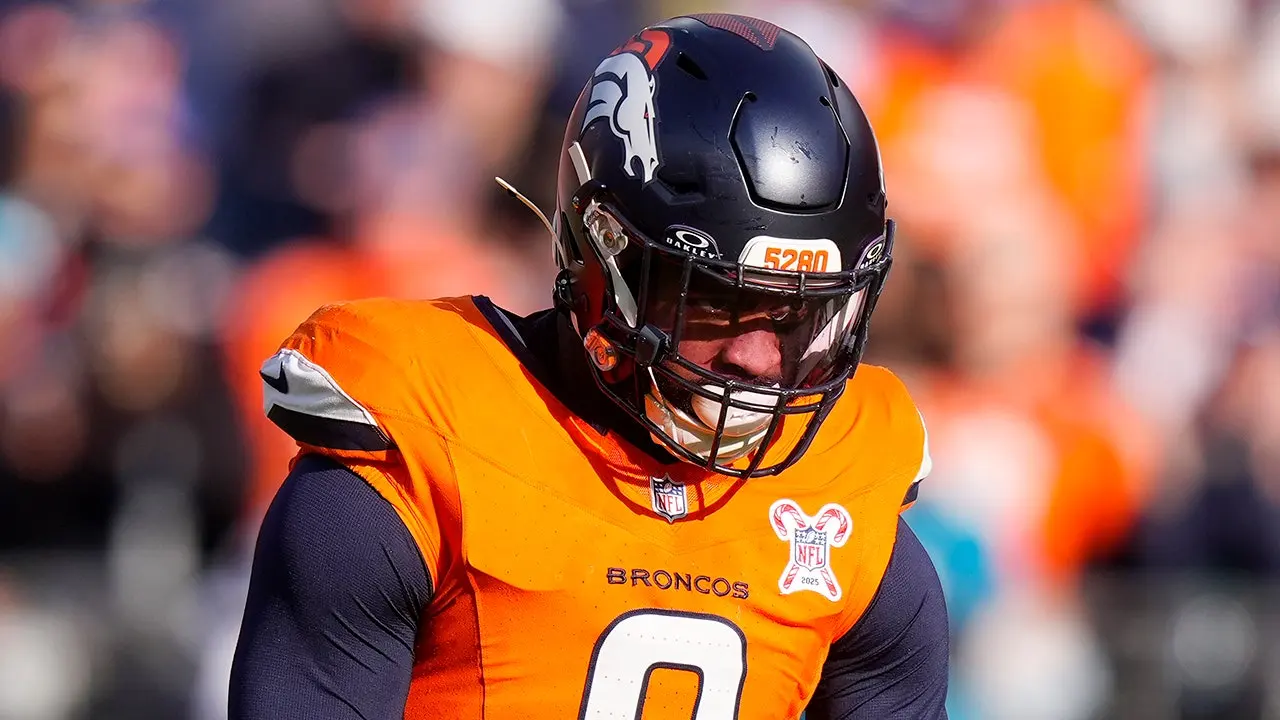
The peak of professional sports often seems like an impenetrable shield, a gilded world where physical talent, intense discipline, and multi-million-dollar contracts insulate elite athletes from the harsh realities of public fallout. For Denver Broncos linebacker Jonathon Cooper, that carefully constructed illusion of security shattered completely over the course of a single, highly chaotic week, exposing the fragile boundary between public adulation and private crisis. Just months after cementing his future as a foundational piece of the Broncos’ roster with a life-changing four-year, $60 million contract extension in November 2024, the 28-year-old athlete found himself stripped of his team colors and placed in handcuffs twice in a span of seven days. The sheer suddenness of his legal troubles serves as a sobering reminder of how rapidly a lifetime of hard work, physical sacrifice, and athletic achievement can be overshadowed by volatile personal conflicts that spill over into the public sphere. Cooper’s initial booking on domestic violence charges was distressing enough for the franchise and its vast fan base, but his subsequent arrest on Thursday night for allegedly violating a mandatory protection order signaled a deeper, more systemic collapse of personal control. Arrested twice within a week, Cooper has been propelled from the high-stakes, highly coordinated theater of the NFL gridiron directly into the sobering and highly scrutinized machinery of the criminal justice system. This rapid transition from a celebrated hometown sports hero to a recurring mugshot on the local evening news has left the Denver community and the sports world at large grappling with the uncomfortable reality of a rising star whose lifestyle off the field appears to be unraveling in real-time, raising urgent questions about personal accountability, mental health, and the immense pressures that accompany sudden fame and generational wealth.
At the absolute core of this escalating legal saga is a deeply troubled, long-term personal dynamic that boiled over into intense physical hostility on a Friday night inside Cooper’s residence. According to court records and detailed arrest affidavits, the initial altercation began during a domestic gathering between Cooper and his on-and-off partner of several years. What started as an ordinary evening quickly deteriorated when the woman confronted Cooper regarding allegations of infidelity, a highly charged accusation that instantly shifted the emotional atmosphere from domestic tranquility to mutual hostility. In the ensuing argument, the woman reportedly grabbed Cooper’s cell phone and threw it against a wall in anger, only to retrieve the device moments later to search through its private contents. This act triggered a frantic, highly physical struggle over the phone, with both individuals fighting desperately to assert ownership and control over the device. The physical confrontation escalated to a bizarre and deeply concerning degree; the probable cause affidavit reveals that when the woman refused to leave his home as demanded, Cooper allegedly took the drastic step of biting down on her iPhone, fracturing the screen with his own mouth in an act of raw frustration. Beyond the property damage, however, the situation carried far graver physical implications. While both parties were initially arrested on suspicion of domestic violence and criminal mischief, the legal landscape became significantly more severe for Cooper when court records later detailed additional, far more serious allegations, including a charge of felony strangulation. This escalation elevated the incident from a heated domestic dispute over a cell phone to a deeply concerning criminal case involving allegations of severe physical violence and intimidation, highlighting how quickly domestic arguments can spiral into dangerous physical confrontations.
Following the first arrest, the legal system attempted to establish a standard boundary designed to protect both parties and prevent further escalation, a routine but critical step in domestic violence interventions. On the Monday following his initial booking, Cooper appeared in court where he pleaded not guilty to the charges, signaling his intent to contest the allegations legally. It was during this period that a mandatory protection order was officially issued, legally forbidding him from having contact with his partner—a standard judicial practice aimed at cooling down high-conflict relationships and protecting potential victims from repeated harm. However, the efficacy of such court orders relies heavily on the compliance of those involved, and the fragile peace was shattered just days later. On Thursday night, law enforcement officers were once again dispatched to address Cooper, ultimately placing him in handcuffs for a second time for allegedly violating that very protection order. Violating a domestic protection order is viewed with extreme severity by the judiciary, as it represents a direct defiance of a court mandate and suggests an inability or unwillingness to de-escalate a volatile personal situation. For Cooper, this second arrest in such a brief timeframe severely complicates his legal defense, as prosecutors and judges often view protection order violations as indicators of ongoing risk and a disregard for legal boundaries. The arrest effectively stripped Cooper of any immediate benefit of the doubt, transforming his legal battles from a single, isolated domestic incident into a pattern of non-compliance that the court system is bound to address with increased rigor, potentially leading to immediate jail time and more severe bond conditions.
The Denver Broncos organization now finds itself in a highly delicate and uncomfortable position, forced to navigate the fallout of a key player’s criminal investigations while maintaining corporate responsibility and public trust. Following the news of Cooper’s second arrest, the team released a brief, measured statement expressing their disappointment and confirming that they are continuing to actively review the matter. This diplomatic response masks the intense internal discussions that inevitably occur within an NFL franchise when a highly paid asset faces serious legal trouble. Having recently invested $60 million into Cooper’s long-term future, the Broncos’ front office must balance their immense financial commitment with the league’s strict personal conduct policy and the ethical obligations they owe to their community, sponsors, and fan base. Professional sports leagues have faced intense, well-deserved scrutiny over how they handle domestic violence among their players, with fans and advocacy groups demanding swifter, more transparent accountability rather than the leniency historically granted to elite performers. The Broncos must thread a needle between honoring due process for an athlete who has pleaded not guilty and taking a firm stance against behaviors that undermine the values of the franchise. As the team’s security, player relations, and legal departments coordinate with local law enforcement, the situation serves as a stark reminder of the corporate vulnerabilities inherent in professional sports, where an athlete’s off-field actions can instantly jeopardize both their career longevity and their employer’s reputation.
This troubling chapter is particularly painful for those who have followed Cooper’s hard-fought journey to the pinnacle of professional football, a narrative that was previously defined by resilience, grit, and overcoming the odds. Drafted out of Ohio State in the seventh round of the NFL Draft—a position where players face incredibly slim statistical odds of ever establishing a lasting career—Cooper defied expectations from the moment he arrived in Denver. Through sheer work ethic, tactical discipline, and relentless determination, he spent five seasons quietly proving his worth, transforming himself from an unheralded late-round draft pick into a cornerstone of the Broncos’ formidable defensive unit. His breakout performance came during the previous season, where he recorded a stellar 50 tackles and eight sacks over 17 games, establishing himself as an indispensable, high-energy pass rusher. His career statistics, including 81 games played, 266 tackles, and 31.5 sacks, reflect a trajectory of steady improvement and relentless dedication to his craft, which is precisely why the Broncos rewarded him with his massive contract extension in late 2024. To see an individual who worked so hard to climb from the bottom of the draft board to the heights of financial security and athletic prominence fall into such severe legal jeopardy is a stark warning about the fragile nature of success. It illustrates how the discipline, focus, and structure that govern an athlete’s life on the field do not automatically translate to stability in their private affairs, leaving a promising career hanging in the balance as athletic achievements are overshadowed by real-world legal consequences.
Beyond the headlines, the statistics, and the financial implications of Cooper’s contract, this situation is fundamentally a human tragedy that impacts real lives far beyond the football field. Domestic violence disputes are deeply traumatic events that leave lasting psychological and physical scars on everyone involved, and the sensationalism of an NFL player’s involvement often overshadows the genuine pain, fear, and vulnerability at the heart of the relationship. As the legal process unfolds in the coming months, the focus will inevitably shift toward court hearings, athletic suspensions, and the future of a defensive roster, but the more vital path forward lies in addressing the underlying human issues of anger, volatile relationship dynamics, and personal accountability. For Cooper, the road ahead is no longer about preparing for the next opponent or fulfilling the terms of his multi-million-dollar contract; instead, it is a difficult journey toward understanding the gravity of his actions, navigating the legal consequences of his choices, and seeking the necessary personal rehabilitation to ensure these patterns do not repeat. For the victim, the legal system, and the community, the priority must remain on safety, healing, and the establishment of firm boundaries that prevent further harm. Ultimately, this distressing week in Denver highlights that no level of athletic fame, wealth, or professional achievement can excuse or insulate an individual from the consequences of domestic harm, reinforcing the painful truth that the most important victories are those won in the quest for personal integrity, safety, and emotional maturity.